If you’ve ever shopped for a wallet or card holder, you’ve probably seen products claiming to offer “RFID protection” or “RFID blocking technology.” These products promise to protect your credit cards, passports, and access cards from electronic theft.
But do RFID card holders really work?
The short answer is yes. A properly designed RFID card holder can block RFID and NFC signals. However, whether you actually need one is a different question.
As a materials engineer who has worked with conductive metals, shielding materials, and electromagnetic interference (EMI) protection, I’ve seen how these products are designed and tested. The science behind RFID blocking is real. What is often exaggerated is the level of danger consumers face from RFID skimming.
In this guide, I’ll explain how RFID card holders work, what they can and cannot protect against, and whether buying one is worth your money.
What Is RFID Technology?
RFID stands for Radio Frequency Identification.
It is a wireless technology that allows data to be transmitted using radio waves. RFID chips are commonly found in:
- Contactless credit cards
- Debit cards
- Passports
- Employee ID badges
- Building access cards
- Hotel key cards
- Transit cards
Many modern payment cards actually use NFC (Near Field Communication), which is a specialized form of RFID technology designed to work over very short distances. NFC is what allows you to tap your card at a payment terminal instead of inserting it. RFID and NFC cards communicate through radio signals and require close proximity to a reader.
What Is an RFID Card Holder?
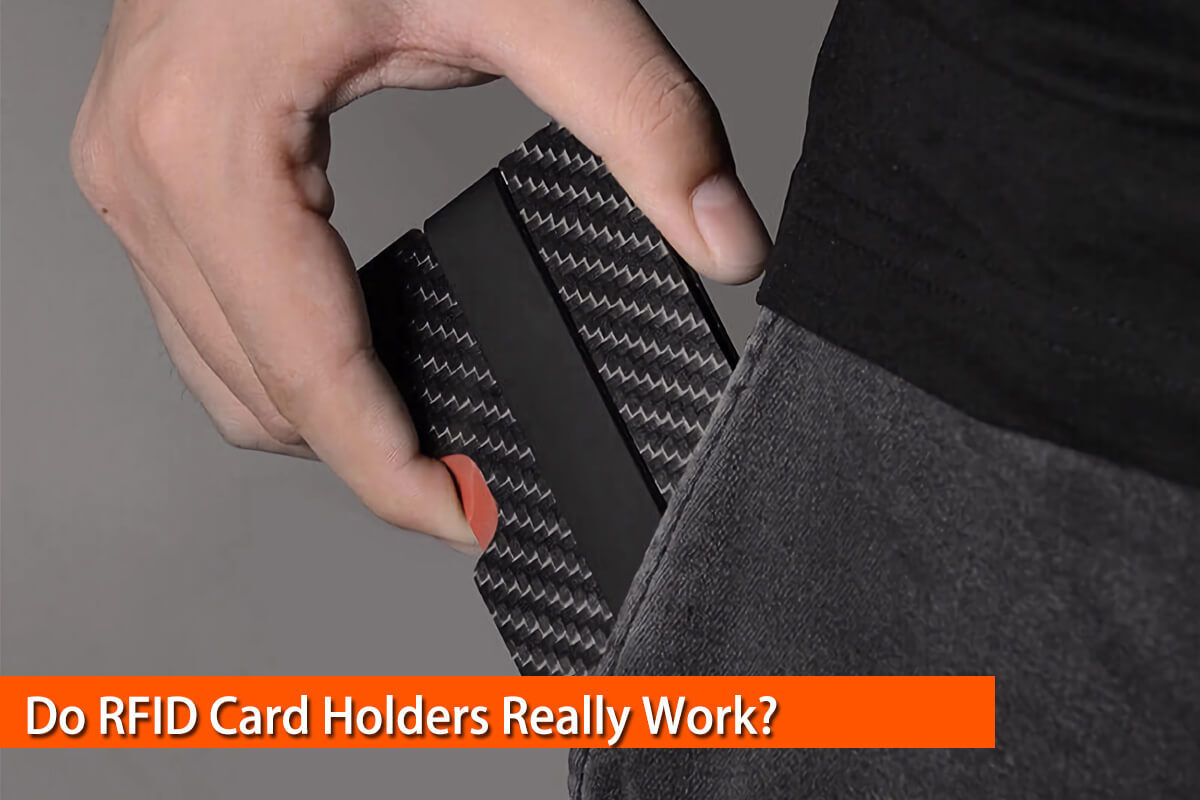
An RFID card holder is a wallet, sleeve, or card case designed to block radio frequency signals.
Most RFID-blocking products use conductive materials such as:
- Aluminum
- Stainless steel
- Copper
- Nickel-coated fabrics
- Metal mesh composites
These materials interfere with electromagnetic waves and prevent RFID readers from communicating with the chip inside your card.
In simple terms, the card holder creates a protective barrier between your card and any nearby scanner.
How RFID Blocking Actually Works
This is where materials science comes in.
Radio waves travel through the air as electromagnetic energy. Certain conductive metals can absorb or reflect this energy. When a card is surrounded by conductive material, the radio signal cannot easily reach the RFID chip.
Engineers often describe this effect as a miniature Faraday cage.
A Faraday cage is an enclosure made from conductive material that blocks external electromagnetic fields. While most RFID card holders are not perfect Faraday cages, they use the same basic principle.
If the shielding material is thick enough and completely surrounds the card, the RFID reader cannot establish communication with the chip. As a result, the card cannot be scanned.
This is why quality matters.
A well-designed RFID card holder can be highly effective. A poorly designed one with gaps, thin shielding layers, or incomplete coverage may not perform as advertised.
Do RFID Card Holders Really Work?
Yes, they do.
From an engineering perspective, the science is straightforward. Conductive materials can block the radio frequencies used by RFID and NFC systems. Numerous demonstrations and tests have shown that properly constructed RFID-blocking wallets and card holders can prevent cards from being read through the protective layer.
In fact, testing is relatively simple.
A common method is to place a contactless card inside the RFID holder and attempt to make a payment without removing the card. If the terminal cannot detect the card, the shielding is working correctly.
From a materials engineering standpoint, there is no mystery here. The technology works.
The more important question is whether it solves a problem that most consumers actually face.
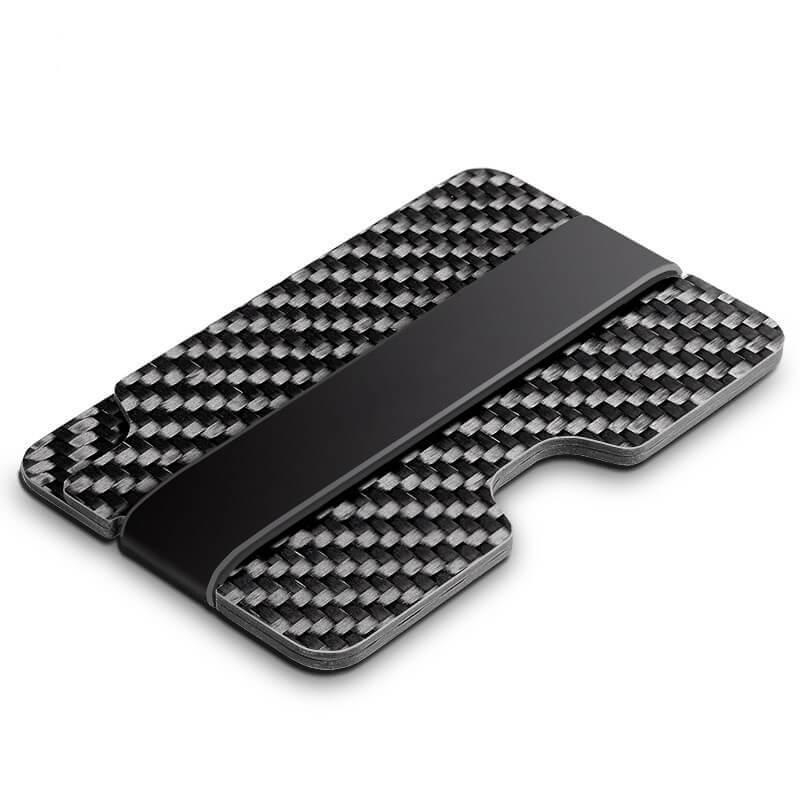
$36.90
With RFID blocking technology to protect your card safety.

Is RFID Skimming a Real Threat?
This is where things become more complicated.
Many advertisements for RFID-blocking products suggest that criminals are constantly walking around with scanners, stealing card information from unsuspecting people.
Technically, RFID skimming is possible.
Security researchers have demonstrated attacks that can read RFID-enabled cards wirelessly. Researchers have also shown that specialized equipment can sometimes capture information from certain access cards and credentials.
However, documented real-world cases involving contactless payment card skimming remain extremely rare.
Several cybersecurity experts argue that RFID skimming is far less common than consumers are led to believe. They point out that there is little evidence showing widespread criminal activity involving the theft of contactless card information through RFID scanners.
The reality is that criminals usually choose easier methods.
Instead of standing close to victims with a scanner, criminals often rely on:
- Phishing scams
- Data breaches
- Malware
- Online fraud
- Card-not-present fraud
- Physical card theft
These attacks generally offer higher rewards and lower risk for criminals.
Why Modern Credit Cards Are More Secure
Many people assume that if someone reads their RFID card, the thief can instantly steal money.
Modern payment systems do not work that way.
Today’s contactless payment cards use multiple security technologies, including:
- Encryption
- Dynamic authentication
- Tokenization
- One-time transaction codes
Major payment networks explain that contactless transactions generate unique transaction data, making it difficult to use intercepted information for fraudulent purchases.
This doesn’t mean the risk is zero.
It simply means that modern cards are significantly more secure than many consumers realize.
Which Cards Are Most Vulnerable?
Not all RFID-enabled cards face the same level of risk.
Credit Cards and Debit Cards
Risk level: Low
Modern banking systems include strong fraud protection and advanced encryption.
Passports
Risk level: Low
Modern electronic passports contain security mechanisms that help protect personal data.
Transit Cards
Risk level: Medium
Transit cards often contain simpler RFID systems and may reveal limited account information.
Building Access Cards
Risk level: Medium to High
This is one area where RFID protection may provide genuine value. Some access cards can be cloned if sufficient information is captured from the card. Security researchers have demonstrated attacks against certain types of building credentials and access systems.
As an engineer, I am often more concerned about protecting access credentials than protecting modern contactless payment cards.
What RFID Card Holders Cannot Protect Against
One of the biggest misconceptions is that RFID card holders provide complete financial security.
They do not.
An RFID-blocking card holder cannot protect you from:
- Phishing emails
- Online scams
- Data breaches
- Stolen passwords
- Malware infections
- Fake websites
- Physical theft of your wallet
These threats are responsible for far more financial losses than RFID skimming.
Buying an RFID card holder should never replace basic cybersecurity practices.
How to Test an RFID Card Holder Yourself
If you already own an RFID wallet or card holder, you can easily test it.
Method 1: Contactless Payment Test
- Place your contactless card inside the holder.
- Keep the card fully enclosed.
- Attempt to tap the holder against a payment terminal.
If the payment terminal cannot detect the card, the shielding is working properly.
Method 2: Smartphone NFC Test
Many smartphones include NFC readers.
Try scanning the protected card while it remains inside the holder. A properly shielded holder should prevent the phone from reading the card.
Method 3: Access Card Test
For RFID access cards, place the card inside the holder and attempt to use it at an entry reader. If access is denied until the card is removed, the shielding is functioning correctly.
Who Should Consider Buying an RFID Card Holder?
Based on both engineering principles and real-world risk, I believe RFID card holders make sense for certain groups of people.
Good Candidates
- Frequent travelers
- Business professionals carrying access cards
- Employees using RFID badges
- Security-conscious individuals
- People who regularly attend crowded events
Probably Unnecessary for
- People carrying only a few payment cards
- Consumers primarily worried about online fraud
- Individuals seeking protection from identity theft unrelated to RFID
For many users, RFID protection offers peace of mind rather than essential security.
$36.90
With RFID blocking technology to protect your card safety.
Pros and Cons of RFID Card Holders
Pros
- Blocks RFID and NFC signals
- Protects access cards and credentials
- Easy to use
- Requires no batteries or maintenance
- Adds an extra layer of privacy
Cons
- Does not prevent most common forms of fraud
- Quality varies significantly between products
- Some marketing claims exaggerate risks
- May make contactless payments less convenient
Final Verdict: Do RFID Card Holders Really Work?
Yes, RFID card holders really work.
The underlying science is well established. Conductive materials such as aluminum, copper, and stainless steel can effectively block RFID and NFC signals when properly designed into a card holder. Independent testing and real-world demonstrations consistently show that quality RFID-blocking products can prevent unauthorized scans.
However, effectiveness and necessity are not the same thing.
The evidence suggests that RFID skimming is a relatively uncommon threat compared with phishing attacks, data breaches, malware, and other forms of financial fraud. For most people, an RFID card holder should be viewed as an additional privacy measure rather than a must-have security product.
As a materials engineer, my conclusion is simple:
The technology works. The shielding is real. The risk it protects against exists. But for most consumers, the biggest benefit is peace of mind, not protection from a widespread crime wave.
If you carry sensitive access cards, travel frequently, or simply want an extra layer of protection, a quality RFID card holder is a reasonable investment. Just remember that good cybersecurity habits remain far more important than any wallet or card holder.