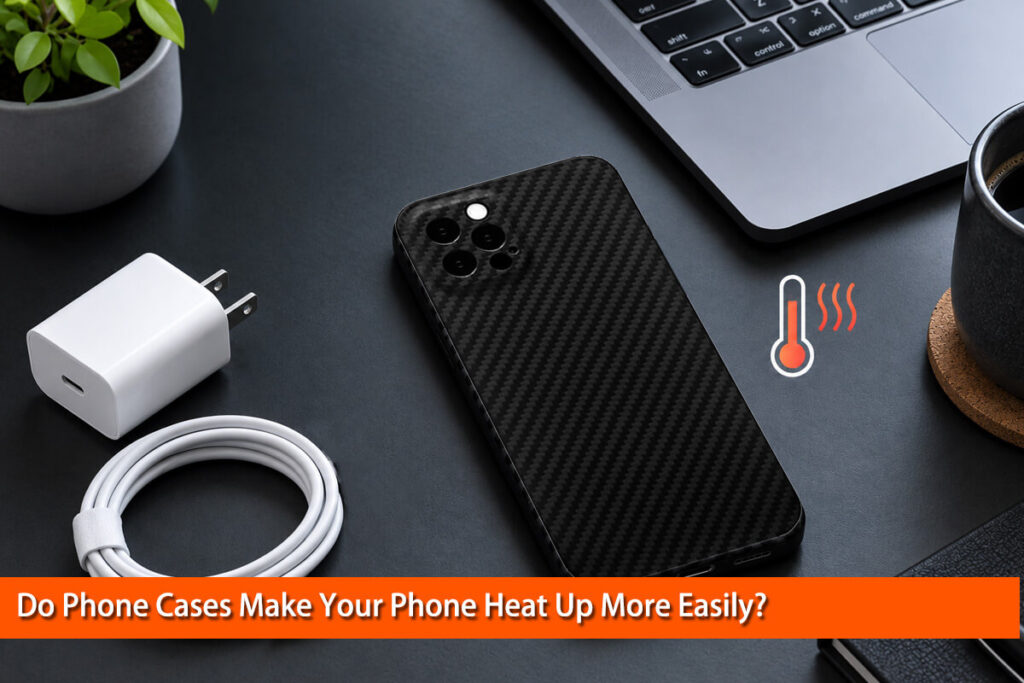
If you love the original design of your iPhone 16, a thick phone case can feel unnecessary. It adds weight, makes the phone harder to slip into a pocket, and changes the way the device feels in your hand. However, going without a case leaves the phone exposed to scratches and accidental impacts.
The ideal solution is an ultra-thin iPhone 16 case with MagSafe compatibility. It should add as little bulk as possible while allowing you to attach magnetic chargers, wallets, and mounts conveniently.
But which case is actually the thinnest? And does a thinner case mean less protection?
From a materials-engineering perspective, the answer depends on more than thickness alone. Material properties, structural design, magnetic components, and edge coverage all influence real-world performance. This guide compares leading options, explains the science behind thin case materials, and helps you choose the right balance of slimness, functionality, and protection.
What Is the Thinnest iPhone 16 Case with MagSafe?
There is no single winner for every buyer because manufacturers use different materials, measurements, and magnetic designs. Nevertheless, several products stand out for their slim profiles.
Here are four options worth comparing. Specifications reflect the cited manufacturer or editorial sources and should be checked against the exact version you intend to purchase.
| Case | Advertised thickness | Key features |
|---|---|---|
| Totallee Super Thin | 0.02 in (about 0.5 mm) | Minimal bulk, lightweight polypropylene construction |
| Oneou Carbon Fiber Case | about 0.50 mm | Ultra-thin, lightweight carbon fiber material phone case |
| Latercase Thin Case | 0.6 mm | Aramid fiber, matte finish, lightweight design |
| Mous Super Thin | 1.1 mm sides; 1.2 mm back | Polycarbonate, magnetic array, raised edges |
| Peel Magnetic Case | Verify the current iPhone 16 model listing | Minimalist design and magnetic functionality; confirm exact specifications before comparing |
Totallee advertises its Super Thin case at 0.02 inches, while Macworld has reported measuring a comparable case at approximately 0.5 mm and 8 g. Its MagSafe-equipped version may differ in weight or thickness. Latercase lists a 0.6 mm profile and a weight of approximately 10 g. Mous lists 1.1 mm sides, a 1.2 mm back, and a weight of 28 g for its iPhone 16 Super Thin case.
Sources: Macworld’s iPhone 16 case comparison, Latercase specifications, and Mous specifications.
Important: Do not compare a non-MagSafe case with a magnetic version as if they were identical. The magnetic system adds material and can affect local thickness and weight. Also, the thinnest case is not automatically the best case for everyday use.
Best Ultra-Thin iPhone 16 Cases with MagSafe Compared
1. Totallee Super Thin Case: For Minimum Bulk
Totallee focuses on preserving the original feel and appearance of the iPhone. Its Super Thin case is advertised at approximately 0.5 mm thick, making it attractive to people who dislike bulky accessories.
Its polypropylene construction is lightweight and suitable for a very thin molded shell. A minimalist case can help protect against surface scratches and minor everyday contact without dramatically changing the phone’s dimensions.
The trade-off is limited cushioning. A very thin shell generally has less material available to absorb and spread impact energy than a thicker case with reinforced corners.
If you choose Totallee, confirm that the exact iPhone 16 version you purchase supports MagSafe accessories. Check the magnetic version’s dimensions and weight rather than assuming that every Super Thin model has the same magnetic functionality.
Best for: Users who prioritize the lightest possible feel and primarily want scratch protection.
2. Oneou Carbon Fiber Phone Case: Lightweight, strong, and built for everyday protection
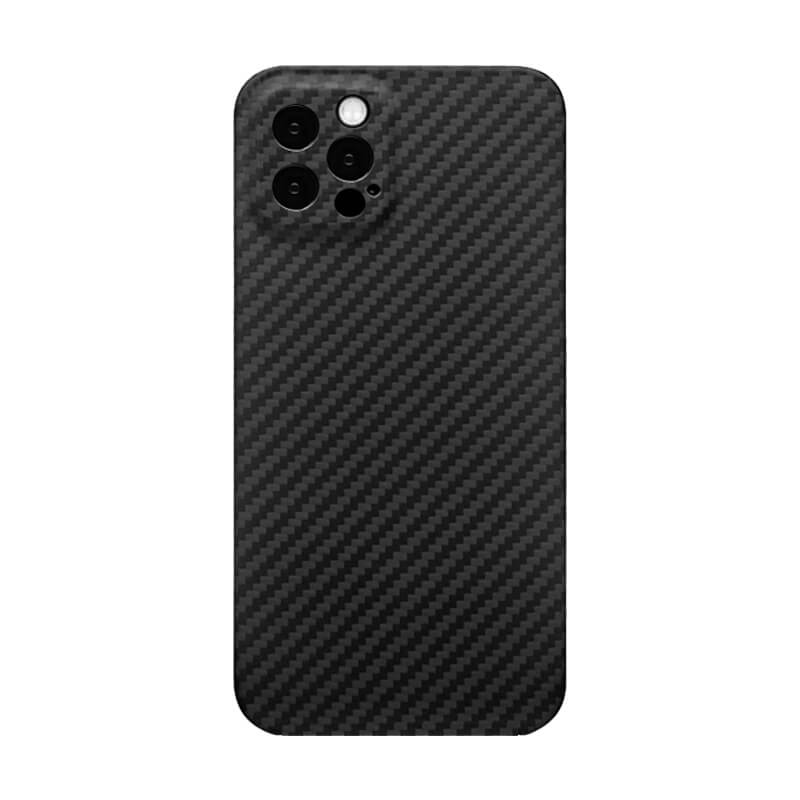
MagSafe Compatible;
Slim & Lightweight;
Precise Fit;
Premium Look;
Camera Protection;
Durable Design;
Easy Access.

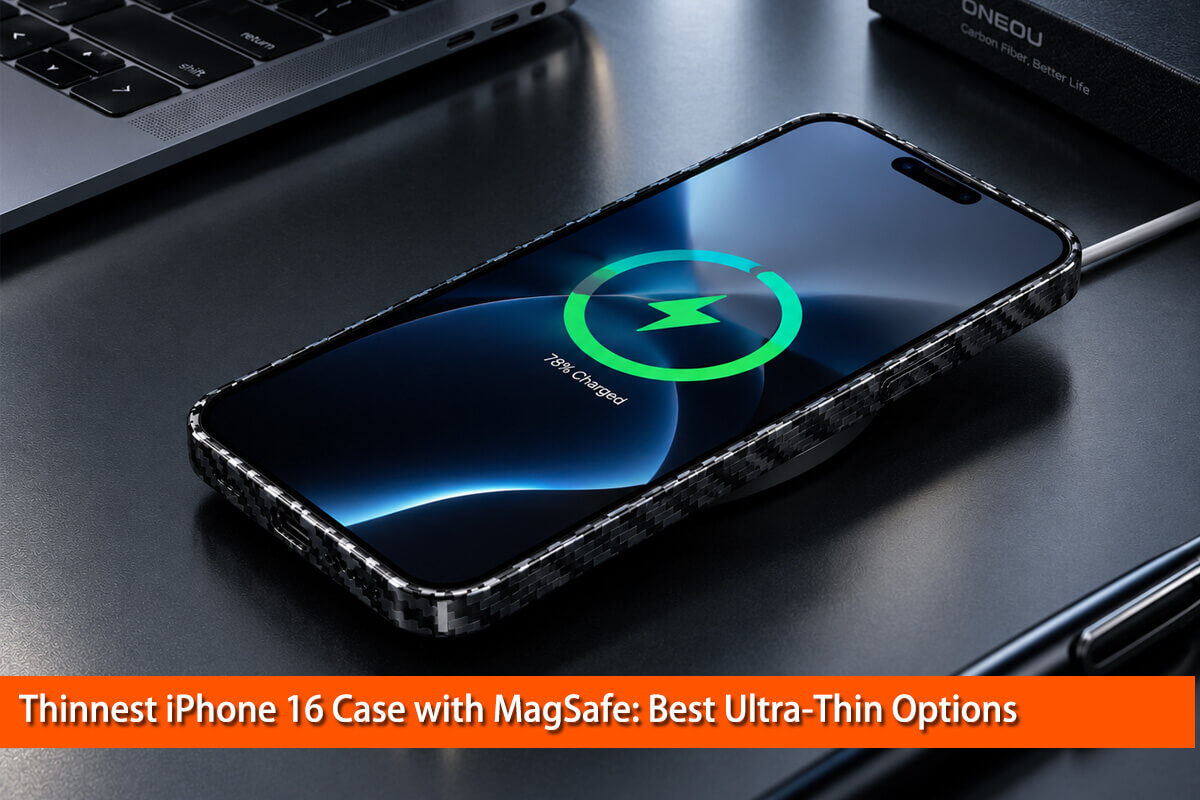
For iPhone users who want a premium material without unnecessary bulk, the Oneou carbon fiber phone case is another option worth considering. Oneou offers iPhone cases designed around a slim profile, lightweight construction, a distinctive carbon fiber finish, and compatibility with MagSafe accessories on supported models.
From a materials-engineering perspective, the appeal of carbon fiber lies in its high strength-to-weight potential. A carefully designed fiber-composite shell can provide stiffness without the added mass of many thicker protective designs. However, actual protection depends on the complete case construction, including its edges, fit, and impact-management features.
Key features to consider include:
- Lightweight, slim design: Helps preserve a comfortable feel in your hand and pocket.
- MagSafe compatibility: Supported models feature magnetic functionality for compatible chargers and accessories.
- Everyday scratch protection: The durable surface helps keep the case looking good during regular use.
- Raised camera and screen edges: Help reduce direct contact with flat surfaces when the phone is placed down.
- Precise model-specific fit: Designed openings provide access to the buttons, camera, and charging port.
- Premium carbon fiber appearance: Adds a clean, performance-inspired look without an unnecessarily bulky design.
One important distinction: a thin carbon fiber case is not automatically the thinnest case available or a substitute for a rugged drop-protection case. Before buying, check the thickness and weight of the specific Oneou model, confirm its MagSafe compatibility, and choose the level of protection that matches your daily routine.
Best for: iPhone owners who value a lightweight feel, a premium carbon fiber finish, and convenient magnetic accessories in a slim everyday case.
3. Latercase Thin Case: For Lightweight Fiber Construction
Latercase uses aramid fibers to create a thin composite shell. Its product page lists a thickness of 0.6 mm, a weight of approximately 10 g, and a smooth matte finish.
Aramid fibers have a high strength-to-weight ratio and are widely used in applications where low weight and mechanical performance are important. In a phone case, the fiber structure can provide a distinctive woven appearance and a rigid, lightweight shell.
However, a fiber-composite case is not indestructible. Its performance depends on fiber orientation, resin or matrix material, shell geometry, edge design, and how the case transfers impact forces.
Check the exact product configuration for built-in magnets. Product specifications and accessory bundles can change, and the presence of aramid fiber does not establish MagSafe compatibility by itself.
Best for: People who value a thin, textured, premium-looking case and lightweight composite construction.
3. Mous Super Thin Case: For a Balance of Slimness and Features
Mous lists its Super Thin case for the iPhone 16 at 1.1 mm thick along the sides and 1.2 mm across the back. Its specifications include a magnetic array, polycarbonate construction, a microfiber lining, and raised edges around the screen and camera.
From an engineering perspective, this design illustrates a useful compromise. A case can remain relatively slim while adding features that a basic shell may lack.
The raised edges help reduce direct contact between the camera lenses or screen and flat surfaces. The magnetic array supports compatible accessories, while the lining helps protect the phone’s back from scratches.
However, raised edges do not guarantee protection against every drop. The Mous case is also heavier than the lightest minimalist alternatives, so it may not appeal to buyers who want the smallest possible addition to their phone.
Best for: Users who want a thin MagSafe case with additional everyday design features.
4. Peel Magnetic Case: For a Minimalist Look
Peel is another brand to consider if your priority is maintaining the original appearance of the iPhone while using magnetic accessories.
Before choosing a Peel case, verify the current listing for the standard iPhone 16 and check its precise thickness, weight, materials, and magnetic compatibility. Do not rely on specifications from a different iPhone generation or model.
Pay particular attention to grip and edge coverage. A smooth, minimalist case may feel excellent in a pocket but can be less secure in a wet or slippery hand.
Best for: Buyers who prefer a clean, understated appearance and are willing to trade some protection for a slim profile.
What Makes a MagSafe Case Different from a Regular Thin Case?
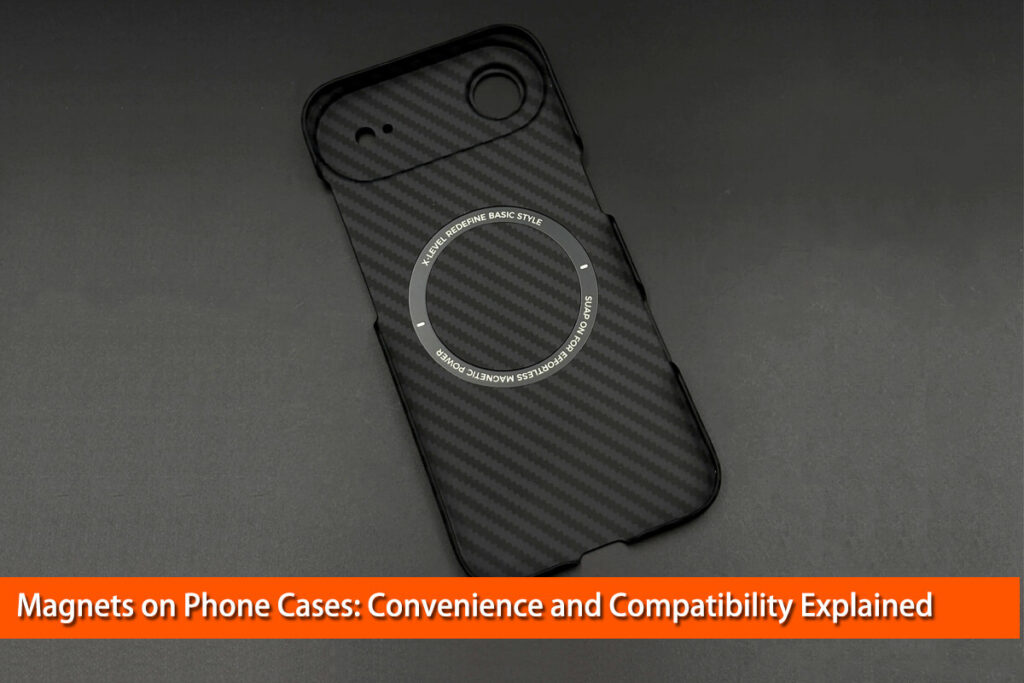
MagSafe is more than a description for wireless charging. It uses a magnetic arrangement that helps compatible accessories align and attach to the back of an iPhone.
Apple’s iPhone 16 technical specifications identify MagSafe and Qi2 wireless charging support, along with the phone’s magnet array and alignment magnet.
A regular thin case may allow wireless charging to work, but that does not necessarily mean a magnetic wallet or car mount will attach securely. A dedicated MagSafe-compatible case incorporates or supports a magnetic arrangement designed for compatible accessories.
Three factors matter:
- Magnetic alignment: The magnetic array needs to align properly with the phone and accessory.
- Attachment strength: A magnetic wallet or mount must remain attached during normal handling. The performance of the complete accessory combination matters.
- Charging performance: The case and accessory should work together without unexpected charging interruptions or excessive heat.
A thin case can offer excellent convenience, but thickness alone cannot predict magnetic strength. Magnet design, placement, materials, and manufacturing quality also matter.
When purchasing, confirm that the listing explicitly supports MagSafe rather than relying only on a statement that the case supports wireless charging.
Which Materials Work Best for an Ultra-Thin MagSafe Case?
Material choice affects weight, stiffness, flexibility, surface feel, and how a case behaves during an impact. There is no universally best material for every design.
Polycarbonate: Lightweight and Rigid
Polycarbonate is a thermoplastic commonly used in protective housings and molded components. It can be formed into thin, rigid shells and produced with clear, colored, or textured finishes.
Its stiffness helps a case retain its shape, but a thin rigid shell is not automatically good at absorbing impacts. Geometry, wall thickness, corner construction, and the way the shell fits the phone remain important.
Aramid Fiber: Thin Composite Construction
Aramid fibers are known for their high strength-to-weight characteristics. When incorporated into a suitable matrix, they can create lightweight composite structures with good mechanical performance.
Aramid fiber is not the same as carbon fiber. Although both may be used in thin composite cases, their material properties and structural behavior differ.
Carbon Fiber: High Stiffness with Low Weight
Carbon fiber is attractive when designers want high stiffness without adding much mass. Individual carbon fibers have excellent mechanical properties along their length, but the performance of a finished composite depends on how those fibers are arranged and bonded together.
This distinction matters when choosing a carbon fiber phone case. A genuine fiber-composite shell is different from a plastic case that merely has a printed carbon-fiber pattern.
A well-designed Oneou carbon fiber phone case can appeal to users who want a slim, premium-looking finish and a lightweight feel. Before deciding whether it is right for you, check the specific model’s measured thickness, weight, magnetic design, and edge coverage. Do not assume that every carbon fiber case has the same protection or MagSafe performance.
For additional engineering background, see this peer-reviewed study on improving the impact resistance of carbon fiber sandwich panels using aramid-fiber epoxy. The research examines how material interfaces affect impact performance. Its findings concern engineered sandwich panels, not phone cases, so they should not be treated as direct proof of a particular case’s drop resistance.
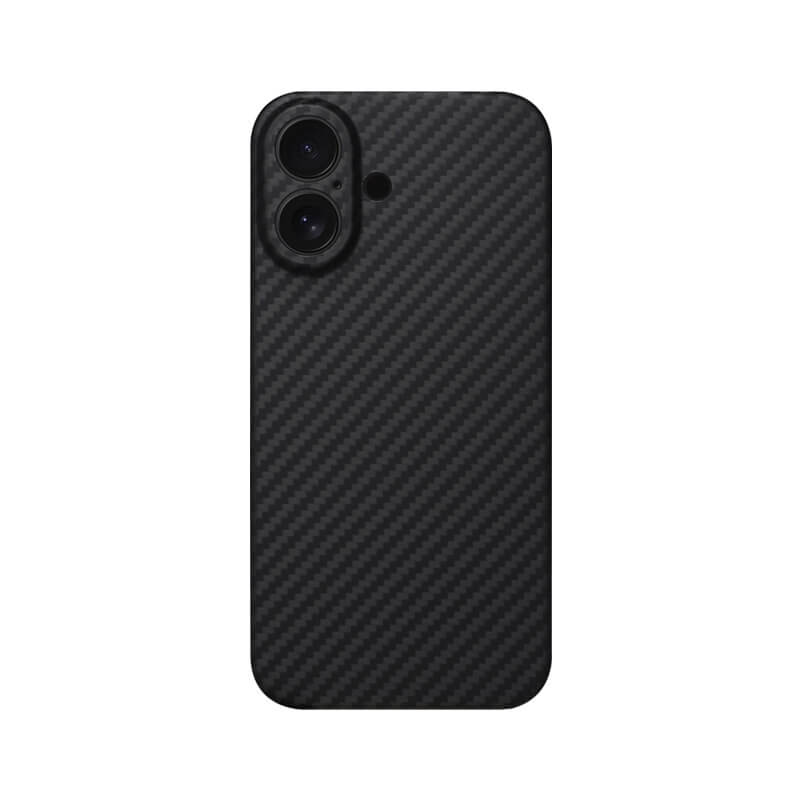
Strong MagSafe magnets ensure secure attachment.
Slim profile protects without adding unnecessary bulk.
Raised edges protect screen and camera.
Textured surface provides a secure grip.
Precise cutouts ensure easy everyday access.
Durable construction helps absorb everyday impacts.
Supports wireless charging without removing the case.
TPU and Hybrid Materials: Flexibility and Cushioning
Thermoplastic polyurethane (TPU) is a flexible material used in many phone cases. Depending on its formulation and geometry, it can provide grip, flexibility, and useful impact-management characteristics.
Hybrid cases combine materials to balance rigidity, flexibility, appearance, and protection. They may be slightly thicker than minimalist shells, but a carefully designed hybrid can be a better choice for people who frequently drop their phones.
The key engineering principle is simple: material names alone do not determine performance. The complete case design matters.
Does a Thinner iPhone 16 Case Provide Less Drop Protection?
In general, an extremely thin case has less room for cushioning, reinforced corners, and raised edges. That can make it less suitable for serious drops than a thicker protective case.
However, thickness alone cannot predict the outcome of a fall.
When a phone hits the ground, the case and phone experience forces over a short period. A well-designed case may help spread the load, deform in a controlled way, or reduce direct contact between vulnerable parts and the ground. Other designs may transfer more of the impact to the device.
Important features include:
- Corner coverage: Corners are vulnerable during many angled drops.
- Screen protection: A raised lip can help prevent direct screen contact with a flat surface.
- Camera protection: A raised camera bezel helps keep the lenses away from abrasive surfaces.
- Shell structure: Material stiffness, flexibility, and geometry affect how impact loads are transferred.
- Fit: A loose case may shift during an impact, while an overly tight or poorly designed case can create other problems.
An ultra-thin case is often a reasonable choice for someone who rarely drops a phone and mainly wants to prevent scratches. If you work outdoors, frequently drop your device, or want stronger impact protection, consider a case with greater edge coverage.
Treat advertised drop heights as manufacturer claims unless they are supported by independent, repeatable testing under comparable conditions.
How to Choose the Right Thin MagSafe Case
Before buying, consider how you actually use your phone.
Choose the thinnest profile if pocket comfort, low weight, and the original iPhone feel matter more to you than drop protection.
Choose a thin fiber-composite case if you prefer a textured, premium finish and lightweight construction. Compare the specific composite design rather than assuming that all fiber cases behave alike.
Choose a thin case with raised edges if you want additional protection around the screen and camera without moving to a bulky rugged case.
Choose a magnetic case designed for your accessories if you regularly use a MagSafe wallet, charger, stand, or car mount. Verify the compatibility of the exact combination.
Check the precise iPhone model. The iPhone 16, 16 Plus, 16 Pro, and 16 Pro Max have different dimensions and camera layouts. A case made for one model will not necessarily fit another correctly.
Finally, check return policies and warranty terms. A case that looks good in product photographs may feel different in your hand, and grip is difficult to judge from specifications alone.
How to Test MagSafe Compatibility After Buying
A short check can help you identify problems before relying on your new case.
- Confirm that the packaging and product listing identify your exact iPhone model.
- Attach a compatible MagSafe charger and check that it aligns and stays attached during normal handling.
- Test your magnetic wallet or mount separately. A charger working correctly does not prove that every accessory will attach securely.
- Confirm that charging starts and remains stable.
- Check the Camera Control, buttons, camera openings, and charging port for unobstructed access.
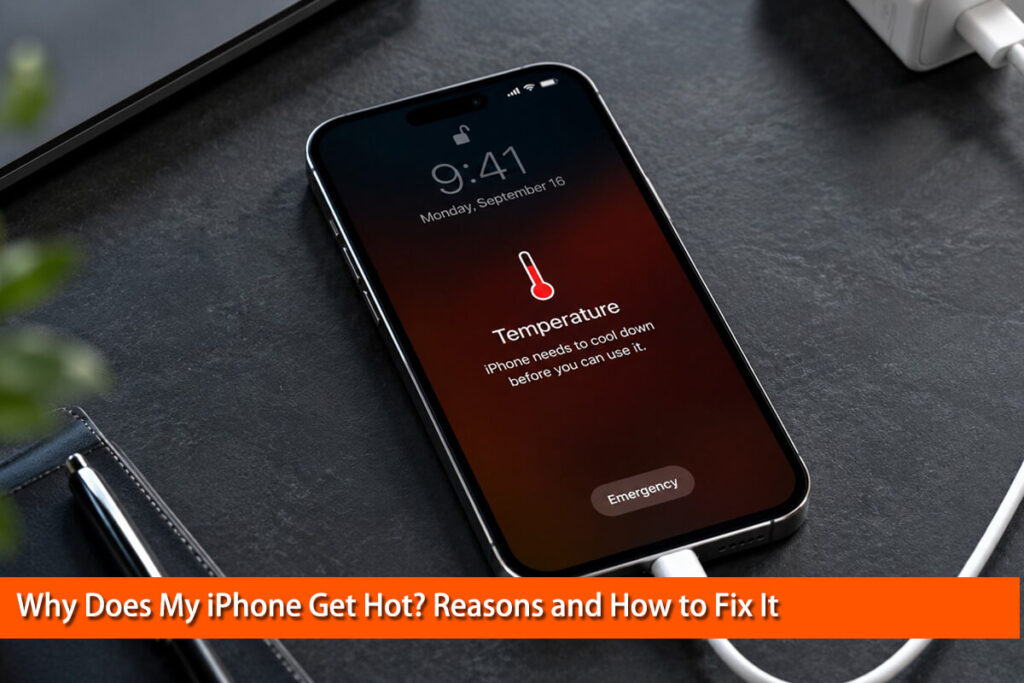
- Follow the charger manufacturer’s instructions and stop using the setup if you notice unusual heat or charging interruptions.
Apple’s official iPhone 16 specifications provide a reliable starting point for checking supported charging features. For information about magnetic wireless-charging standards, consult the Wireless Power Consortium.
Remember that a case’s magnetic compatibility, wireless-charging compatibility, and drop protection are three different things. Each needs to be evaluated separately.
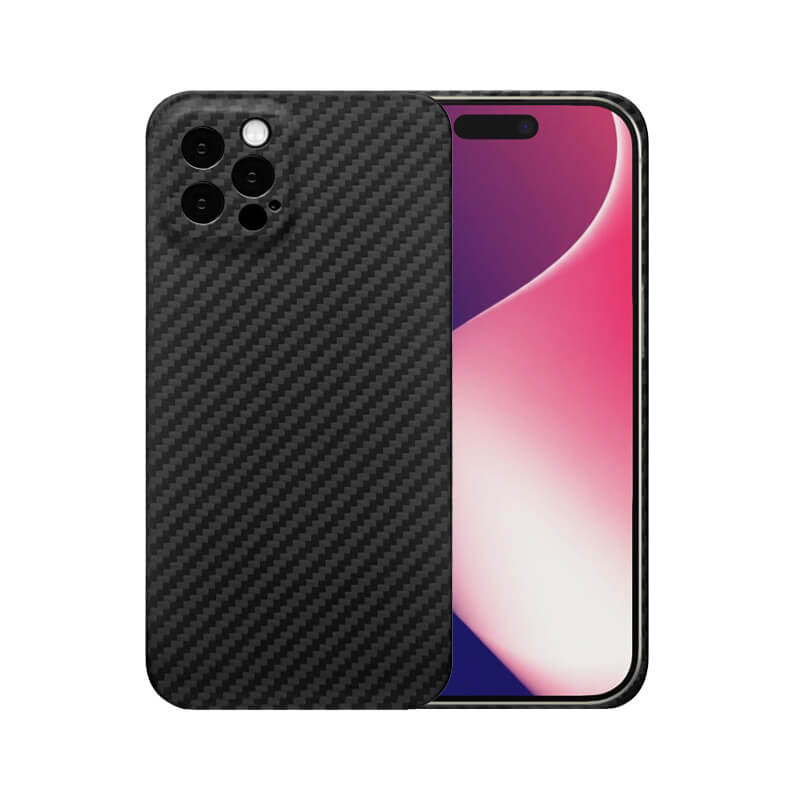
Built-in magnets ensure seamless MagSafe compatibility.
Slim design keeps your iPhone comfortable to hold.
Premium carbon fiber delivers a high-end look.
Raised edges help protect the screen and cameras.
Precise fit provides easy access to all controls.
Scratch-resistant surface maintains its premium appearance.
Supports MagSafe charging and compatible accessories.
Frequently Asked Questions
What is the thinnest iPhone 16 case with MagSafe?
Totallee advertises its Super Thin case at approximately 0.5 mm, while Latercase lists 0.6 mm for its Thin Case. However, you must compare the exact magnetic versions before identifying a definitive winner. Thickness measurements may also exclude raised edges or other parts of the case.
Can a 0.5 mm iPhone case support MagSafe?
Yes, an ultra-thin case can be designed to support magnetic accessories. The important factors are the magnetic arrangement, alignment, and construction, not thickness alone. Always verify the specific product listing.
Does an ultra-thin MagSafe case support wireless charging?
Many do, but compatibility depends on the particular case and charger. Check the manufacturer’s specifications and test the combination you intend to use.
Are carbon fiber iPhone cases compatible with MagSafe?
Some are, but carbon fiber itself does not guarantee MagSafe compatibility. Look for a case specifically designed with a compatible magnetic system and confirm that the manufacturer supports your iPhone model.
Do thinner cases provide less drop protection?
They often offer less room for cushioning and reinforced edges, but actual performance depends on materials, structure, and fit. Do not judge protection solely by thickness or material name.
Is an ultra-thin MagSafe case worth buying?
It can be, especially if you value a lightweight feel, easy pocket storage, and magnetic accessories. If you frequently drop your phone, a thicker case with better corner and screen coverage may be a more sensible choice.
Final Verdict: Choose Thinness Without Ignoring Function
The best ultra-thin iPhone 16 case with MagSafe is not necessarily the one with the smallest advertised thickness. Totallee is worth considering for minimum bulk, Latercase for lightweight fiber-composite construction, and Mous for a slim design with additional everyday features.
Before buying, compare the exact magnetic version’s thickness, weight, fit, and protection. If you prefer a premium material and a minimalist appearance, a Oneou carbon fiber phone case may also be worth considering, provided its specific specifications match your needs.
Ultimately, the right choice is the thinnest case that delivers the magnetic functionality, handling, and level of protection you are comfortable with.