Your phone case protects one of the most frequently used and valuable devices you own. It goes everywhere with you: in your pocket, on your desk, in your car, and sometimes onto the floor after an accidental drop. But while most people pay attention to keeping their phones clean, they rarely think about when to replace the case itself. So, how often should you change your phone case?
The answer depends on several factors, including the material, construction quality, usage habits, and physical condition of the case. Some cases may remain useful for several years, while others can lose their protective properties much sooner.
From a materials-engineering perspective, the most important thing is not simply how old your phone case is. It is whether the material and structure can still provide reliable protection.
In this guide, we’ll explain how long different phone cases typically last, seven warning signs that indicate replacement may be necessary, and how to extend the useful life of your phone case.
How Often Should You Change Your Phone Case?
There is no universal replacement schedule for phone cases. A well-made case that is properly maintained may remain functional for several years, while a poorly constructed case can become unsuitable much sooner.
As a general guideline, inspect your phone case every three to six months and consider replacing it whenever you notice structural damage, loose fitting, or reduced protection.
Different materials also have different aging characteristics.
General Phone Case Replacement Guidelines
| Phone case material | Common aging characteristics | What to watch for |
|---|---|---|
| Silicone | Surface wear and loss of elasticity | Stretching, tearing, reduced grip |
| TPU | Discoloration and deformation | Yellowing, stickiness, loose fitting |
| Polycarbonate | Scratches and impact damage | Cracks, chips, broken corners |
| Leather | Natural aging and surface deterioration | Peeling, deep cracks, damaged stitching |
| Hybrid cases | Depends on individual components | Separation, damaged edges, loose layers |
| Carbon fiber cases | Surface and resin aging | Cracks, delamination, structural damage |
These are general material tendencies, not scientifically established replacement deadlines. Actual performance depends on the formulation, manufacturing process, construction, and conditions of use.
Does Your Phone Case Need Replacing Every 6–12 Months?
You may have seen recommendations suggesting that phone cases should be replaced every six to twelve months. However, this is not a universal engineering rule.
Consider two different situations.
Someone using an inexpensive silicone case every day may experience stretching, surface deterioration, and reduced grip within a relatively short period.
Another person using a properly manufactured carbon fiber composite case may experience very little structural change over the same period.
Does that mean the second case will last forever? Certainly not. But it demonstrates why replacement decisions should be based on actual condition rather than an arbitrary calendar date.
If your case remains structurally sound, fits securely, and provides adequate protection, there may be no reason to replace it simply because it is one year old.
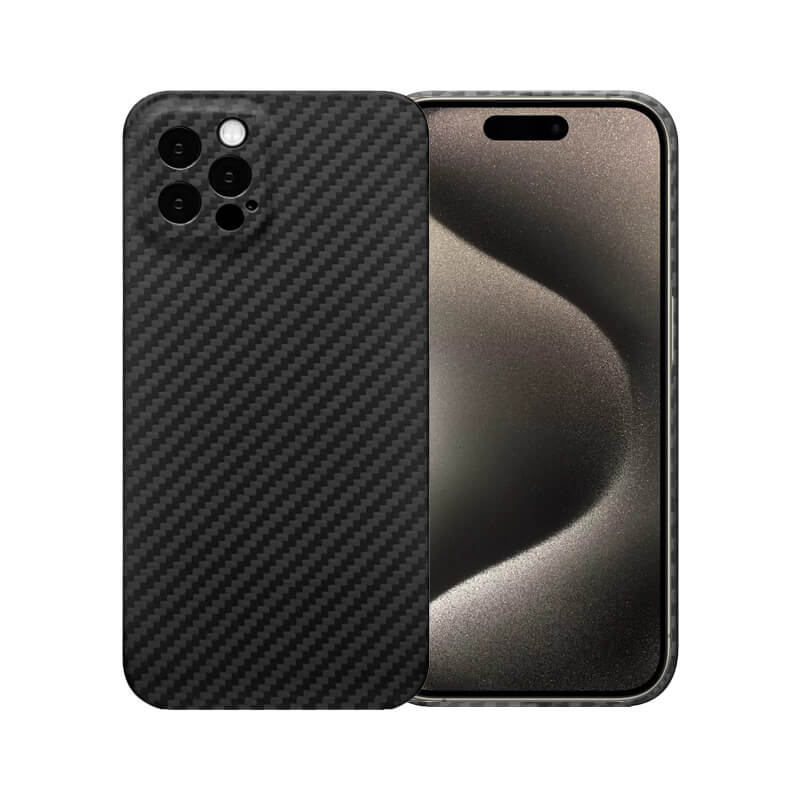
A premium, lightweight, and performance-inspired look.
Slim design, protects your iPhone without adding unnecessary bulk.
Built-in MagSafe magnets support convenient charging and accessories.
Precision fit provides easy access to buttons, ports, and cameras.
Raised edges help protect your screen and camera lenses from scratches.
Designed specifically for the iPhone 15 Pro for a precise fit.

7 Signs It’s Time to Replace Your Phone Case
Instead of counting the months since your last purchase, pay attention to these seven warning signs.
1. Visible Cracks or Structural Damage
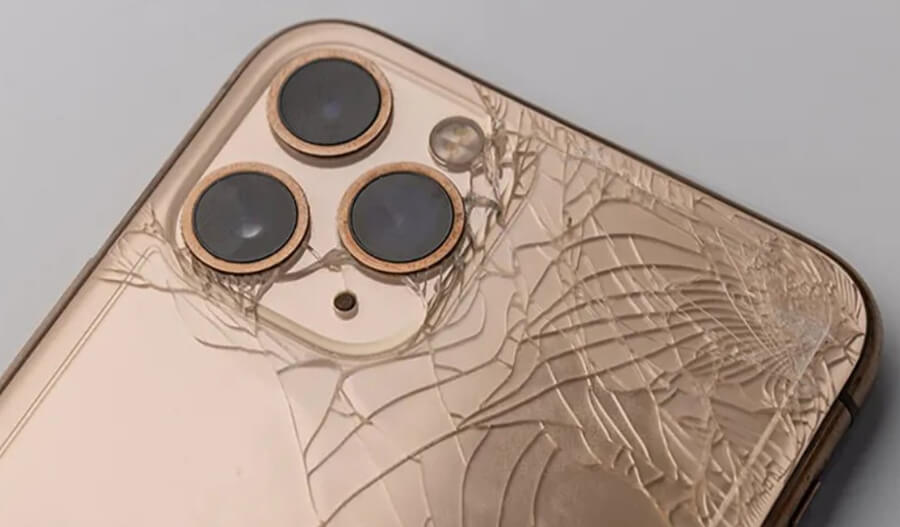
Cracks are among the clearest indications that a phone case may need replacing.
Pay particular attention to the corners, edges, and areas surrounding the camera opening. These locations can experience considerable stress when a phone is dropped or repeatedly removed from its case.
A small surface scratch is generally cosmetic. However, a structural crack can reduce the case’s ability to maintain its shape and protect the phone during another impact.
For rigid materials such as polycarbonate and carbon fiber composites, inspect damaged areas carefully. A crack in the outer finish does not always indicate damage to the entire structure, but deeper cracks deserve attention.
What to do: If you discover a crack that extends through a structural section, or a damaged corner that no longer provides adequate protection, replace the case.
2. Your Phone Case Has Become Loose
A phone case should fit securely around your device.
Over time, flexible materials such as silicone and TPU may stretch or become permanently deformed. Repeated installation, removal, heat exposure, and mechanical stress can contribute to changes in their dimensions.
A loose case creates several problems:
- The phone may move inside the case.
- Corners may become exposed.
- Dust and small particles can enter between the phone and case.
- The case may detach more easily during an accidental drop.
Check whether the corners remain firmly attached and whether the phone moves excessively inside the case.
What to do: If your case no longer fits properly and cannot be securely repositioned, replacing it is the safer choice.
3. The Corners and Edges Have Lost Their Protection
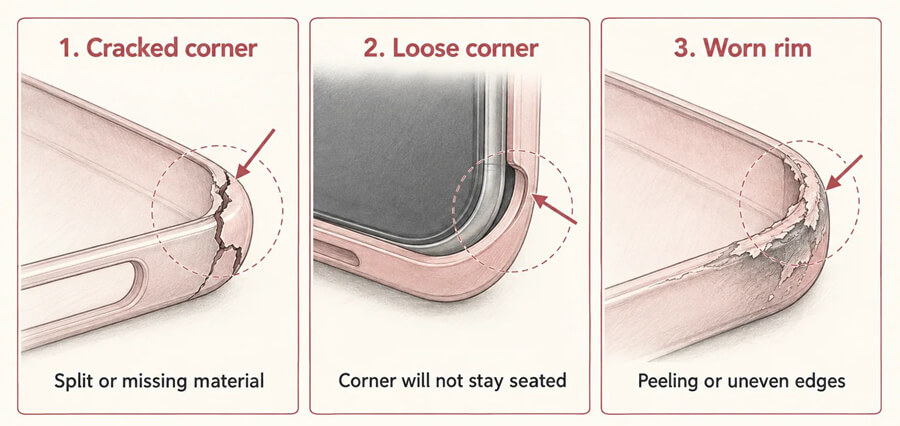
Corners are particularly important in phone-case design because they are common impact locations during accidental drops.
A well-designed case should maintain adequate coverage around the phone’s edges and corners. Some designs also incorporate raised lips to help keep the screen and camera lenses away from flat surfaces.
Repeated impacts can damage these protective areas.
Look for:
- Flattened or damaged corner sections.
- Broken protective lips.
- Deformed edges.
- Exposed areas around the camera.
- Missing pieces of protective material.
Remember that a phone case does not need to look completely broken to have lost some of its protective ability.
What to do: Replace the case if damage compromises the areas designed to protect your phone during everyday impacts.
4. The Material Is Peeling, Sticky, or Breaking Down
Different phone-case materials deteriorate in different ways.
Silicone may become less elastic or develop tears. TPU can experience discoloration, surface changes, or deformation. Leather may develop deep cracks or peeling.
Some of these changes are cosmetic, while others indicate a decline in material condition.
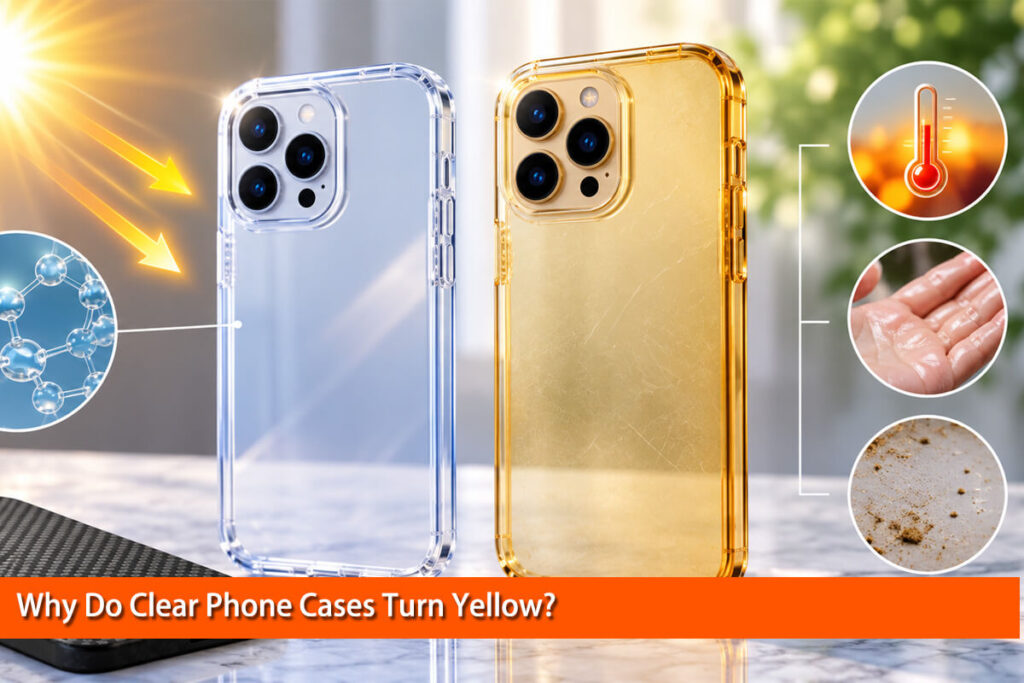
For example, a clear TPU case turning yellow does not automatically mean it has lost its impact protection. However, yellowing combined with brittleness, cracking, or permanent deformation is a stronger reason to replace it.
What to do: Pay attention to changes in flexibility, texture, and structural integrity rather than appearance alone.
5. The Case No Longer Protects Your Camera or Screen Properly
Modern smartphones have increasingly sophisticated camera systems, often with large lenses that extend beyond the rear surface.
This makes camera protection an important part of phone-case design.
Check whether the raised camera bezel still provides sufficient clearance when the phone is placed on a flat surface.
You should also inspect the front edges to make sure the screen remains adequately protected.
If the protective edges are worn down, broken, or deformed, the camera lenses and screen may become more vulnerable to scratches.
What to do: Replace a case when its camera or screen protection has been significantly compromised.
6. Buttons, Ports, or Magnetic Accessories No Longer Work Properly
A phone case should not interfere with normal device operation.
As a case becomes damaged or deformed, button covers may stop aligning correctly. Charging openings may become obstructed, and magnetic accessories may no longer attach securely.
This is particularly relevant if you regularly use MagSafe chargers, magnetic car mounts, or wireless charging accessories.
However, remember that charging problems are not always caused by an aging case. Charger condition, phone temperature, and accessory compatibility can also affect performance.
If your wireless charging becomes unreliable, test the phone without its case and compare the results.
For more information, see Oneou’s guide: Do Carbon Fiber MagSafe Phone Cases Work with Wireless Charging?.
What to do: Replace the case if physical damage prevents proper button operation, secure accessory attachment, or reliable device fitting.
7. Persistent Dirt, Odor, or Damage That Cleaning Cannot Fix
Your phone case comes into contact with your hands, clothing, bags, desks, and many other surfaces.
Over time, sweat, skin oils, dust, and other contaminants can accumulate, particularly around the corners and the area between the phone and case.
Sometimes a thorough cleaning is enough. However, persistent odors, embedded grime, damaged coatings, or deteriorating materials may indicate that replacement is more practical.
A 2018 study published in the journal Antimicrobial Resistance & Infection Control examined bacterial contamination on smartphone surfaces and found that the smartphone-case junction had significantly more contamination than the screen surface.
Read the scientific study: Evaluation of 6 Methods for Aerobic Bacterial Sanitization of Smartphones.
The practical lesson is simple: clean both the phone and the inside of its case, not just the visible exterior.
How Phone Case Material Affects Its Lifespan
Material selection is one of the biggest factors influencing how a phone case ages.
Different materials respond differently to heat, sunlight, moisture, mechanical stress, and repeated impacts.
Understanding these differences can help you choose a case that remains useful for longer.
Silicone Phone Cases
Silicone is popular because it offers flexibility, a comfortable grip, and a soft-touch surface.
However, silicone cases can accumulate dust and lint. Depending on the formulation and construction, repeated stretching and mechanical stress may also cause permanent deformation.
If a silicone case becomes loose, tears around the corners, or loses its original shape, replacement may be necessary.
TPU and Clear Plastic Cases
Thermoplastic polyurethane (TPU) is widely used in phone cases because it combines flexibility with useful mechanical properties.
Clear TPU cases are particularly popular because they allow the original phone design to remain visible.
Their main disadvantage is that some formulations gradually develop yellowing or other surface changes.
UV exposure, heat, oxidation, and environmental contact can all contribute to polymer aging.
However, discoloration alone does not necessarily mean that the case has stopped providing protection.
Polycarbonate Cases
Polycarbonate is a rigid thermoplastic known for its impact resistance and dimensional stability.
It is commonly used in hard-shell phone cases and hybrid designs.
Despite its useful mechanical properties, polycarbonate can still develop scratches, chips, and cracks under repeated mechanical stress.
Pay particular attention to corners and thin sections around the camera.
Leather Phone Cases
Leather offers a distinctive appearance and comfortable tactile experience.
Unlike synthetic materials, genuine leather naturally changes as it ages. It may develop a patina, become darker, or show marks from everyday handling.
These changes are not necessarily signs of failure.
However, deep cracking, peeling, damaged stitching, and significant structural deterioration indicate that replacement may be appropriate.
Apple also explains that leather cases naturally change appearance through use and exposure to skin oils and sunlight in its official cleaning and care instructions.
Carbon Fiber Phone Cases
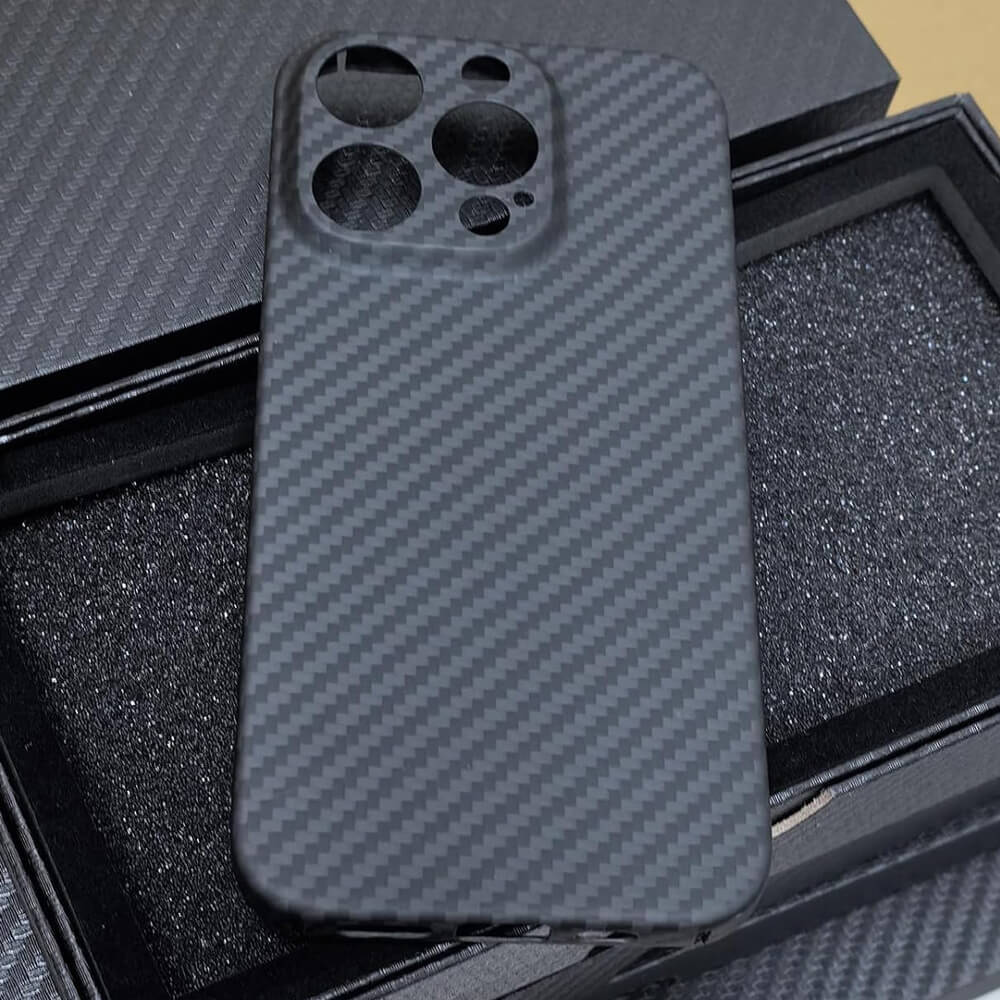
Carbon fiber is an interesting option for people who value lightweight construction, structural stiffness, and a premium appearance.
Unlike ordinary plastic, genuine carbon fiber composites consist of carbon fibers embedded in a resin matrix.
The fibers provide much of the structural reinforcement, while the resin holds the fibers together and transfers loads throughout the composite.
This combination offers an excellent strength-to-weight ratio and makes carbon fiber useful in aerospace, automotive, and other demanding engineering applications.
However, carbon fiber composites are not immune to aging.
A 2023 review published in the International Journal of Polymer Science, titled Aging Effects on the Mechanical Performance of Carbon Fiber-Reinforced Composites, examined how environmental conditions affect composite performance.
The researchers discussed several aging mechanisms, including:
- Thermal aging caused by elevated temperatures.
- Moisture-related degradation.
- UV radiation exposure.
- Chemical exposure.
- Microcracking and delamination.
An important engineering distinction is that the carbon fibers and the surrounding resin do not necessarily age in the same way.
Damage to the resin matrix or fiber-resin interface can eventually affect the performance of the complete composite.
For everyday phone cases, this means that construction quality, resin selection, surface protection, and manufacturing processes all matter.
A well-made carbon fiber phone case can remain a practical long-term option, but it should still be inspected for cracks, separation, and structural damage.
If you want to understand this material in more detail, read Oneou’s article: Benefits of Carbon Fiber Phone Cases: Strength, Weight & Protection.
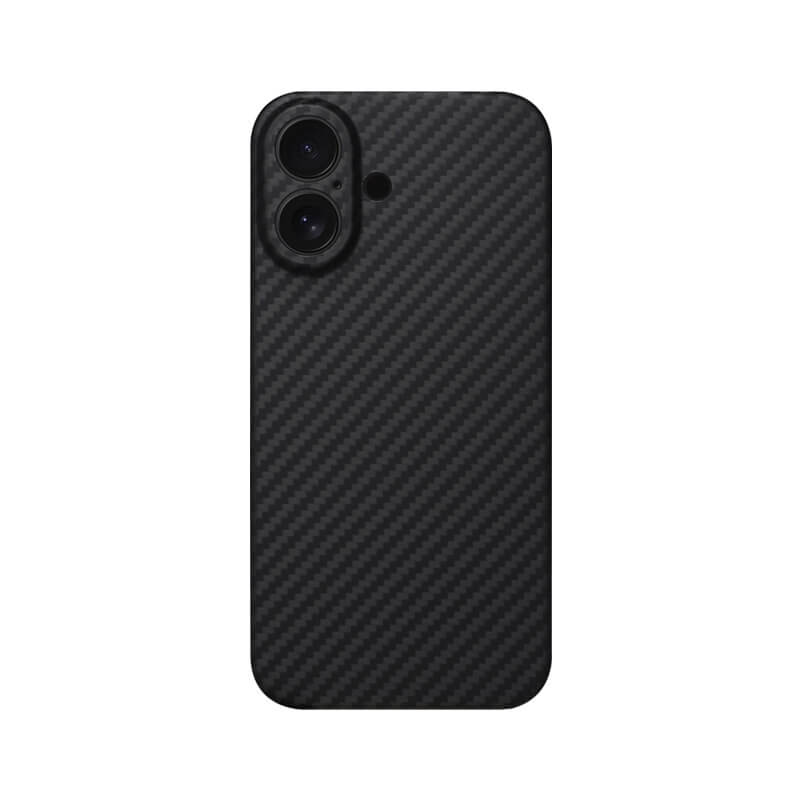
Strong MagSafe magnets ensure secure attachment.
Slim profile protects without adding unnecessary bulk.
Raised edges protect screen and camera.
Textured surface provides a secure grip.
Precise cutouts ensure easy everyday access.
Durable construction helps absorb everyday impacts.
Supports wireless charging without removing the case.
Does a Dirty Phone Case Mean You Need a New One?
Not necessarily.
It is important to distinguish between hygiene and structural condition.
A dirty phone case does not automatically need replacing. In many situations, proper cleaning is enough to restore a reasonable level of cleanliness.
Research has demonstrated that smartphones and their cases can carry bacterial contamination. However, finding bacteria on a phone does not automatically mean that the device presents a serious health risk.
The appropriate response is regular cleaning rather than unnecessary replacement.
How Can You Tell Whether Cleaning Is Enough?
| Condition | Recommended action |
|---|---|
| Dust and fingerprints | Clean the case |
| Light surface stains | Try material-appropriate cleaning |
| Minor scratches | Continue using if protection is unaffected |
| Persistent unpleasant odor | Clean thoroughly; replace if it remains |
| Peeling or deteriorating surface | Consider replacement |
| Structural cracks | Replace the case |
| Loose or damaged corners | Replace the case |
For most users, regularly cleaning the case and the phone’s contact surfaces is a more sensible approach than buying a new case simply because it has been used for several months.
How Often Should You Clean Your Phone Case?
Cleaning frequency and replacement frequency are two different things.
Even a durable phone case needs regular maintenance.
For everyday users, a practical cleaning routine looks like this:
Daily maintenance
Wipe away visible fingerprints, dust, and surface dirt when necessary. Pay attention to areas that frequently come into contact with your hands.
Weekly cleaning
Remove your phone from the case and clean both the interior and exterior. This helps remove accumulated dust, skin oils, and small particles.
After heavy exposure
Clean your case when it has been exposed to sweat, outdoor dirt, makeup, or other contaminants.
The cleaning method should always match the material.
For example, Apple recommends removing the iPhone before cleaning silicone, clear, and TPU cases. It suggests using a soft, slightly damp, lint-free cloth and warns against household cleaners, solvents, ammonia, and abrasive products.
Read Apple’s official iPhone case cleaning instructions before using cleaning products.
For leather and other specialized materials, follow the manufacturer’s specific care recommendations.
How to Make Your Phone Case Last Longer
Replacing a phone case when necessary is important, but good maintenance can also extend its useful life.
Here are five practical habits.
1. Avoid excessive heat and direct sunlight
Prolonged exposure to high temperatures and intense sunlight can accelerate the aging of many polymers, coatings, adhesives, and composite resin systems.
Avoid leaving your phone in a hot car or exposing the case to unnecessary heat.
2. Use suitable cleaning products
Do not assume that every cleaning solution is safe for every material.
Aggressive solvents and abrasive cleaners can damage surface finishes and protective coatings.
3. Remove your case carefully
Repeatedly bending and twisting a case during installation or removal can place unnecessary stress on its corners and edges.
Follow the manufacturer’s recommended installation method.
4. Keep the inside of the case clean
Small particles trapped between the case and phone can cause scratches through repeated movement.
Remove the case periodically and clean both surfaces.
5. Choose a quality case from the beginning
Material quality, manufacturing precision, construction, and fit all influence long-term performance.
A case should not only look attractive when new. It should also maintain its essential protective functions during everyday use.
Is It Worth Investing in a More Durable Phone Case?
If you replace inexpensive phone cases frequently, investing in a better-constructed product may be worth considering.
The key is understanding what makes a case durable.
It is not simply about choosing the hardest material or the thickest design. A well-engineered phone case needs an appropriate balance between stiffness, toughness, thickness, weight, fit, and impact management.
This is one reason carbon fiber composites are attractive in premium phone accessories.
A Oneou carbon fiber phone case is designed for consumers who appreciate lightweight construction, a slim profile, and the distinctive appearance of carbon fiber.
Carbon fiber’s high stiffness-to-weight characteristics make it particularly interesting for people who want a more refined alternative to bulky traditional cases.
However, the complete construction still matters. The resin system, case geometry, protective edges, and manufacturing quality all influence the finished product’s performance.
If you use MagSafe accessories, make sure the specific model you choose is designed for the relevant magnetic and wireless-charging functions.
You can explore Oneou’s carbon fiber phone case collection to find a model designed for your iPhone.
For more information about material selection, see our guide: What’s the Best Phone Case Material? A Complete Comparison.
Final Thoughts: When Should You Actually Replace Your Phone Case?
So, how often should you change your phone case?
The most accurate answer is that you should replace it when it can no longer provide reliable protection, rather than following an arbitrary replacement schedule.
Inspect your case every few months and pay particular attention to cracks, loose corners, damaged edges, and changes in material condition.
Regular cleaning and proper maintenance can help extend its useful life. Choosing a well-constructed case made from suitable materials can also reduce unnecessary replacements.
Whether you prefer silicone, TPU, polycarbonate, leather, or carbon fiber, the best phone case is one that continues to fit properly and protect your device throughout everyday use.
Frequently Asked Questions
1. Can I use the same phone case for 2 or 3 years?
Yes. A good-quality phone case can remain usable for two or three years if it maintains its shape, fits securely, and has no significant structural damage. Inspect it regularly rather than replacing it simply because of its age.
2. Do phone cases lose their protection over time?
They can. Repeated impacts, material aging, deformation, and damage to protective edges may reduce a case’s ability to protect a phone. However, the rate of deterioration depends on its material and construction.
3. Should I replace my phone case after dropping my phone?
Not necessarily. A minor drop does not automatically mean the case needs replacing. However, inspect the corners, edges, and internal structure for cracks or deformation. If the case has sustained significant impact damage, replacement is recommended.
4. How often should I replace a silicone phone case?
There is no fixed replacement interval. Replace it when you notice permanent stretching, tearing, reduced grip, or a loose fit. A silicone case that remains in good condition can continue to be used.
5. Do clear phone cases need to be replaced when they turn yellow?
Not always. Yellowing can be a cosmetic result of material aging and environmental exposure. If the case remains flexible, structurally sound, and properly fitted, it may still be usable. Replace it if discoloration is accompanied by cracking, brittleness, or deformation.
6. How long do carbon fiber phone cases last?
There is no scientifically established universal lifespan for carbon fiber phone cases. Their durability depends on the carbon fiber reinforcement, resin matrix, manufacturing quality, surface protection, and usage conditions. A properly constructed case can remain useful for years, provided it is maintained and inspected regularly.
7. Is it better to clean or replace an old phone case?
If the case is simply dirty, cleaning is usually sufficient. If it has structural cracks, loose corners, damaged protective edges, or deteriorating materials, replacement is the better option.