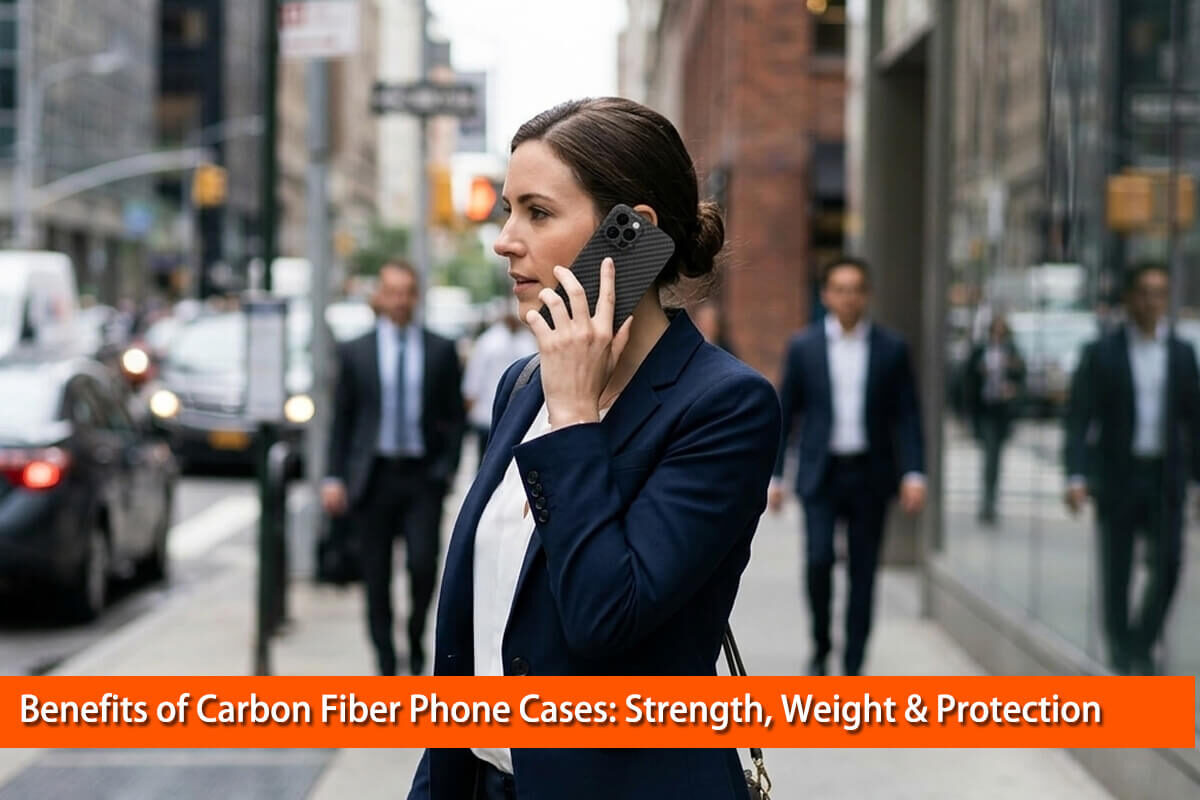
Your smartphone is one of the most valuable items you carry every day. It travels in your pocket, sits on your desk, goes into your bag, and sometimes slips from your hand. A good phone case should protect your device without making it unnecessarily thick, heavy, or uncomfortable to use.
This is where carbon fiber becomes an interesting material choice.
Carbon fiber is widely used in aerospace, automotive engineering, motorsports, sporting equipment, and other industries where low weight and high mechanical performance matter. Its combination of stiffness, strength-to-weight ratio, and distinctive appearance has also made it popular in premium phone accessories.
But are carbon fiber phone cases really worth buying? Do they provide better protection than traditional cases? And what should you know before choosing one?
As a carbon fiber materials engineer, I would begin with an important principle: the performance of a phone case depends on its complete construction, not just the material name printed on the product page.
In this article, we will explore the genuine benefits of carbon fiber phone cases, explain their limitations, compare them with other materials, and help you decide whether a carbon fiber case is right for your phone.
What Is a Carbon Fiber Phone Case?
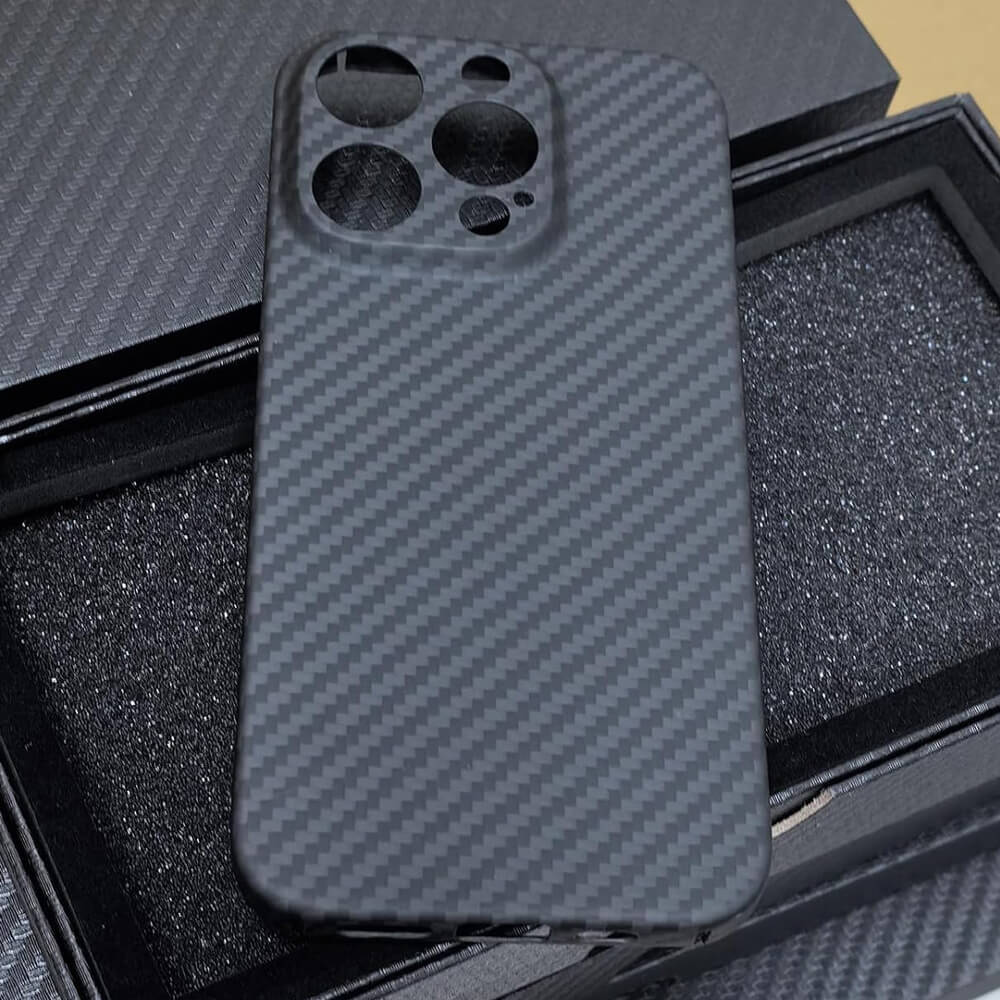
Before discussing the benefits, it is useful to understand what carbon fiber actually is.
Carbon fiber consists of extremely thin carbon filaments. These filaments can be arranged into woven fabrics or other reinforcement patterns and combined with a resin matrix to create a carbon fiber composite.
The carbon fibers provide much of the structural strength and stiffness. The resin holds the fibers together, transfers loads between them, and helps form the finished component.
This combination is known as carbon fiber reinforced polymer, or CFRP.
The important point is that carbon fiber is not simply black plastic with a woven pattern. A genuine carbon fiber composite contains actual carbon reinforcement.
However, the phone case market includes several different materials that can look similar:
- Genuine carbon fiber composite
- Carbon-fiber-textured plastic
- TPU with a carbon-fiber pattern
- Polycarbonate with a carbon-fiber appearance
- Aramid fiber composite
- Hybrid fiber constructions
These materials can have very different mechanical, electrical, and durability characteristics.
If you are buying a carbon fiber phone case, always check the product specifications. A woven appearance alone does not prove that the case contains genuine carbon fiber.

1. Excellent Strength-to-Weight Ratio
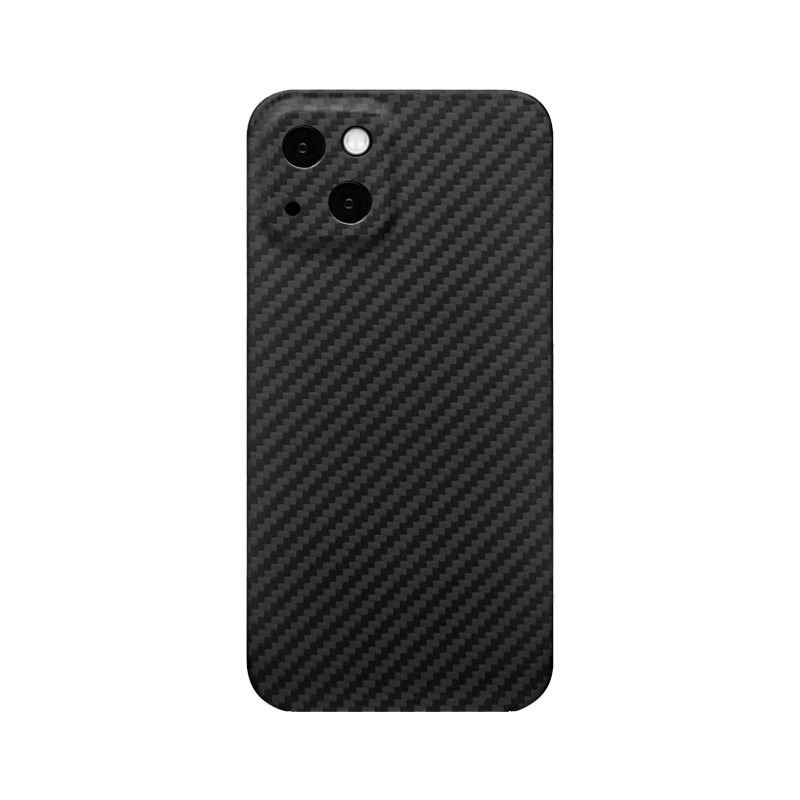
One of the most recognized advantages of carbon fiber is its excellent strength-to-weight ratio.
In engineering, strength is only part of the equation. Weight also matters.
A material may be strong, but if it is extremely heavy, it may not be suitable for applications where portability and efficiency are important.
Carbon fiber composites are attractive because they can provide high mechanical performance while keeping weight relatively low. This is one reason they are used in aircraft components, performance vehicles, bicycles, and other lightweight structures.
For a phone case, this property can be useful in several ways.
A well-designed carbon fiber shell may provide structural rigidity without requiring excessive material thickness. This can help manufacturers create a case that feels solid while remaining relatively light.
However, there is an important distinction:
Carbon fiber is not automatically stronger than every other material in every situation.
Its performance depends on the fiber type, fiber orientation, resin system, thickness, and manufacturing quality.
A carbon fiber composite designed well for one application may perform differently from another composite made with a different construction.
For phone case buyers, the practical benefit is not simply the word “strong.” It is the possibility of achieving a useful combination of structural performance and low weight.
2. Lightweight Design for Everyday Comfort
A phone case should protect your device, but it should not make carrying the phone uncomfortable.
This is especially important with larger smartphones, which are already heavier than many older models.
A thick protective case can add noticeable weight. After carrying it all day, that additional weight may become frustrating.
Carbon fiber is attractive because it can provide a lightweight structural solution.
A carefully designed carbon fiber phone case can add relatively little weight while maintaining a rigid shell around the device.
For everyday users, this may mean:
- Less weight in your pocket
- A more comfortable grip
- Easier handling with one hand
- Less bulk inside a bag
- A phone that retains more of its original feel
Of course, the actual weight depends on the case design. A carbon fiber case with thick protective layers, metal components, or additional reinforcement may weigh more than an ultra-thin composite shell.
That is why buyers should compare the actual product weight rather than relying only on material marketing.
3. Slim Profile Without Excessive Bulk
Many people want phone protection but dislike bulky cases.
This is one of the reasons slim carbon fiber phone cases have become popular.
Carbon fiber composites can provide high stiffness in relatively thin structures. In the right design, this allows manufacturers to create a protective shell without adding the same amount of bulk as some thicker cases.
A slim case can be particularly useful for people who:
- Carry their phone in tight pockets
- Prefer the original shape of their smartphone
- Use magnetic stands or car mounts
- Dislike thick edges around the screen
- Want a premium accessory that feels minimal
However, we should be precise about what “slim” means.
A thin case is not automatically a rugged case.
There is a difference between a case designed to maintain a lightweight, low-profile structure and one designed to absorb substantial impact energy during serious drops.
A thin carbon fiber case may be an excellent choice for everyday protection and handling. But if you frequently drop your phone from significant heights, you should evaluate the case’s corner protection, impact design, and testing rather than choosing based on thickness alone.
4. High Stiffness Helps Maintain Structural Shape
Strength and stiffness are related, but they are not the same property.
Strength describes how much load a material can withstand before failure.
Stiffness describes how strongly it resists bending or deformation.
Carbon fiber is particularly valued for its high stiffness-to-weight characteristics.
In a phone case, this can help the shell maintain its shape during normal handling.
For example, when you place your phone in a pocket or bag, the case may experience pressure from surrounding objects. A rigid composite structure can resist deformation and help maintain its geometry.
This is one reason carbon fiber is widely used in engineering applications where controlling movement and deformation is important.
However, stiffness should not be confused with impact absorption.
A stiff material can resist bending, but it does not necessarily absorb energy in the same way as a flexible material such as TPU.
For phone cases, the best design depends on the intended use. A rigid carbon fiber shell may provide structural support, while softer materials may be used in other designs to manage impact energy.
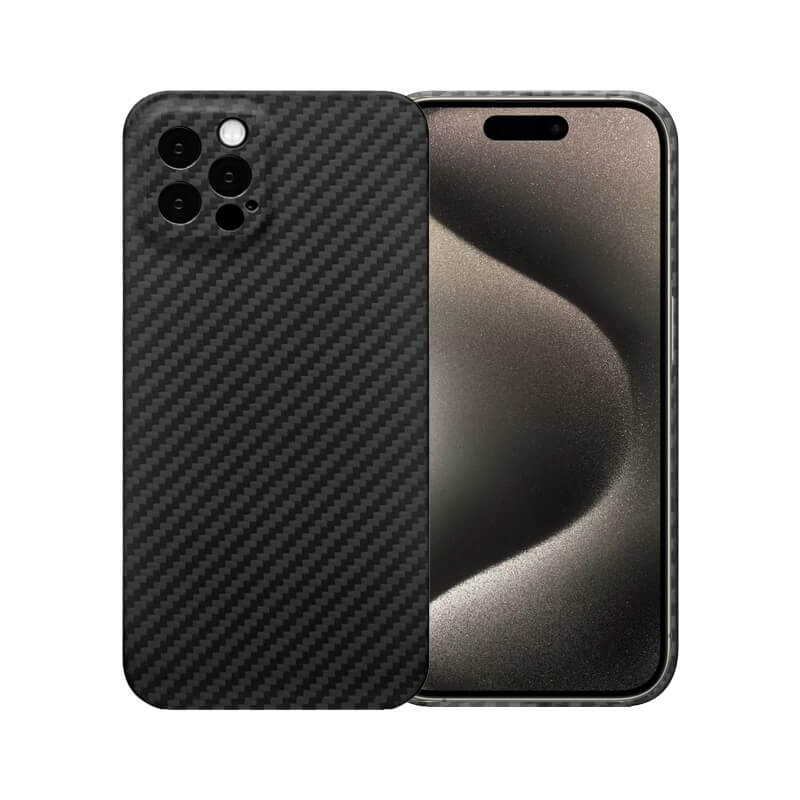
A premium, lightweight, and performance-inspired look.
Slim design, protects your iPhone without adding unnecessary bulk.
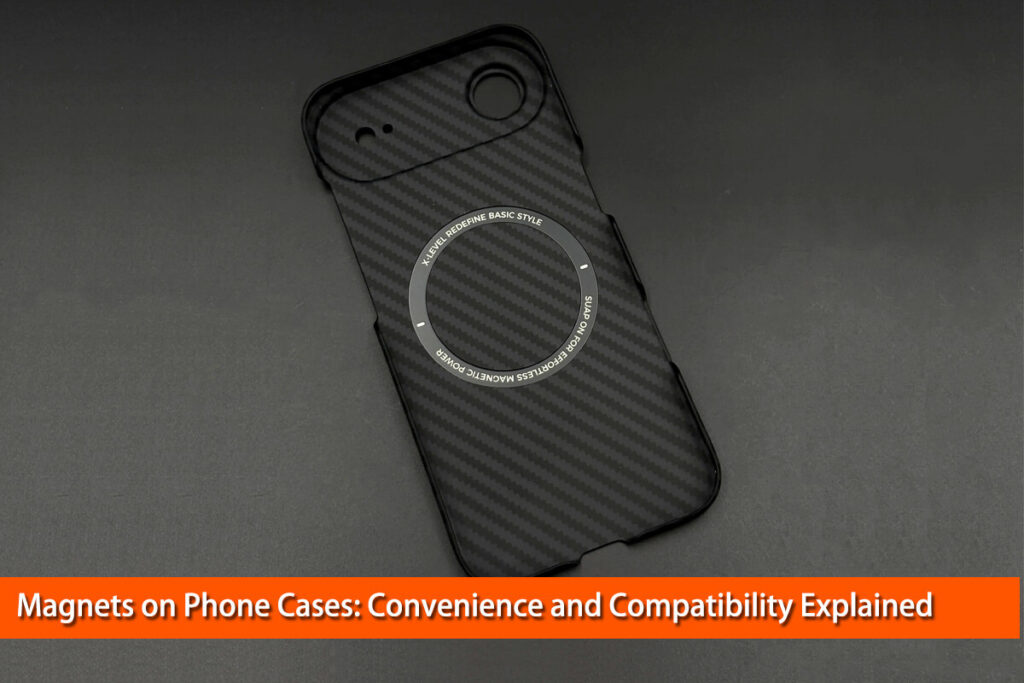
Built-in MagSafe magnets support convenient charging and accessories.
Precision fit provides easy access to buttons, ports, and cameras.
Raised edges help protect your screen and camera lenses from scratches.
Designed specifically for the iPhone 15 Pro for a precise fit.
5. Durability for Everyday Use
A phone case experiences repeated handling throughout its life.
It may be placed on a desk, slid across a table, carried in a pocket, or stored in a bag with other objects.
Over time, these repeated interactions can affect the appearance and condition of the case.
Carbon fiber composites are valued in engineering for their mechanical durability and resistance to fatigue under suitable loading conditions.
For a phone case, a well-made composite shell can provide a durable structural layer for everyday use.
However, the durability of a finished case depends on more than the carbon fibers.
The following components also matter:
- Resin system
- Surface coating
- Adhesives
- Edge materials
- Manufacturing quality
- Case geometry
- Exposure to abrasion and chemicals
A case with genuine carbon fiber may still develop scratches or surface wear if its coating is not designed for daily handling.
Likewise, a case with a carbon-fiber appearance may have a different durability profile depending on whether the pattern is printed, molded, or created using an actual composite layer.
This is why it is better to evaluate the complete product rather than assuming that all carbon fiber cases will age in exactly the same way.
6. Premium Appearance and Distinctive Texture
Not every benefit of carbon fiber is mechanical.
For many buyers, appearance is an important part of the purchasing decision.
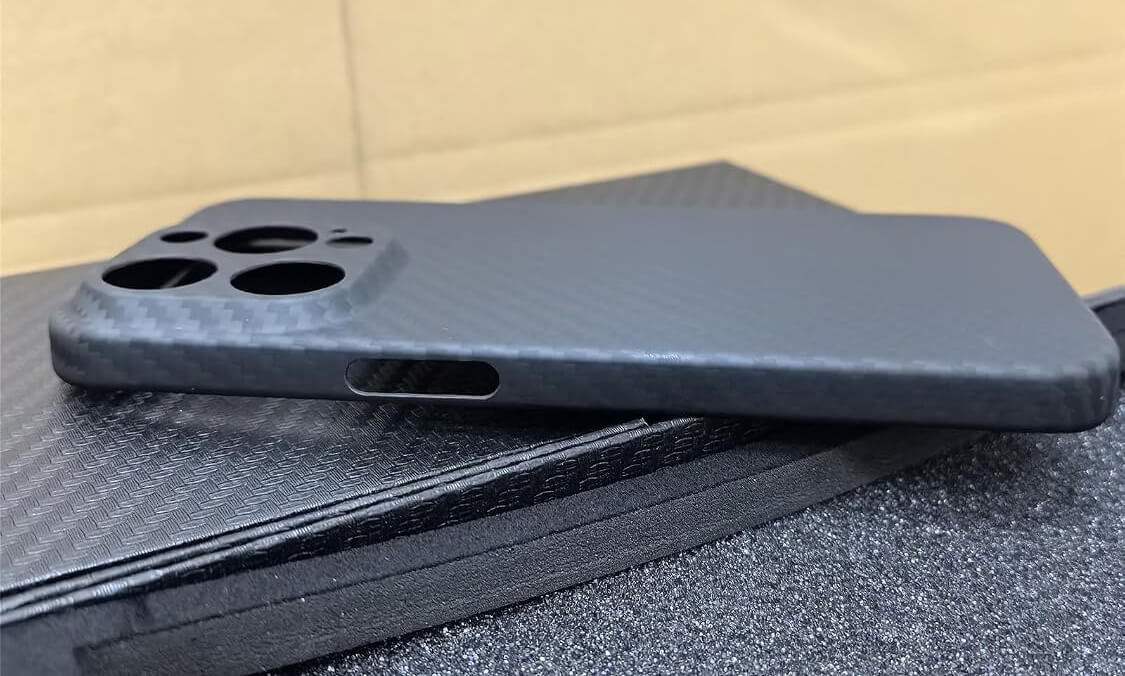
Carbon fiber has a distinctive woven pattern that is strongly associated with performance cars, motorsports, aerospace engineering, and high-end sporting equipment.
This gives carbon fiber phone cases a technical and performance-oriented appearance that is different from ordinary silicone or plastic cases.
Depending on the finish, carbon fiber can look:
- Matte and understated
- Glossy and luxurious
- Sporty and technical
- Dark and professional
- Modern and minimalist
The woven pattern can also create a subtle sense of depth and texture.
For people who prefer premium accessories, this appearance may be one of the biggest reasons to choose carbon fiber.
A well-finished carbon fiber phone case can look refined without requiring bright colors, large logos, or excessive decoration.
This makes it suitable for users who want their phone accessory to feel more like a precision-engineered product than a generic protective cover.
7. Dimensional Stability
Carbon fiber also has interesting thermal properties.
Many carbon fiber composites have relatively low thermal expansion in the direction of the fibers. This means they can experience less dimensional change with temperature than some traditional materials.
Dimensional stability is important in precision engineering because excessive expansion and contraction can affect the shape and fit of a component.
For a phone case, this property may contribute to maintaining the geometry of the composite structure under normal environmental temperature changes.
However, this benefit should not be exaggerated.
A carbon fiber phone case is not automatically a thermal management system.
It would be inaccurate to claim that carbon fiber always keeps a phone cooler or prevents overheating.
Smartphone temperature depends on many factors, including:
- Processor workload
- Battery charging
- Ambient temperature
- Internal phone design
- Case thickness
- Material construction
- Airflow
Carbon fiber’s thermal properties are interesting from a materials-engineering perspective, but they should not be confused with active cooling performance.
8. Resistance to Corrosion and Environmental Wear
Another advantage of carbon fiber composites is their resistance to corrosion.
Unlike steel, carbon fiber itself does not rust.
Carbon fiber reinforced polymers can also provide good resistance to many environmental conditions, depending on the resin system and finished construction.
This is one reason composite materials are used in automotive, marine, aerospace, and industrial applications.
For phone case users, the practical benefit is that a carbon fiber composite can provide a durable structural material without the rusting concerns associated with ordinary steel.
However, it is important to distinguish between the carbon fiber and the complete phone case.
A finished case may contain:
- Carbon fiber
- Resin
- Adhesives
- Magnets
- Metal inserts
- Surface coatings
- Other structural materials
These components may have different environmental resistance.
Therefore, it is more accurate to say that carbon fiber provides a corrosion-resistant structural foundation rather than claiming that every component of every carbon fiber case is corrosion-proof.
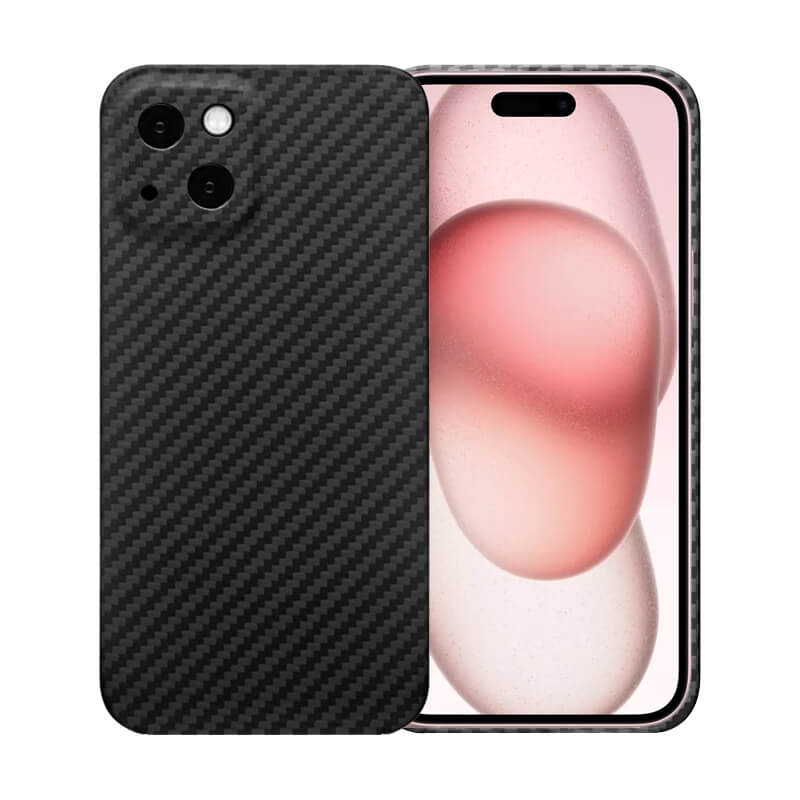
Lightweight design, keeps your iPhone comfortable to carry.
Precision fit is designed specifically for iPhone 15 Plus.
Support seamless MagSafe charging.
Slim profile, protect your iPhone without unnecessary bulk.
Durable construction, no worry about the scratches.
Easy access to buttons, speakers, cameras, and USB-C port.
Does a Carbon Fiber Phone Case Protect Against Drops?
This is one of the most important questions buyers should ask.
The short answer is:
A carbon fiber phone case can provide useful structural protection, but carbon fiber alone does not guarantee maximum drop protection.
There is a common misunderstanding that because carbon fiber is strong and stiff, a carbon fiber case must automatically be better at absorbing every impact.
That is not how impact engineering works.
When a phone falls, the phone and case must manage the energy generated during the impact.
Different materials manage that energy in different ways.
A rigid carbon fiber shell can provide structural support and resist deformation. Softer materials, such as TPU or silicone, can deform and absorb energy during impact.
The final performance depends on the complete case design.
Important factors include:
- Corner protection
- Raised screen edges
- Camera protection
- Case thickness
- Fiber orientation
- Resin system
- Internal structure
- Material combinations
- Fit between the case and phone
A well-designed carbon fiber case can be highly useful for everyday protection. But a thin rigid shell should not automatically be considered equivalent to a thick, multi-layer rugged case.
If drop protection is your main priority, look for evidence of actual testing and examine how the case protects the corners, edges, screen, and camera.
Carbon Fiber vs. Other Phone Case Materials
Different materials offer different combinations of weight, stiffness, flexibility, and impact performance.
Here is a general comparison.
| Property | Carbon Fiber | Aramid Fiber | TPU | Silicone | Polycarbonate |
|---|---|---|---|---|---|
| Lightweight potential | High | High | Moderate | Moderate | High |
| Stiffness | High | Moderate–high | Moderate | Low | High |
| Flexibility | Low | Moderate | High | High | Low |
| Slim design potential | High | High | Good | Moderate | Good |
| Shock absorption | Design-dependent | Design-dependent | Good potential | Good potential | Design-dependent |
| Premium appearance | High | High | Moderate | Moderate | Moderate |
| Electrical conductivity | Yes | No | No | No | No |
| Corrosion resistance | High for the carbon composite | High | High | High | High |
This table describes general material characteristics, not guaranteed performance for every finished phone case.
The actual result depends on the thickness, construction, manufacturing process, and design of the product.
Carbon Fiber vs. Aramid Fiber
Carbon fiber and aramid fiber are sometimes confused because both can produce thin, woven phone cases with a premium technical appearance.
However, they are different materials.
Carbon fiber
Carbon fiber is valued for:
- High stiffness
- High strength-to-weight ratio
- Low weight
- Electrical conductivity
- Distinctive woven appearance
- Dimensional stability in suitable composite designs
Aramid fiber
Aramid fiber is known for:
- High tensile strength
- Low density
- Toughness
- Lightweight construction
- Electrical insulation
- Good suitability for thin composite structures
The difference is important because modern smartphones depend on wireless functions such as cellular communication, Wi-Fi, GPS, NFC, and magnetic accessories.
Carbon fiber’s electrical conductivity can create design challenges around these functions.
Aramid fiber is electrically insulating, which can make it attractive for cases where wireless compatibility is a major priority.
Neither material is universally better.
The right choice depends on what you value most:
- Structural stiffness
- Lightweight construction
- Toughness
- Wireless compatibility
- Appearance
- Price
- Overall case design
The most important thing is to know which material you are actually buying.
Related reading: Carbon Fiber vs Aramid Phone Cases: The Ultimate Comparison
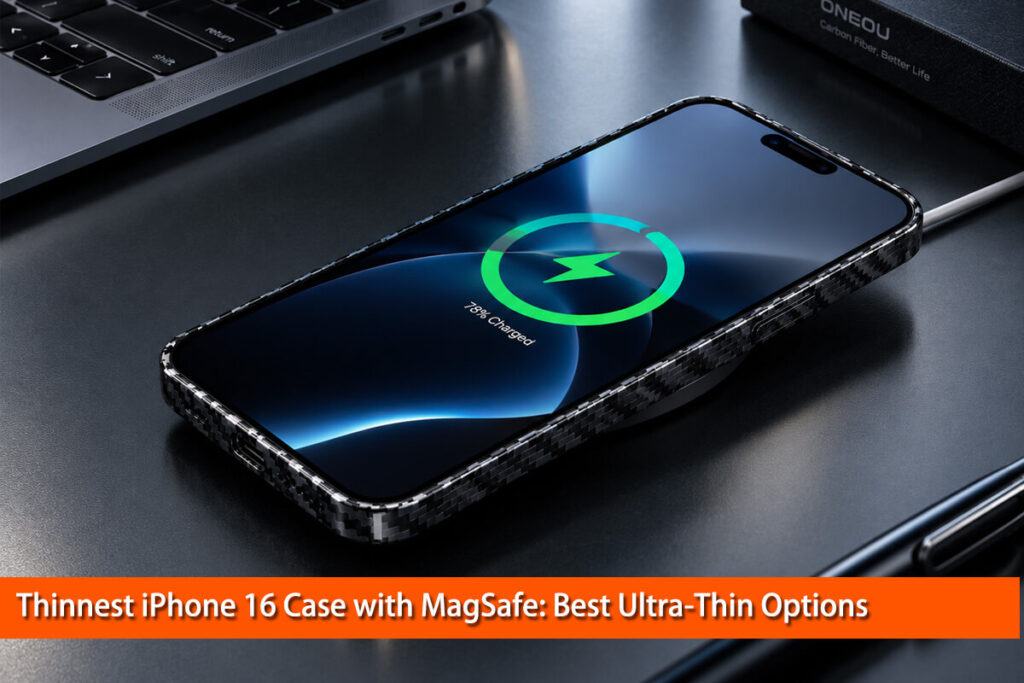
Does Carbon Fiber Affect MagSafe or Wireless Charging?
This topic deserves special attention for modern phone users.
Carbon fiber is electrically conductive. That is a useful property in many engineering applications, but it also means that genuine carbon fiber must be carefully considered when used around wireless electronics.
A carbon fiber layer can influence electromagnetic behavior depending on its construction, thickness, shape, and position relative to the phone’s antennas and charging components.
However, it would be inaccurate to say that every carbon fiber phone case will block signals or prevent wireless charging.
The effect depends on the finished case.
Important factors include:
- Carbon fiber coverage
- Material thickness
- Openings in the structure
- Position of the carbon fiber
- Magnetic components
- Phone model
- Wireless charging design
This is why MagSafe compatibility should be treated as a property of the complete case, not simply the material.
If you use MagSafe chargers, wallets, stands, or car mounts, choose a case that has been specifically designed and tested for those functions.
Do not assume that a case is compatible simply because it is thin or advertised as carbon fiber.
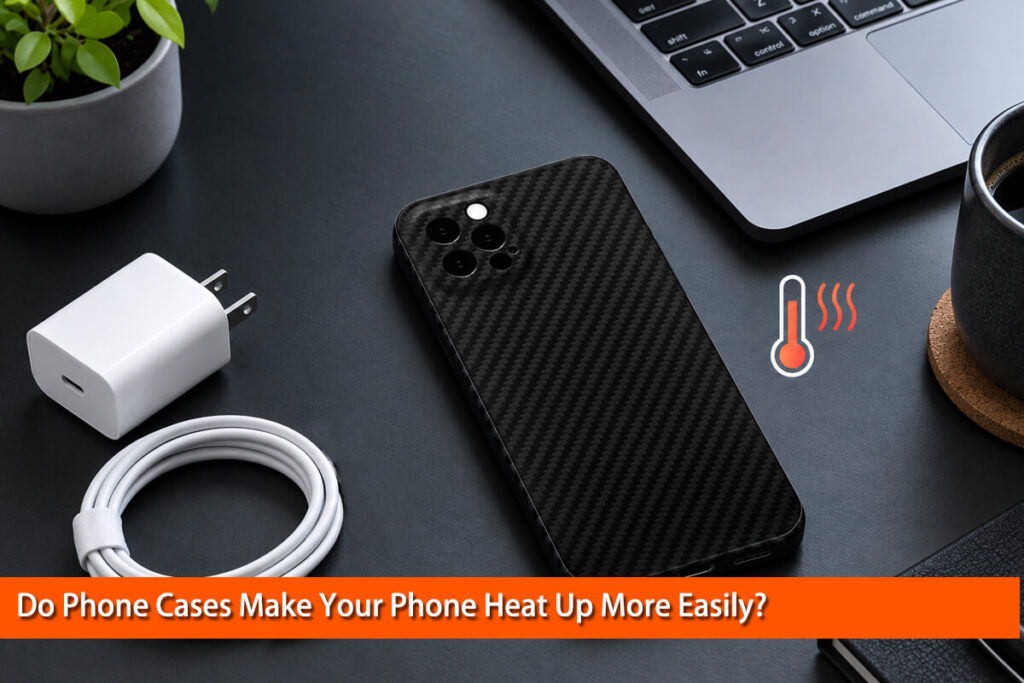
Does Carbon Fiber Make a Phone Run Cooler?
This is a common question, and it deserves a clear answer.
A carbon fiber phone case should not automatically be considered a cooling device.
Carbon fiber has interesting thermal properties, including relatively high thermal conductivity in certain directions and low thermal expansion in suitable configurations.
But that does not mean a carbon fiber case will automatically reduce smartphone temperature.
A phone’s temperature depends on:
- Processor activity
- Battery charging
- Ambient temperature
- Internal thermal design
- Case construction
- Airflow
- Software and workload
A thin case may have a different thermal effect from a thick case, but the material name alone does not tell you how the finished product will behave.
If cooling is your primary concern, evaluate the actual case design and manufacturer testing rather than relying on general claims about carbon fiber.
Potential Drawbacks of Carbon Fiber Phone Cases
Carbon fiber offers several attractive properties, but it also has limitations.
Understanding these limitations helps buyers make a better decision.
1. Higher Price
Genuine carbon fiber composites can cost more than basic plastic, TPU, or silicone.
The material itself may require more specialized manufacturing, finishing, and quality control.
A higher price does not automatically guarantee better protection, but it may reflect the material, construction, and manufacturing process.
2. Limited Flexibility
Carbon fiber composites are generally much stiffer than soft silicone or TPU.
This can be an advantage for structural rigidity, but it may also make the case less flexible during installation or removal.
If you prefer a case that bends easily around your phone, a rigid carbon fiber construction may feel different.
3. Impact Performance Depends on Design
Carbon fiber is strong and stiff, but stiffness is not the same as impact absorption.
A case designed primarily for low weight and thinness may not provide the same drop protection as a thick, multi-layer rugged case.
Always evaluate the complete case rather than relying only on the material name.
4. Wireless Compatibility Requires Careful Engineering
Because carbon fiber is electrically conductive, it must be carefully considered around wireless charging and magnetic accessories.
This does not mean every carbon fiber case will have problems.
It means compatibility should be tested and verified for the actual finished product.
5. Not Every Carbon Fiber Case Contains Genuine Carbon Fiber
Some products use carbon-fiber patterns on ordinary plastic materials.
These cases may still be useful, but they should not be confused with genuine carbon fiber composites.
If genuine carbon fiber is important to you, check the specifications and ask the manufacturer about the construction.
How to Choose a Good Carbon Fiber Phone Case
When choosing a carbon fiber phone case, look beyond the marketing language.
Here are the questions I recommend asking.
1. Is it genuine carbon fiber?
Check the material specifications.
A carbon-fiber pattern does not automatically mean that the case contains carbon fiber.
2. What type of construction is used?
Look for information about the shell, laminate, resin, and other structural materials.
3. How much does it weigh?
Compare the actual product weight rather than relying on the phrase “lightweight.”
4. How thick is the case?
A thin case may be ideal for everyday use, but thickness alone does not determine drop protection.
5. How are the corners protected?
Corners are important during drops. Check whether the case provides reinforcement or additional protective material.
6. Are the screen and camera edges raised?
A good case should consider protection against direct contact with surfaces.
7. Is MagSafe supported?
If you use magnetic accessories, confirm compatibility with your exact phone model.
8. Does wireless charging work?
Look for manufacturer information or actual product testing.
9. What materials are used around the edges?
Some cases use a rigid carbon fiber back with other materials around the perimeter.
The edge construction can affect comfort, grip, and protection.
10. Does the manufacturer provide a warranty?
A clear warranty can provide useful information about the manufacturer’s confidence in its product.
Who Should Consider a Carbon Fiber Phone Case?
A carbon fiber phone case may be a good fit for people who:
- Dislike thick, heavy phone cases
- Prefer lightweight materials
- Want a slim structural shell
- Appreciate premium technical design
- Like automotive or motorsport-inspired aesthetics
- Want a distinctive woven texture
- Care about material engineering
- Prefer an understated, professional appearance
It may be less suitable for someone whose only priority is maximum shock absorption from frequent high-impact drops.
For that user, a thick multi-layer rugged case may be more appropriate.
The important point is that there is no universally perfect phone case.
The best choice depends on how you use your phone and what you value most.
Frequently Asked Questions
Are carbon fiber phone cases actually strong?
Yes. Carbon fiber composites can provide high strength and stiffness relative to their weight. However, the performance of a finished phone case depends on fiber type, orientation, resin, thickness, and construction.
Are carbon fiber phone cases lightweight?
They can be. Carbon fiber is valued for its strength-to-weight and stiffness-to-weight characteristics. The actual weight depends on the complete case design.
Are carbon fiber phone cases durable?
A well-made carbon fiber composite can provide a durable structural material for everyday use. Surface durability also depends on the resin, coating, and other components.
Do carbon fiber phone cases protect against drops?
They can provide structural protection, but carbon fiber alone does not guarantee superior impact absorption. Corner design, thickness, and other materials are important.
Is carbon fiber better than aramid fiber?
Neither is universally better. Carbon fiber emphasizes stiffness and structural rigidity, while aramid fiber offers a different combination of toughness, low weight, and electrical insulation.
Does carbon fiber affect MagSafe?
It can create design challenges because carbon fiber is electrically conductive. Compatibility depends on the complete case construction and should be verified for the specific product.
Can you wirelessly charge through a carbon fiber case?
Wireless charging compatibility depends on the case’s material arrangement, thickness, and construction. Check the manufacturer’s specifications and testing rather than assuming compatibility.
Does a carbon fiber case make a phone overheat?
Not automatically. Smartphone temperature depends on many factors, including workload, charging, ambient temperature, internal design, and case construction.
Are all carbon fiber phone cases made from real carbon fiber?
No. Some cases use carbon-fiber patterns on plastic or other materials. Check the specifications if genuine carbon fiber matters to you.
Are carbon fiber phone cases worth the price?
They can be worth considering if you value lightweight construction, stiffness, slim design, premium appearance, and genuine composite materials. Whether the price is justified depends on the complete product and your priorities.
Final Thoughts: Are Carbon Fiber Phone Cases Worth It?
Carbon fiber is one of the most interesting materials available for premium phone accessories.
Its combination of low weight, high stiffness, strength-to-weight performance, distinctive appearance, and useful environmental properties explains why it is widely used in demanding engineering applications.
For phone cases, these characteristics can translate into a slim, lightweight, and structurally rigid design that feels different from traditional silicone or plastic cases.
But the material alone does not make a great phone case.
The real engineering challenge is combining the carbon fiber with the right thickness, resin system, fiber orientation, edge protection, surface finish, and overall geometry.
Wireless compatibility also deserves careful attention, particularly for users who rely on MagSafe and wireless charging.
The most important lesson is simple:
Do not choose a phone case simply because it says “carbon fiber.” Choose it because the complete case has been designed well.
If you value lightweight materials, slim construction, premium technical appearance, and genuine composite engineering, a carbon fiber phone case may be an excellent choice.
And when you understand both its advantages and its limitations, you can make a much more informed decision about whether it is the right material for your phone.
Read More: