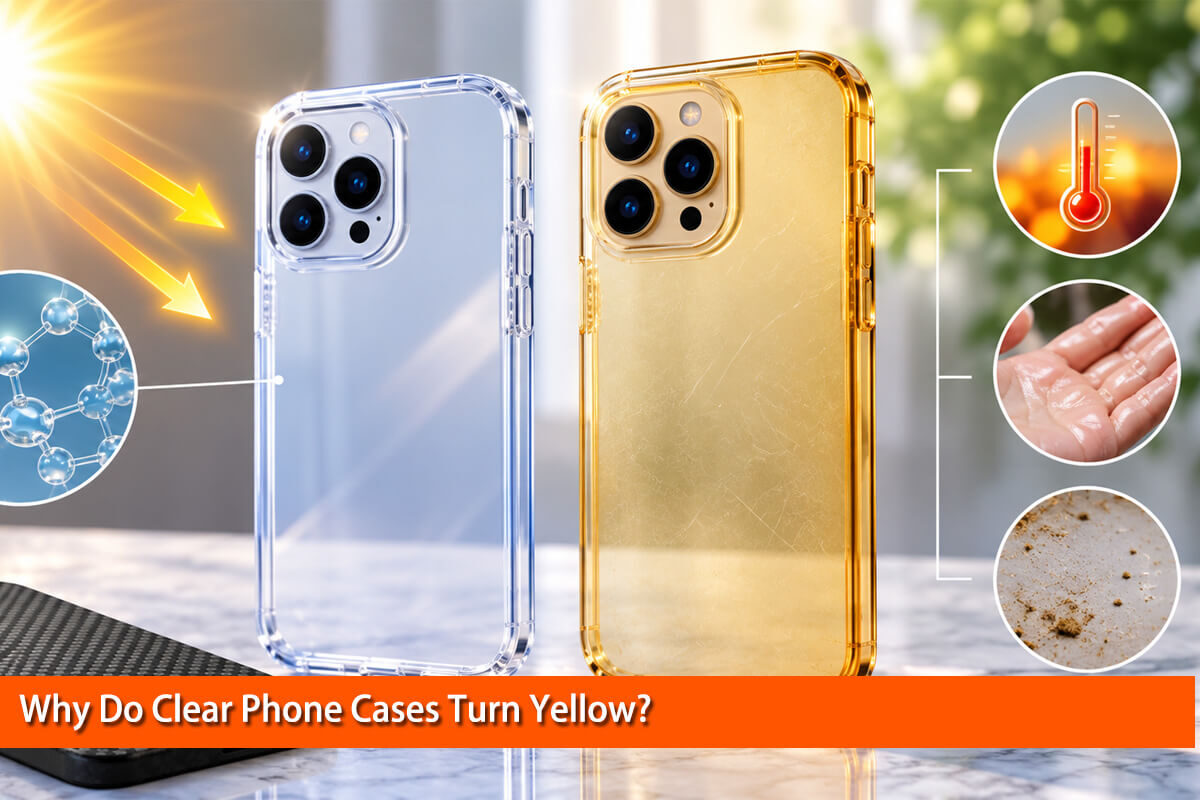
Have you ever bought a beautiful transparent phone case, only to find it turning yellow after a few months? It is a common problem. A case that once looked clean and crystal clear can gradually become yellow, amber, or cloudy, making even a new smartphone look old.
So, why do clear phone cases turn yellow? Is it caused by sunlight, heat, sweat, or simply poor material quality?
The answer involves several factors, including ultraviolet (UV) radiation, oxidation, polymer chemistry, and everyday contamination. Some yellowing happens because dirt and oils build up on the surface, while other discoloration results from permanent chemical changes inside the plastic.
As someone who studies material properties, I believe understanding these differences is important. It helps you choose a better phone case, maintain its appearance, and avoid wasting time on cleaning methods that cannot reverse material degradation.
In this guide, we will explore why transparent phone cases turn yellow, which materials are most susceptible, whether you can restore a yellowed case, and how to prevent the problem.
1. Why Do Clear Phone Cases Turn Yellow?
Most transparent phone cases are made from polymers such as thermoplastic polyurethane (TPU) or polycarbonate (PC). These materials are popular because they can be lightweight, flexible, durable, and visually appealing.
However, transparent plastics do not always maintain their original appearance. Over time, environmental exposure and chemical reactions can change their optical properties.
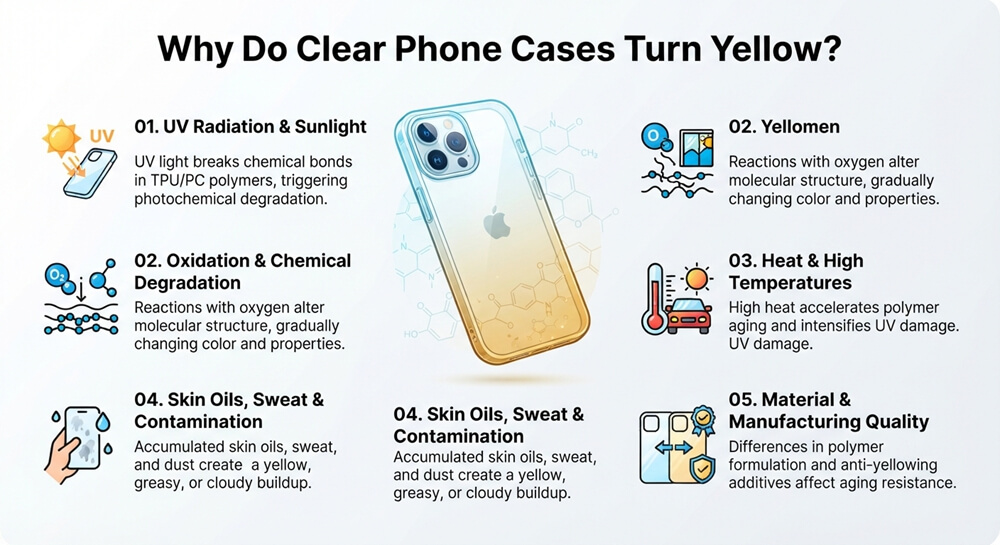
Here are the five major reasons clear phone cases turn yellow.
UV Radiation and Sunlight
Sunlight is one of the most important contributors to plastic discoloration.
Ultraviolet radiation carries enough energy to trigger chemical reactions in certain polymers. When UV light interacts with susceptible parts of a plastic’s molecular structure, it can break chemical bonds and initiate photochemical degradation.
This process can produce new chemical structures called chromophores. These structures absorb certain wavelengths of visible light, particularly in the blue and violet regions. As a result, the material may appear yellow or brown to our eyes.
A study published in Polymer Degradation and Stability in 2009, titled IR-change and yellowing of polyurethane as a result of UV irradiation, investigated how UV exposure changes polyurethane.
The researchers observed photodegradation and gradual color changes in the aromatic polyurethane samples they studied.
This helps explain why a transparent TPU case exposed to direct sunlight for extended periods may become yellow faster than one used mostly indoors.
Oxidation and Chemical Degradation
Oxidation is another important reason clear phone cases lose their original appearance.
In simple terms, oxidation involves chemical reactions in which a material reacts with oxygen or other oxidizing substances. In polymers, these reactions can change the molecular structure and gradually affect the material’s color and physical properties.
For susceptible plastics, oxidation may create additional light-absorbing chemical groups, making the material appear yellow.
Importantly, oxidation and UV degradation are not always separate processes. UV radiation can initiate reactions that continue through oxidation, creating a combined aging effect.
This is why a yellowed phone case may remain yellow even after you wash it thoroughly. The discoloration may be part of the plastic itself rather than something sitting on its surface.
Heat and High Temperatures
Heat can accelerate many chemical reactions involved in polymer aging.
For example, leaving your phone case inside a hot car, near a sunny window, or in another high-temperature environment may accelerate material degradation.
Temperature can also interact with UV exposure. A transparent case exposed to both sunlight and heat may age differently from one exposed to either factor alone.
However, this does not mean normal phone warmth will automatically turn a clear case yellow. The actual effect depends on the polymer formulation, temperature, exposure duration, and other environmental conditions.
Skin Oils, Sweat, and Everyday Contamination
Your phone case is constantly exposed to your hands, skin oils, sweat, cosmetics, dust, and other contaminants.
Over time, these substances accumulate on the surface. They can make a transparent case look yellow, greasy, or cloudy.
Unlike chemical degradation inside the polymer, surface contamination can often be reduced through proper cleaning.
This distinction matters because cleaning may restore the appearance of a dirty case, but it cannot reliably reverse permanent chemical discoloration.
Material Formulation and Manufacturing Quality
Not all transparent plastics have the same resistance to aging.
Two clear cases made from similar materials may develop different levels of discoloration because of differences in:
- Polymer chemistry and molecular structure.
- UV stabilizers and antioxidant additives.
- Manufacturing processes.
- Protective coatings and surface treatments.
- Material purity and formulation.
Manufacturers sometimes add UV stabilizers to slow photochemical degradation. These additives can improve resistance to discoloration, but they do not guarantee that a transparent case will remain perfectly clear forever.
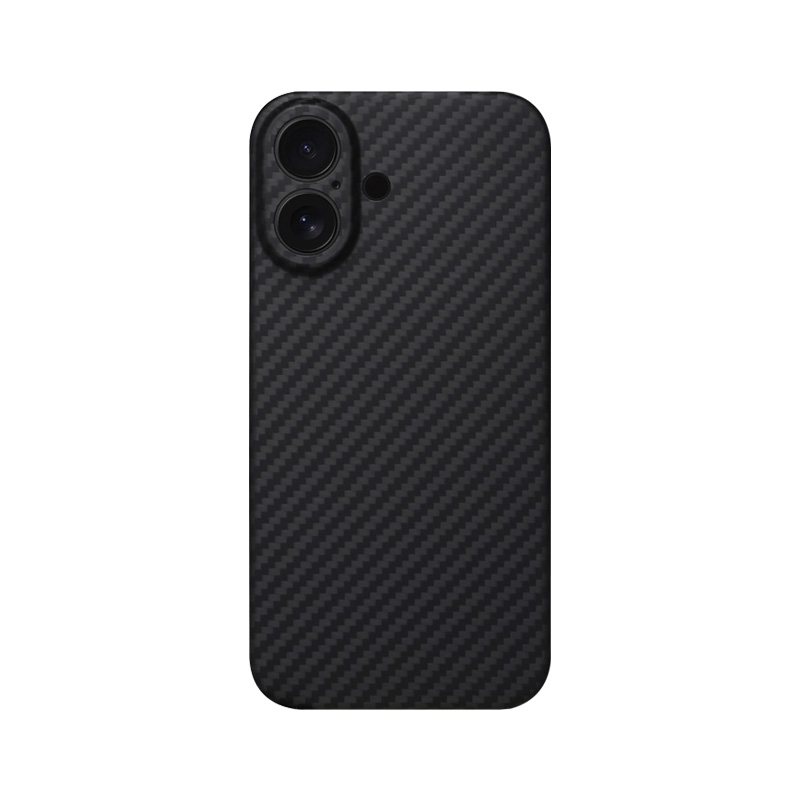
Built-in MagSafe magnets support convenient wireless charging and magnetic accessories.
Ultra-slim design keeps your iPhone lightweight and comfortable to hold.
Durable construction helps resist everyday scratches and wear.
Raised camera edges help protect lenses from surface scratches.
Precision cutouts ensure seamless access to buttons and ports.
Textured surface provides a comfortable, secure grip.
Designed specifically for iPhone 17 with a precise fit.

2. Which Phone Case Materials Are Most Likely to Turn Yellow?
The material used in a phone case has a significant influence on its long-term appearance.
Here is a comparison of commonly used materials.
| Material | Yellowing Characteristics | Main Advantages |
|---|---|---|
| TPU | Some formulations are susceptible to UV-induced yellowing | Flexible, lightweight, and impact-absorbing |
| Polycarbonate (PC) | Can discolor with UV exposure and aging, depending on formulation | Rigid, lightweight, and dimensionally stable |
| Silicone | Can collect dirt and surface stains; aging varies by formulation | Soft, flexible, and grippy |
| Hybrid TPU + PC | Depends on the materials and which components are exposed | Combines flexibility and rigidity |
| Carbon fiber composite | Does not show the same visible yellowing behavior as transparent TPU | Lightweight, stiff, and premium-looking |
Why Are TPU Clear Cases Particularly Prone to Yellowing?
TPU is widely used in transparent phone cases because it offers an attractive combination of flexibility, elasticity, and impact resistance.
However, polyurethane chemistry matters.
Aromatic polyurethane formulations are generally more susceptible to UV-induced yellowing than aliphatic polyurethane formulations. This difference is related to their molecular structures and how they react under UV exposure.
That does not mean every TPU case will yellow quickly. Formulation, stabilizers, coatings, and exposure conditions all influence the final result.
Does Polycarbonate Resist Yellowing Better Than TPU?
Polycarbonate is a rigid thermoplastic often used in transparent hard-shell phone cases.
It can provide good dimensional stability and optical clarity. However, untreated or inadequately stabilized polycarbonate can also experience UV-related discoloration.
Some manufacturers use UV-resistant grades, coatings, or additives to improve long-term appearance.
Therefore, choosing PC instead of TPU does not automatically eliminate yellowing. You should consider the specific material formulation and the manufacturer’s testing information.
3. How Long Does It Take for a Clear Phone Case to Turn Yellow?

There is no universal timeline for clear phone case yellowing.
Some cases may show noticeable discoloration relatively quickly, while others maintain their transparency for much longer.
The rate depends on several conditions:
| Factor | Effect on Yellowing |
|---|---|
| Direct sunlight | Increases UV exposure and photochemical aging |
| High temperatures | Can accelerate chemical degradation |
| Material formulation | Determines the polymer’s inherent aging resistance |
| UV stabilizers | Can slow UV-related discoloration |
| Daily handling | Increases surface contamination |
| Cleaning habits | Help control dirt and oils but cannot prevent internal chemical aging |
For example, a transparent TPU case frequently left on a sunny dashboard may discolor faster than a similar case used mainly indoors.
It is also important to understand that yellowing does not necessarily mean the case has completely lost its protective ability. However, if discoloration appears together with cracking, deformation, brittleness, or poor fitting, replacement is a sensible decision.
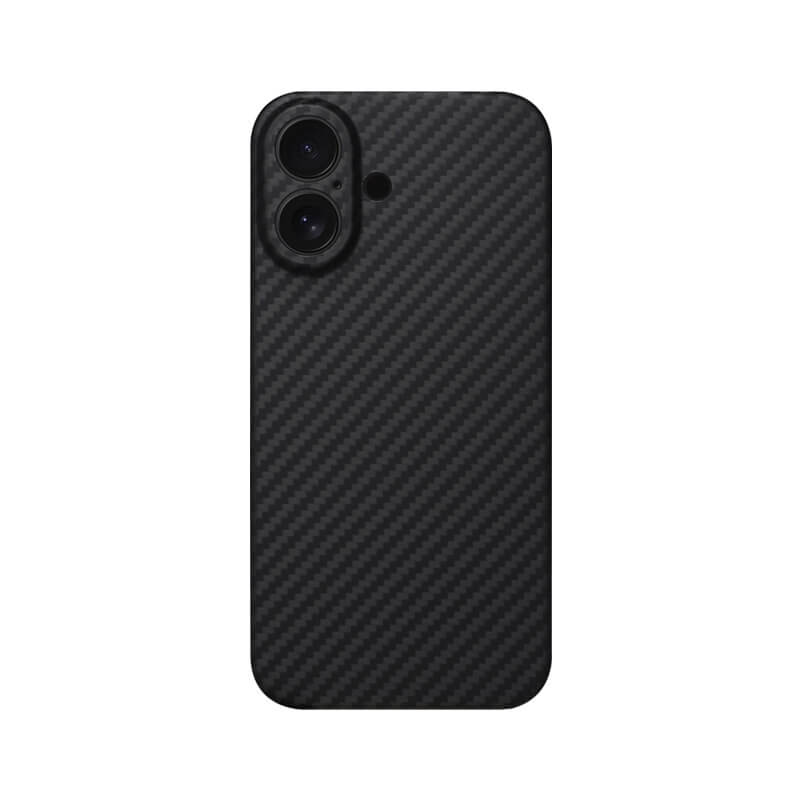
Strong MagSafe magnets ensure secure attachment.
Slim profile protects without adding unnecessary bulk.
Raised edges protect screen and camera.
Textured surface provides a secure grip.
Precise cutouts ensure easy everyday access.
Durable construction helps absorb everyday impacts.
Supports wireless charging without removing the case.
4. Can You Fix or Clean a Yellowed Clear Phone Case?
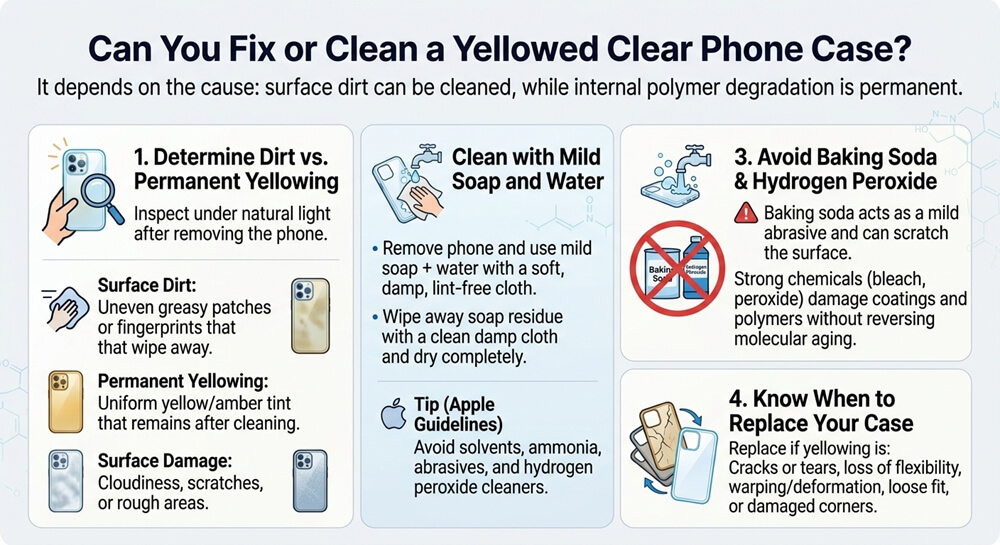
This is one of the most common questions people ask.
The answer depends on the cause of the discoloration.
If the yellow appearance comes from dirt, grease, or surface contamination, cleaning may help. If it results from chemical degradation inside the polymer, ordinary cleaning methods cannot reliably restore the original transparency.
Step 1: Determine Whether It Is Dirt or Permanent Yellowing
Remove the phone and inspect the case under natural light.
Look for these differences:
- Surface dirt: Uneven greasy patches or visible fingerprints that may disappear after cleaning.
- Permanent yellowing: A more uniform yellow or amber color that remains after surface dirt has been removed.
- Surface damage: Cloudiness, scratches, or rough areas that may affect transparency.
Step 2: Clean with Mild Soap and Water
For routine cleaning, use a gentle approach:
- Remove your smartphone from the case.
- Prepare a small amount of mild soap and water.
- Use a soft, slightly damp, lint-free cloth to clean the surface.
- Wipe away soap residue with a clean damp cloth.
- Dry the case completely before putting your phone back inside.
Always check the case manufacturer’s cleaning instructions first.
Apple’s official How to clean your Apple products guide also recommends removing the iPhone before cleaning its case and using a soft, slightly damp, lint-free cloth.
Apple specifically warns against using solvents, ammonia, abrasives, hydrogen peroxide cleaners, and several other household cleaning products on its clear, silicone, and polycarbonate or TPU cases.
Step 3: Should You Use Baking Soda or Hydrogen Peroxide?
You may find online tutorials recommending baking soda, hydrogen peroxide, bleach, or other household chemicals to remove yellowing.
Be careful with these methods.
Baking soda can act as a mild abrasive, potentially scratching a transparent surface. Strong oxidizing chemicals may damage coatings or affect the polymer itself.
Even if a chemical treatment makes a surface look temporarily lighter, it does not necessarily reverse the molecular degradation responsible for yellowing.
There is no universally safe household method that can restore permanently yellowed TPU to its original transparency.
Step 4: Know When to Replace Your Case
If the case remains yellow after gentle cleaning, the discoloration is probably permanent.
Consider replacing it if you also notice:
- Cracks or tears.
- Loss of flexibility.
- Warping or deformation.
- Loose fitting around the phone.
- Damaged corners or protective edges.
A new case is usually a better investment than repeatedly experimenting with aggressive cleaning chemicals.
5. How to Prevent Clear Phone Cases from Turning Yellow
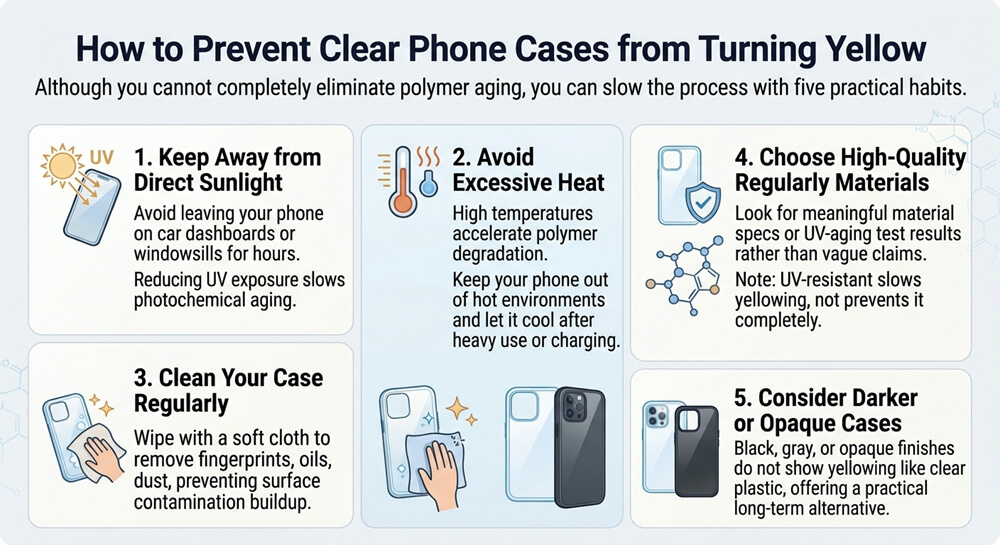
Although you cannot completely eliminate polymer aging, you can slow the process.
Here are five practical ways to keep a transparent phone case looking better for longer.
1. Keep Your Phone Away from Direct Sunlight
Avoid leaving your phone in direct sunlight for extended periods.
For example, do not leave it on a car dashboard or a windowsill for hours. Reducing unnecessary UV exposure can help slow photochemical aging.
2. Avoid Excessive Heat
High temperatures can accelerate polymer degradation.
Keep your phone away from hot environments whenever possible. If your phone becomes unusually hot during intensive use or charging, allow it to cool rather than leaving it exposed to additional heat.
3. Clean Your Case Regularly
Wipe your case with a soft cloth to remove fingerprints, oils, sweat, and dust.
Regular cleaning helps prevent surface contamination from building up and keeps the case looking cleaner.
4. Choose High-Quality Materials
When purchasing a transparent phone case, look for information about its material formulation and UV resistance.
A manufacturer that provides meaningful material specifications or UV-aging test results offers more useful evidence than one that simply advertises an anti-yellowing claim.
Remember that UV-resistant does not mean completely immune to discoloration.
5. Consider Darker or Opaque Phone Cases
If you dislike the appearance of yellowed transparent plastic, consider a darker phone case.
Black, gray, and other opaque finishes do not reveal yellow discoloration in the same way as clear materials.
This does not mean darker cases never age or become damaged. However, they offer a practical alternative if maintaining a crystal-clear appearance is important to you.
6. What Should You Choose Instead of a Clear Phone Case?
If you are tired of replacing yellowed transparent cases, it may be worth considering a different material.
Your choice should depend on more than appearance. Weight, structural strength, grip, durability, thickness, and everyday protection all matter.
Carbon Fiber Phone Cases: A Premium Alternative
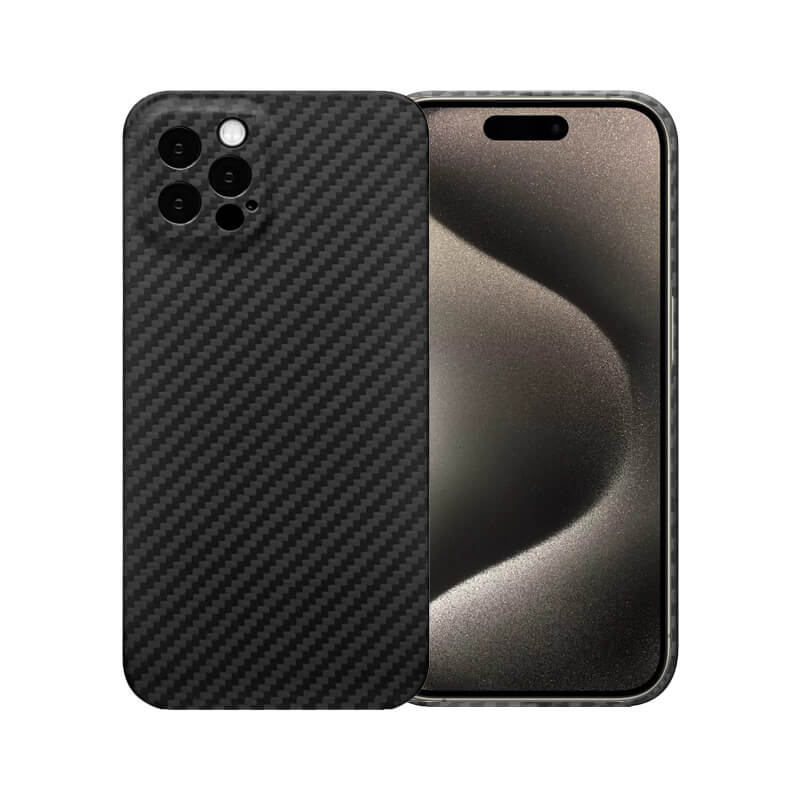
A premium, lightweight, and performance-inspired look.
Slim design, protects your iPhone without adding unnecessary bulk.
Built-in MagSafe magnets support convenient charging and accessories.
Precision fit provides easy access to buttons, ports, and cameras.
Raised edges help protect your screen and camera lenses from scratches.
Designed specifically for the iPhone 15 Pro for a precise fit.
Carbon fiber is an advanced engineering material used in industries such as aerospace, automotive manufacturing, and high-performance sporting equipment.
It consists of thin carbon fibers combined with a resin matrix to create a composite material.
Its main advantages include:
- High strength-to-weight potential.
- Excellent stiffness when properly engineered.
- Lightweight construction.
- A distinctive woven appearance.
- Good resistance to everyday surface wear, depending on the finish.
Unlike transparent TPU, a dark carbon fiber finish does not show yellow discoloration in the same visible way. This makes it an appealing alternative for people who prefer a long-lasting, darker aesthetic.
However, carbon fiber composites are not completely immune to aging. Their resin matrix and surface coatings can still be affected by environmental exposure. The finished construction matters.
If you want to learn more about the engineering properties of this material, read Oneou’s guide to the benefits of carbon fiber phone cases.
Why Consider a Oneou Carbon Fiber Phone Case?
At Oneou, we focus on carbon fiber phone cases designed for people who appreciate lightweight construction, premium aesthetics, and practical everyday functionality.
A Oneou carbon fiber phone case offers a different approach to smartphone protection compared with conventional transparent TPU cases.
Its dark carbon fiber appearance avoids the visible yellowing associated with transparent plastics, while its slim design provides a lightweight and comfortable feel.
For compatible models, Oneou also offers MagSafe-compatible designs, allowing users to enjoy magnetic accessories and convenient wireless charging.
You can explore the Oneou Carbon Fiber Phone Case Collection to find a design for your iPhone.
If you are still comparing materials, our guide to the best phone case materials explains the differences between TPU, silicone, polycarbonate, aramid fiber, and carbon fiber.
7. Frequently Asked Questions
Why do clear phone cases turn yellow so quickly?
Clear phone cases may yellow because of UV exposure, oxidation, heat, and polymer aging. Certain TPU formulations are particularly susceptible to UV-induced discoloration. Surface oils and dirt can also make a case look yellow.
Does sunlight make clear phone cases yellow?
Yes. UV radiation can trigger photochemical reactions in susceptible plastics, changing their molecular structure and producing yellow-colored compounds. Limiting prolonged direct sunlight can help slow this process.
Does heat from a phone cause its case to turn yellow?
Normal phone warmth does not necessarily cause rapid yellowing. However, prolonged high-temperature exposure can accelerate polymer aging, especially when combined with UV radiation.
Can you make a yellowed clear phone case transparent again?
If the yellow appearance comes from surface dirt or oils, gentle cleaning may improve it. If the polymer itself has chemically degraded, ordinary cleaning cannot reliably restore its original transparency.
Does baking soda remove yellowing from phone cases?
Baking soda may help remove some surface contamination, but it cannot reverse chemical degradation inside plastic. Its abrasive properties may also scratch certain transparent surfaces.
Are expensive clear phone cases less likely to turn yellow?
Not necessarily. Price alone does not determine UV resistance. Material formulation, stabilizers, coatings, and manufacturing quality are more meaningful factors.
Which phone case material does not turn yellow?
No material is completely immune to aging. However, opaque materials such as dark carbon fiber composites do not display yellow discoloration in the same way as transparent TPU cases.
Is TPU or polycarbonate better for a clear phone case?
TPU offers flexibility and impact absorption, while polycarbonate provides greater rigidity. Both can discolor depending on their formulation and UV protection. The better choice depends on the desired flexibility, construction, and long-term performance.
Conclusion: Understanding and Preventing Clear Phone Case Yellowing
So, why do clear phone cases turn yellow?
The main reasons are UV radiation, oxidation, heat, and the natural aging of polymer materials. Daily exposure to skin oils, sweat, and dirt can also make a transparent case look discolored.
The most important thing to remember is that surface contamination and permanent material degradation are different problems. Regular cleaning can remove dirt, but it cannot reliably reverse chemical changes inside the plastic.
If you prefer transparent cases, look for quality materials, UV-resistant formulations, and sensible maintenance practices. Avoid prolonged sunlight and excessive heat to help extend the case’s useful appearance.
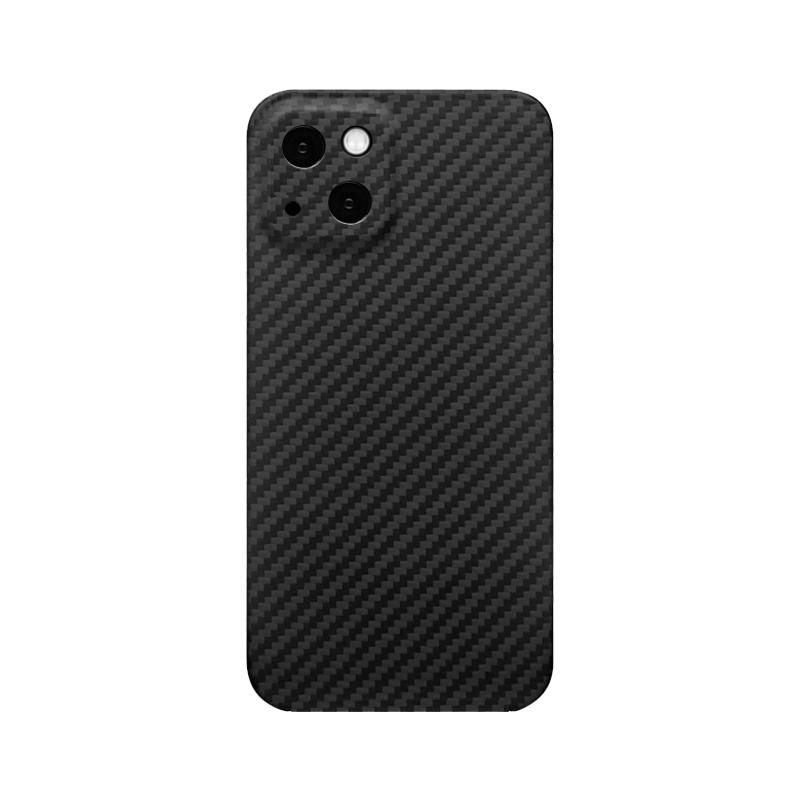
However, if you are tired of dealing with yellowed transparent cases, a darker alternative may be worth considering. A well-designed Oneou carbon fiber phone case offers a distinctive premium appearance, lightweight construction, and a finish that does not visibly yellow like clear TPU.
Ultimately, choosing the right phone case is not just about how it looks on the day you buy it. It is about selecting a material and design that suit your everyday needs and continue to look good over time.