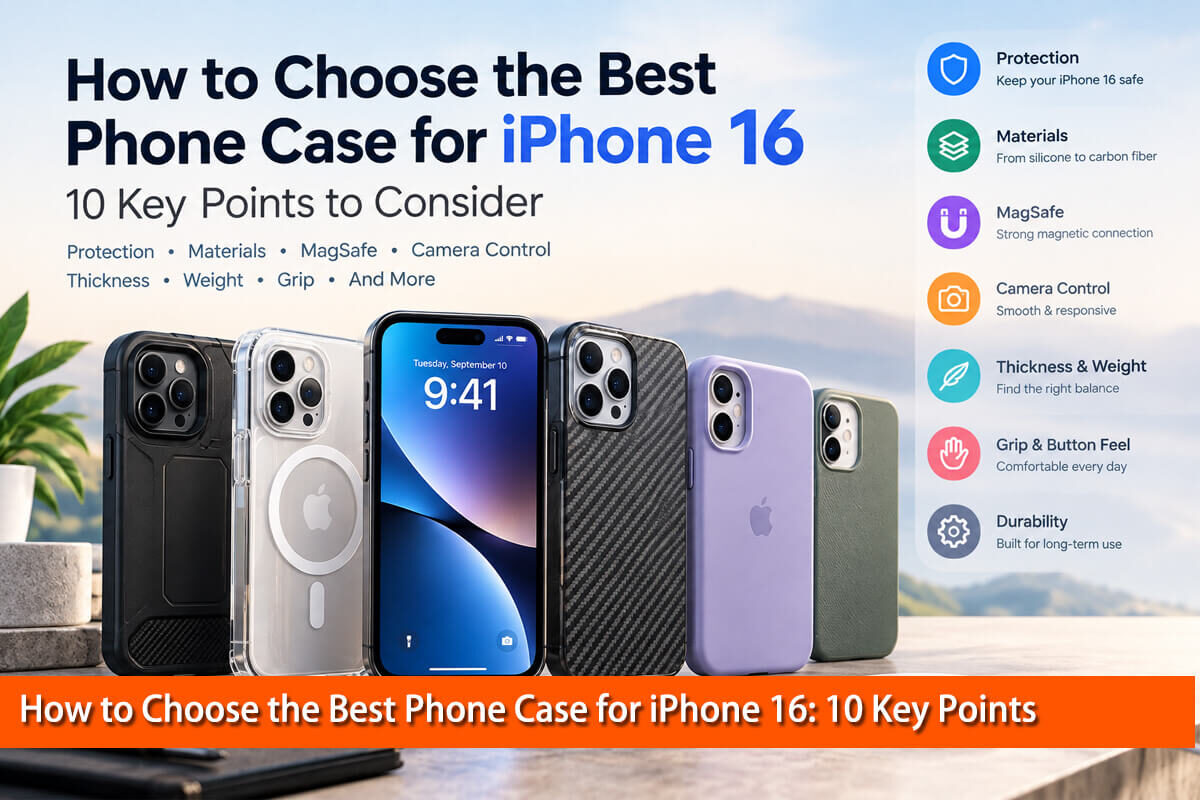
Choosing the best phone case for iPhone 16 is not simply about finding the thickest or most expensive case. A good case needs to balance protection, weight, grip, materials, wireless charging, camera access, and everyday comfort.
The iPhone 16 also introduces an important design feature that older iPhones do not have: Camera Control. This means case design is more complicated than simply making a shell around the phone.
As a materials engineer, I recommend looking at an iPhone 16 case as a small engineered product. Its performance depends on the material, structure, geometry, manufacturing quality, and how you actually use your phone.
This guide explains the most important things to look for when choosing an iPhone 16 case, including protection, materials, MagSafe compatibility, Camera Control, thickness, weight, and long-term durability.
1. Start With the Correct iPhone 16 Model
Before comparing materials or protection levels, make sure the case is designed for your exact phone.
The iPhone 16 family includes different models with different dimensions and camera arrangements, including:
- iPhone 16
- iPhone 16 Plus
- iPhone 16 Pro
- iPhone 16 Pro Max
A case designed for one model should not automatically be assumed to fit another.
This is particularly important around the camera area and buttons. Even a small dimensional difference can affect camera clearance, button operation, and the overall fit.
Apple’s official iPhone 16 specifications list the phone’s physical dimensions, buttons, Camera Control, USB-C connector, and wireless charging system. Check the exact model before buying a case.
Simple rule: Always match the case to the exact iPhone model, not just the iPhone generation.
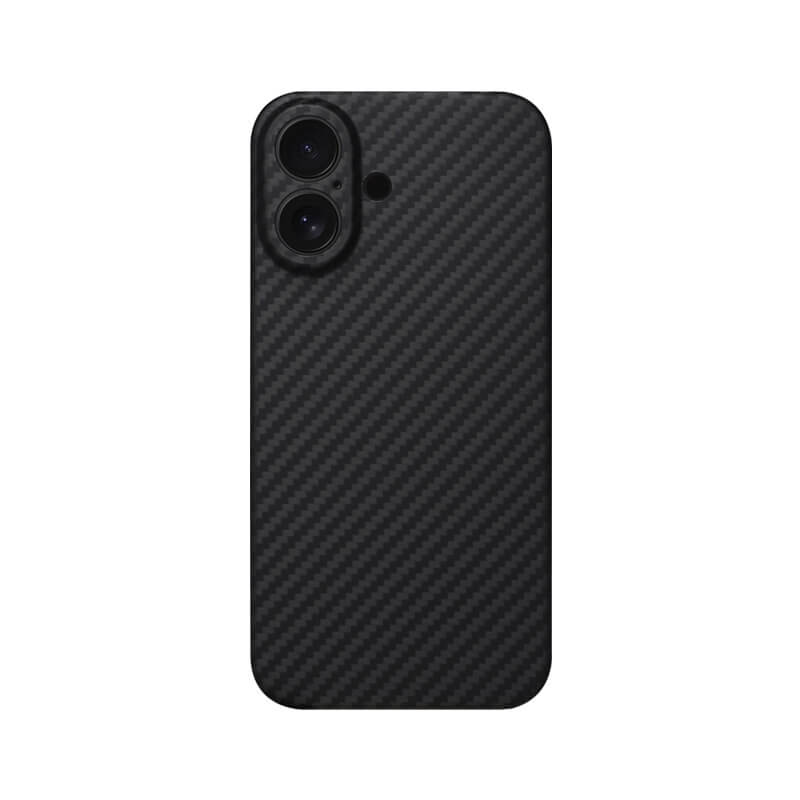
Strong MagSafe magnets ensure secure attachment.
Slim profile protects without adding unnecessary bulk.
Raised edges protect screen and camera.
Textured surface provides a secure grip.
Precise cutouts ensure easy everyday access.
Durable construction helps absorb everyday impacts.
Supports wireless charging without removing the case.

2. Decide How Much Protection You Really Need
The best iPhone 16 case for one person may be completely wrong for another.
If you mainly use your phone at home or in an office, you may prefer a slim case that adds little bulk. If you work outdoors, travel frequently, or have a history of dropping your phone, additional protection may be more important.
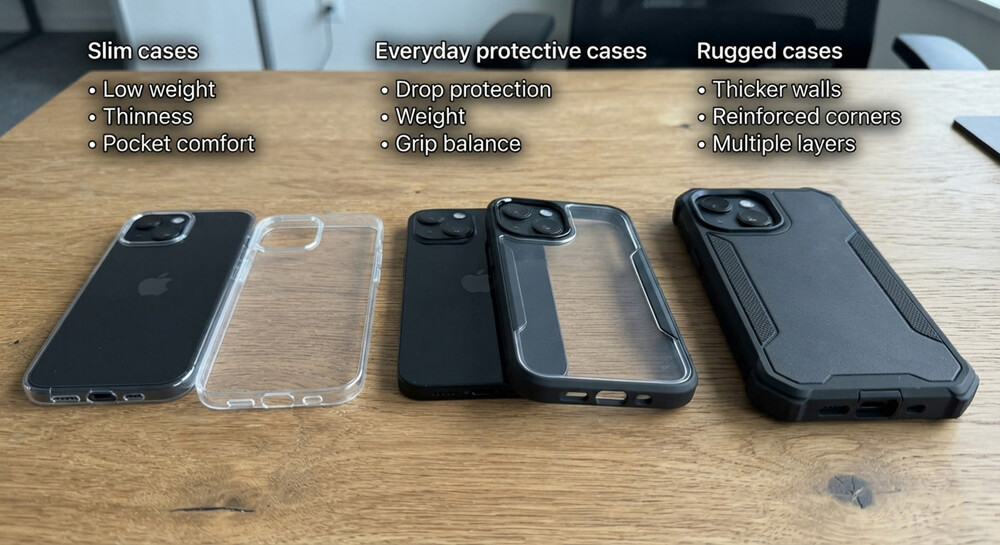
Generally, iPhone cases can be divided into three groups.
Slim cases
These prioritize:
- Low weight
- Thinness
- Pocket comfort
- Original phone feel
They are suitable for users who want basic protection against scratches, minor impacts, and everyday wear.
Everyday protective cases
These usually combine flexible and rigid materials. A TPU bumper with a PC back is a common example.
This type offers a practical balance between:
- Drop protection
- Weight
- Grip
- Thickness
- Appearance
For many users, this is the most practical type of phone case.
Rugged cases
Rugged cases generally use thicker walls, reinforced corners, multiple material layers, and higher protective edges.
They are useful for demanding environments, but the trade-off is increased weight and bulk.
From an engineering perspective, more material does not automatically mean better protection. Case geometry, energy absorption, corner design, material interfaces, and construction quality all matter.
3. Look for Raised Edges Around the Screen
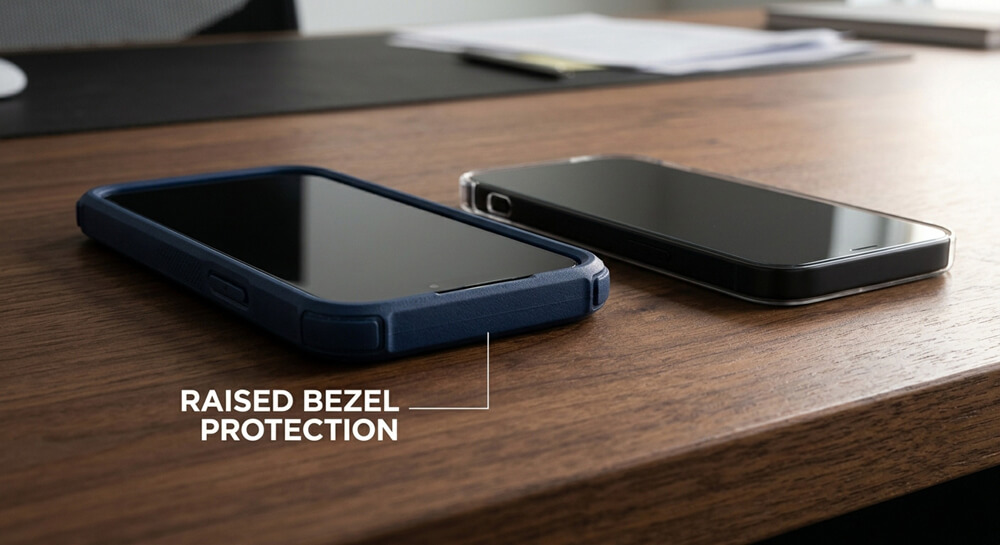
One of the most useful features of an iPhone 16 case is a raised bezel around the display.
When a phone is placed face down, or when it lands at certain angles, a raised edge can help keep the glass from making direct contact with the surface.
A good case should therefore provide some clearance between the display and a flat surface.
However, do not interpret a raised bezel as a guarantee that the screen cannot break.
Impact behavior depends on many factors, including:
- Drop height
- Impact angle
- Surface hardness
- Impact location
- Phone orientation
- Case material
- Case geometry
Macworld’s testing guidance for iPhone 16 cases similarly recommends looking for raised edges around both the screen and camera area.
So when comparing cases, don’t only ask whether the manufacturer says “screen protection.” Look at the actual construction.
4. Pay Attention to Camera Protection
The camera module is another area that deserves attention.
A good iPhone 16 case should provide sufficient clearance around the camera lenses while maintaining accurate openings for the cameras and flash.
Look for:
- A raised camera bezel
- Accurate lens openings
- Adequate clearance
- A rigid camera surround
- A design that does not interfere with photography
A very thin case may provide excellent handling but little protection around the camera module. A thicker case can provide more clearance, but excessive material can make the phone feel bulky.
The goal is not simply to make the camera area as thick as possible. The goal is to create enough protective height without interfering with the camera system.
5. Make Sure Camera Control Works Properly
This is one of the most important considerations when choosing a phone case for iPhone 16.
Apple’s Camera Control is not simply a conventional mechanical button. Apple describes it as a control that can be lightly pressed, double-pressed, and slid to adjust camera controls.
That creates a special challenge for case manufacturers.
A conventional thick layer of silicone or TPU cannot necessarily reproduce the same interaction correctly.
Apple’s own case design uses a special sapphire crystal and conductive layer over the Camera Control area. Other manufacturers use different engineering solutions.
When evaluating a case, test:
- Opening the Camera app
- Light pressing
- Double pressing
- Swiping
- Adjusting camera controls
- Taking a photo
If a case makes Camera Control difficult to use, its protective benefits may not compensate for the reduced functionality.
This is why “Camera Control compatible” should be treated as a functional requirement, not just a marketing phrase.
6. Choose the Right Case Material
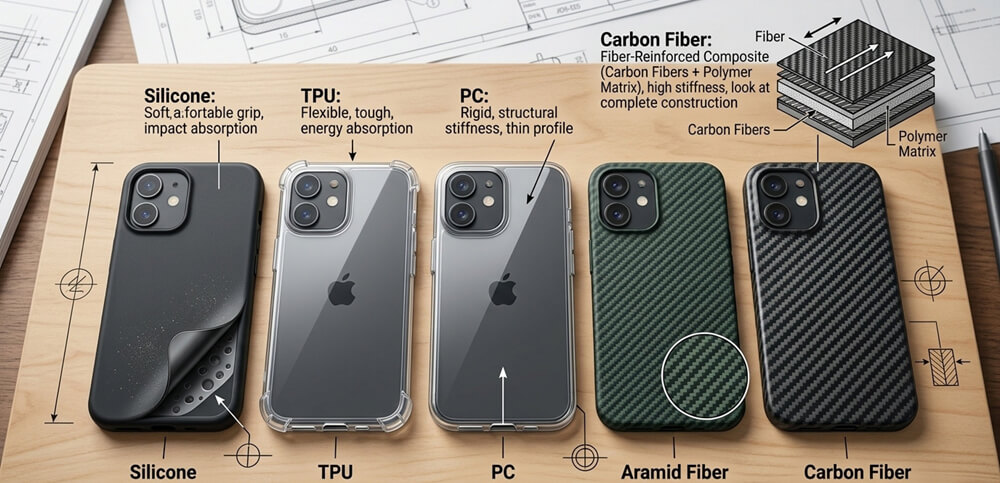
Material selection has a major effect on the feel and performance of an iPhone 16 case.
There is no single material that is best for everyone.
Silicone
Silicone cases are known for their soft feel and good grip. They are comfortable to hold and can provide some impact absorption.
The trade-off is that soft materials can attract dust and may show wear over time.
TPU
Thermoplastic polyurethane, or TPU, is widely used in phone cases because it combines flexibility, toughness, and relatively good impact absorption.
It is particularly useful for flexible bumpers and corners.
Polycarbonate
Polycarbonate, or PC, is a rigid thermoplastic. It provides structural stiffness and can help maintain a thin case profile.
However, a rigid material alone does not necessarily provide ideal impact absorption. This is one reason hybrid cases are common.
Aramid Fiber
Aramid fiber is attractive for users who want a thin, lightweight premium case.
It provides high specific strength and stiffness while allowing manufacturers to create very thin structures.
Carbon Fiber
A carbon fiber phone case is another premium option worth considering.
Carbon fiber is not simply a “strong plastic.” It is normally a fiber-reinforced composite in which carbon fibers provide reinforcement while a polymer matrix holds the fibers together.
The scientific literature shows that carbon-fiber-reinforced polymers can achieve high specific stiffness and strength, which is one reason carbon fiber is used in aerospace and other lightweight engineering applications.
However, there is an important engineering detail: carbon fiber composites are not automatically the best material for every type of impact.
Composite performance depends on fiber orientation, resin system, laminate structure, interfaces, geometry, and loading conditions. Research on composite impact behavior shows that impact resistance is influenced by both material and structural parameters.
For this reason, when evaluating a carbon fiber phone case, don’t judge it only by the words “carbon fiber.” Look at the complete construction.
Strong MagSafe magnets ensure secure attachment.
Slim profile protects without adding unnecessary bulk.
Raised edges protect screen and camera.
Textured surface provides a secure grip.
Precise cutouts ensure easy everyday access.
Durable construction helps absorb everyday impacts.
Supports wireless charging without removing the case.
7. Consider Thickness and Weight Together
Thickness and weight are easy to overlook when shopping online.
A very protective case may add considerable bulk to an already large phone. That can affect:
- Pocket comfort
- One-handed use
- Grip
- Wireless charging
- Overall portability
A very thin case has the opposite trade-off.
As a simple rule:
If protection is your priority: accept some additional thickness.
If portability is your priority: choose a slimmer construction.
If you want a balance: consider a hybrid or thin composite case.
Weight is especially important for the iPhone 16 Pro Max because the phone itself is already relatively large.
A case that weighs only a few dozen grams may not sound heavy, but it can noticeably change the overall feel of the device.
8. Check MagSafe and Wireless Charging Compatibility
The iPhone 16 supports MagSafe and Qi2 wireless charging, with Apple’s specifications listing charging support of up to 25W under supported conditions.
If you regularly use magnetic accessories, your case should be designed for them.
Look for:
- Built-in magnetic ring
- Proper magnetic alignment
- Strong attachment
- Wireless charging compatibility
- Compatibility with MagSafe accessories
This matters if you use:
- MagSafe chargers
- Magnetic car mounts
- MagSafe wallets
- Magnetic battery packs
- Other magnetic accessories
A case can technically allow wireless charging while still providing a poor magnetic connection.
Therefore, don’t stop at the words “wireless charging compatible.” If you depend on magnetic accessories, specifically look for genuine MagSafe compatibility.
9. Don’t Forget Grip and Button Feel
Protection is not the only purpose of a phone case.
A case also changes how you interact with your phone every day.
A good case should have a secure grip without feeling sticky or uncomfortable.
Pay attention to:
- Side texture
- Surface finish
- Edge shape
- Button response
- Action button access
- Camera Control operation
- USB-C opening
Buttons should remain easy to press without requiring excessive force.
This is particularly important because poor grip can make a phone easier to drop. In that sense, handling comfort is indirectly part of protection.
The best iPhone 16 case should therefore feel natural in your hand rather than simply looking protective.
10. Look Beyond Marketing Claims
One of the biggest mistakes consumers make is treating marketing claims as engineering test results.
You may see phrases such as:
- Military-grade protection
- Extreme drop protection
- 10-foot drop protection
- Shockproof
- Heavy-duty protection
These statements can be useful, but you should ask what they actually mean.
A meaningful test description should ideally explain:
- Drop height
- Test surface
- Number of drops
- Test orientation
- Test conditions
- Test standard
- Whether testing was performed independently
This distinction matters because impact performance depends heavily on the test conditions.
For example, a case that survives a controlled drop onto one surface does not necessarily provide the same protection in every real-world accident.
As a materials engineer, I would always pay more attention to construction and documented testing than to a large number printed on a product box.
How Different Materials Compare
Here is a simple way to think about common case materials:
| Material | Main Strength | Main Trade-Off | Best For |
|---|---|---|---|
| Silicone | Soft, comfortable grip | Can wear over time | Everyday users |
| TPU | Flexible and impact absorbing | May yellow or age | Everyday protection |
| PC | Rigid and lightweight | Less flexible | Slim/hybrid cases |
| Leather | Premium feel | Requires more care | Premium style |
| Aramid fiber | Very thin and lightweight | Higher cost | Minimalist premium users |
| Carbon fiber | High stiffness and low weight | Composite design matters | Performance-focused users |
| Hybrid | Balanced properties | More complex construction | General everyday use |
The key point is that materials should be evaluated according to the job they need to perform.
Oneou’s article What’s the Best Phone Case Material? A Complete Comparison give you an ultimate guidance for phone case material choosing.
Which iPhone 16 Case Is Right for You?
Instead of asking “What is the best iPhone 16 case?”, ask “What do I need from my case?”
If you want maximum protection
Look for a rugged case with reinforced corners, shock-absorbing materials, and raised screen and camera edges.
If you want a slim case
Consider a thin PC, aramid fiber, or well-designed composite case.
If you use MagSafe every day
Choose a case with a properly integrated magnetic system rather than simply a case that allows wireless charging.
If Camera Control is important to you
Prioritize a case with a proven Camera Control solution and test the touch and sliding functions.
If you want premium materials
Aramid fiber, carbon fiber, leather, and carefully engineered hybrid constructions are worth considering.
If you frequently drop your phone
Prioritize impact protection, corner reinforcement, grip, and raised edges over extreme thinness.
iPhone 16 Case Buying Checklist
Before buying, ask these questions:
- Is it made for my exact iPhone 16 model?
- Does it protect the screen edges?
- Does it protect the camera area?
- Does Camera Control work naturally?
- Is it compatible with MagSafe?
- Does wireless charging work properly?
- Is the case comfortable to hold?
- Is the weight acceptable?
- Does the material match my needs?
- Are protection claims supported by meaningful test information?
If the answer to these questions is yes, you are much more likely to end up with a case that works well in real life.
Final Thoughts
The best phone case for iPhone 16 is not necessarily the thickest, lightest, cheapest, or most expensive option.
It is the case that provides the right balance for your particular use.
Start with exact model compatibility. Then consider protection, screen and camera clearance, Camera Control, material, thickness, weight, grip, MagSafe, and long-term durability.
From a materials engineering perspective, the most important lesson is simple: case performance comes from the complete system, not one material or one marketing claim.
A carbon fiber phone case can be an excellent choice for someone who values low weight, stiffness, and a premium material. A TPU case may be more suitable for someone who prioritizes flexibility and grip. A rugged hybrid case may make more sense for someone who regularly exposes their phone to impacts.
Strong MagSafe magnets ensure secure attachment.
Slim profile protects without adding unnecessary bulk.
Raised edges protect screen and camera.
Textured surface provides a secure grip.
Precise cutouts ensure easy everyday access.
Durable construction helps absorb everyday impacts.
Supports wireless charging without removing the case.
In other words, choosing the best iPhone 16 case is a process of matching material + structure + protection + functionality + lifestyle.
That approach will help you choose a case based on engineering and actual use rather than marketing alone.