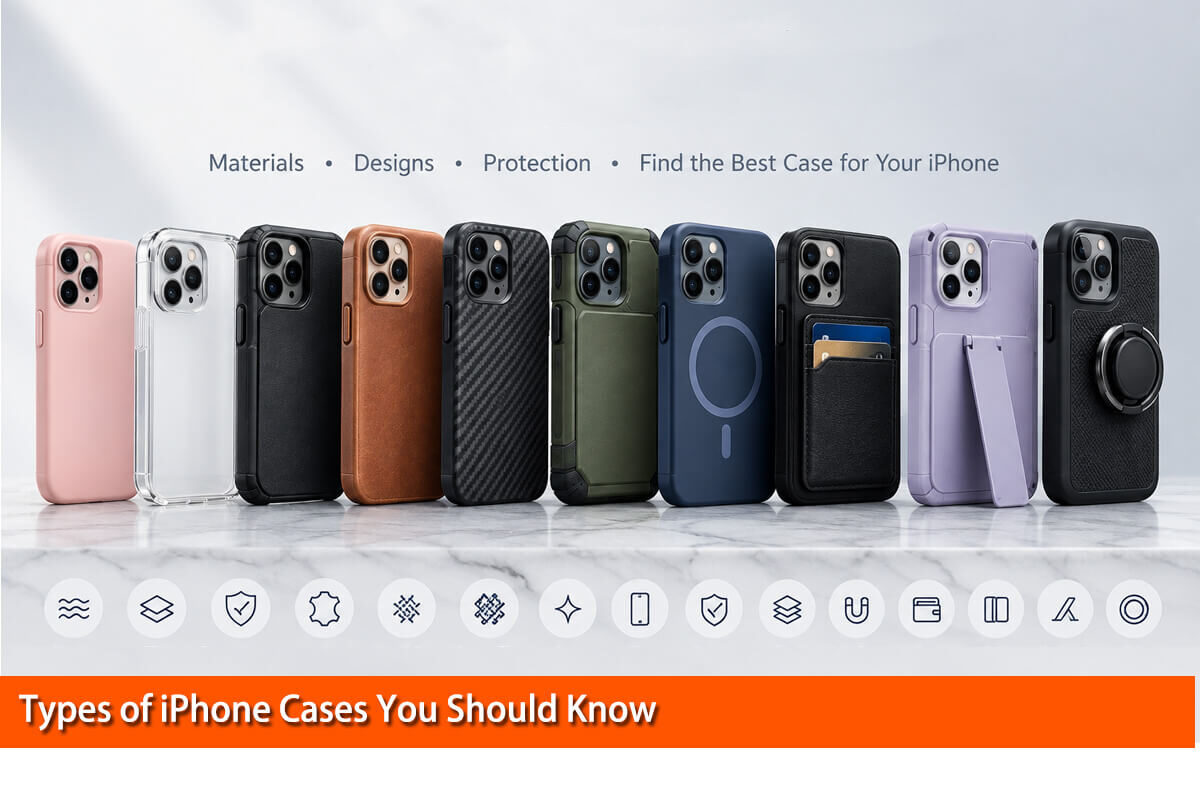
If you have ever searched for an iPhone case, you have probably noticed how many choices are available. Silicone, TPU, polycarbonate, leather, aramid fiber, carbon fiber, clear cases, rugged cases, MagSafe cases, wallet cases—the list can quickly become confusing.
The important thing to understand is that these names do not all describe the same thing. Some describe the material, while others describe the design or function of the case. For example, a carbon fiber phone case can also be a slim case, a MagSafe case, or a hybrid case.
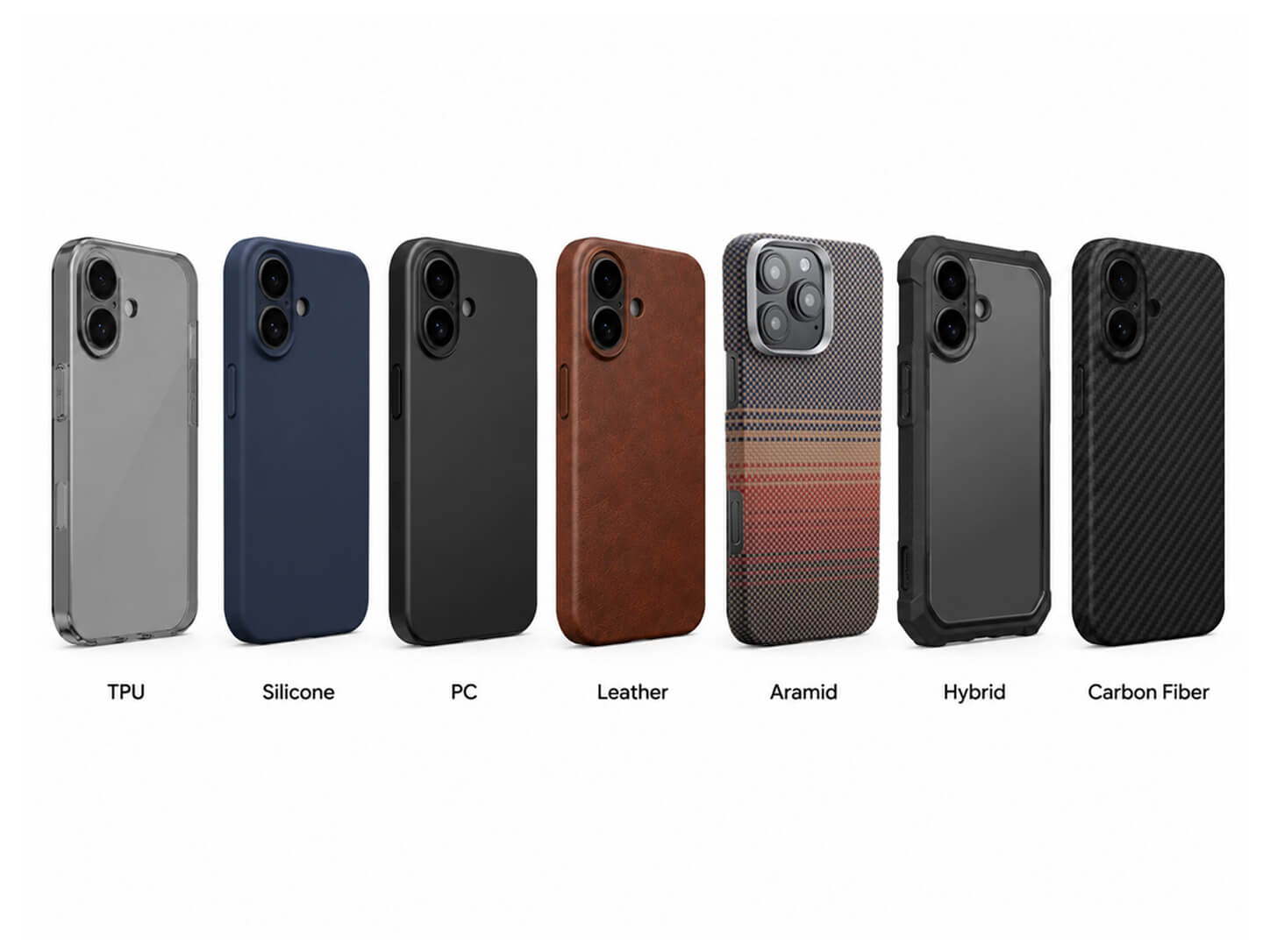
From a materials-engineering point of view, there is also an important difference between the properties of a raw material and the performance of a finished phone case. A strong material does not automatically make a protective case. The thickness, shape, corners, internal structure, bonding, and combination of materials all affect how a case performs.
In this guide, we will look at the major types of iPhone cases, what they are made from, their advantages and disadvantages, and what type of user each case may suit best.
1. Silicone iPhone Cases
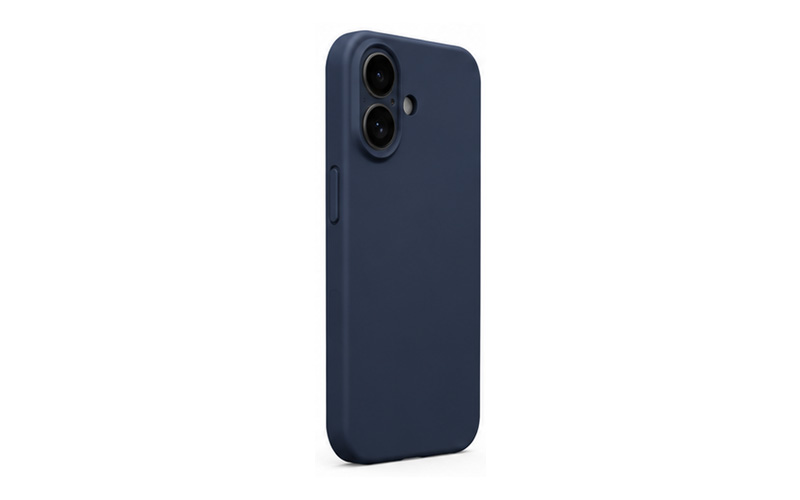
Silicone cases are among the most familiar types of iPhone cases. Silicone is a flexible polymer with a soft, rubber-like feel.
One of its biggest advantages is grip. A silicone surface generally feels comfortable in the hand and can make the phone less slippery during everyday use. Silicone can also absorb and distribute some impact because it is flexible.
However, silicone is not automatically a heavy-duty protective material. A thin silicone shell and a thick multi-layer protective case can have very different performance.
Silicone cases can also collect lint and dust, and their surfaces may eventually show wear from regular use.
Best for: users who want good grip, a soft feel, and comfortable everyday protection.
2. TPU iPhone Cases
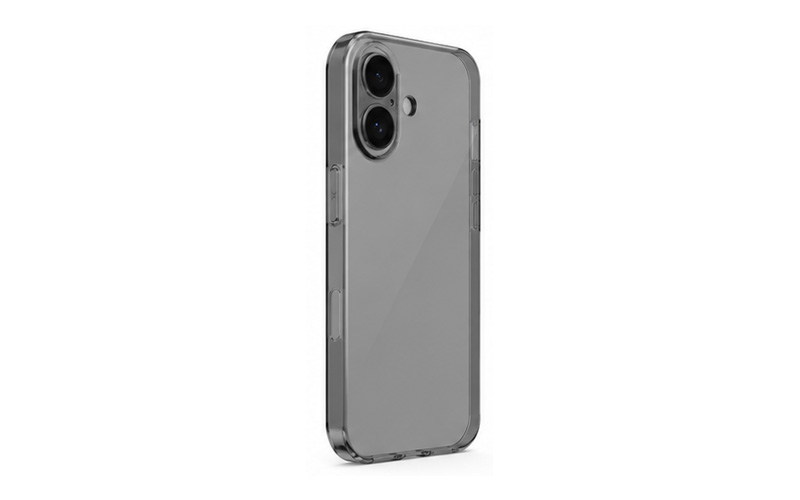
TPU stands for thermoplastic polyurethane. It is widely used in protective products because it can combine flexibility, toughness, abrasion resistance, and relatively good energy absorption.
From a materials perspective, TPU is interesting because its mechanical behavior is not simply “soft plastic.” TPU contains hard and soft molecular segments, allowing its properties to be adjusted over a wide range. Research on TPU has shown nonlinear behavior, rate dependence, hysteresis, and softening under repeated deformation.
This makes TPU particularly useful around the edges and corners of phone cases. It can flex during installation while providing a relatively tough protective layer.
The main disadvantage is that TPU is not as rigid as materials such as polycarbonate or fiber-reinforced composites. Some transparent TPU formulations can also change appearance over time.
Best for: affordable everyday protection, flexible cases, and protective bumpers.
3. Polycarbonate (PC) iPhone Cases
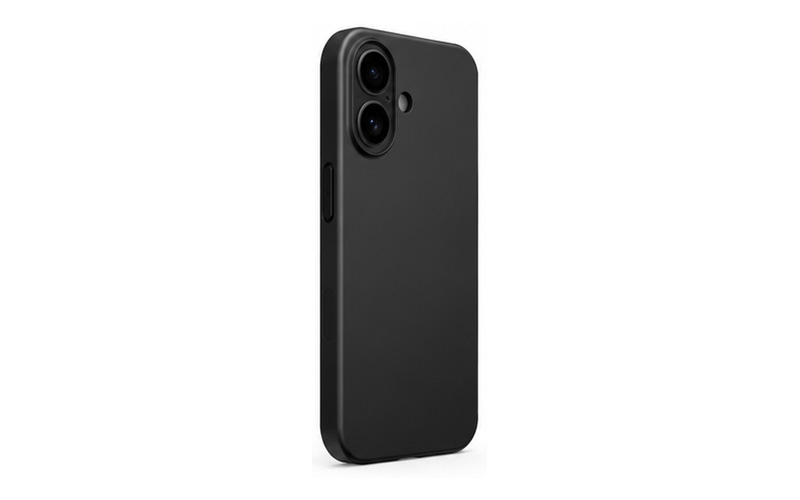
Polycarbonate, commonly called PC, is a rigid engineering thermoplastic. It is widely used where high impact resistance, dimensional stability, and relatively low weight are important.
Unlike silicone or TPU, PC does not feel rubbery. A PC shell provides structural stiffness and can help maintain the shape of a case.
Polycarbonate is also commonly used for transparent cases because it can be manufactured with high optical clarity.
However, hardness and impact protection are not the same thing. A rigid shell can resist deformation, but a complete phone case still needs to manage impact energy around the corners and edges. A well-designed hybrid case may therefore use rigid PC together with a more flexible material.
Engineering literature describes polycarbonate as a material with high impact strength and useful mechanical performance, while more recent research has examined its detailed tensile and deformation behavior.
Best for: clear cases, lightweight rigid cases, and cases that need structural stiffness.
4. Leather iPhone Cases
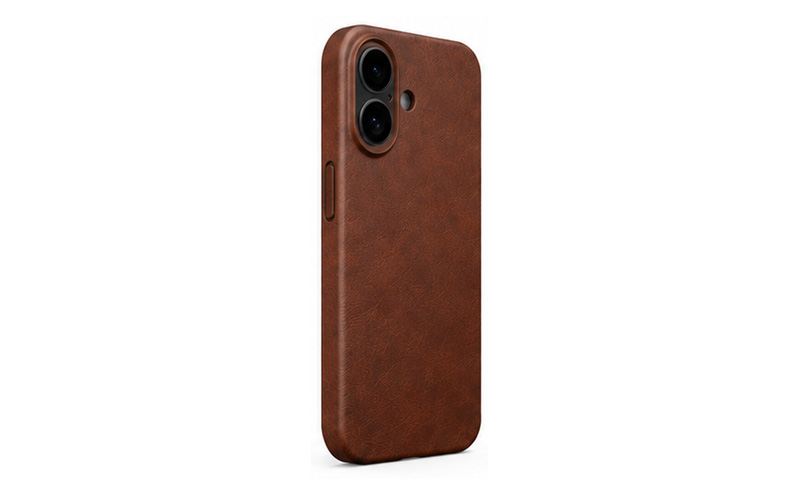
Leather cases are mainly chosen for their appearance and tactile feel. Genuine leather can develop a patina over time, while synthetic and vegan leather can provide a similar visual style with different durability and environmental characteristics.
But it is important not to confuse the outer material with the complete case structure.
A leather-covered case may contain a polymer frame underneath. That frame may provide much of the actual structural protection. A thin leather exterior by itself should not be considered a substitute for a protective internal structure.
Leather can also scratch, absorb moisture, and require more care than synthetic materials.
Best for: users who prioritize premium appearance, texture, and a traditional feel.
5. Aramid Fiber iPhone Cases
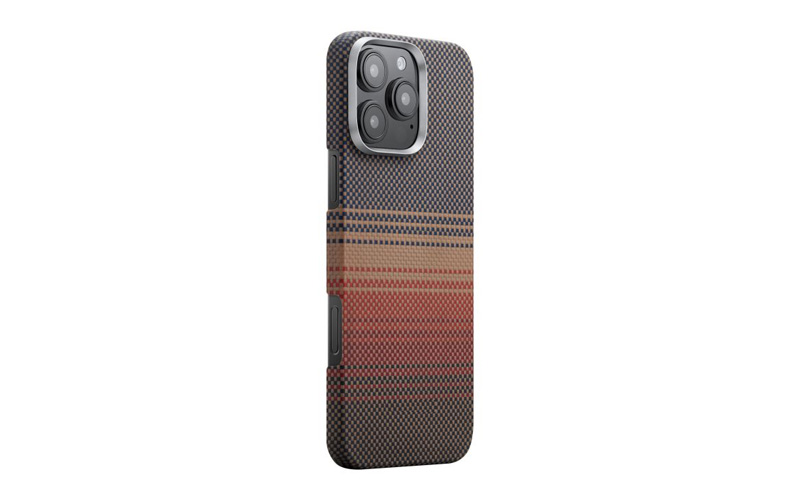
Aramid fiber is a high-performance synthetic fiber used in applications where low weight and high mechanical performance are important. Kevlar is one well-known example of an aramid fiber.
Aramid fiber cases are popular among people who want a very thin and lightweight case. Woven aramid fabric can be combined with resin to form a stiff composite shell.
One advantage of aramid fiber is its excellent strength-to-weight characteristics. It can provide useful mechanical performance without adding much thickness.
However, an aramid fiber case is not necessarily a rugged case. Ultra-thin construction may intentionally sacrifice some cushioning and bulk in exchange for a lighter, more pocket-friendly design.
Best for: users who want lightweight, thin, and premium protection.
Carbon Fiber vs Aramid Phone Cases: The Ultimate Comparison
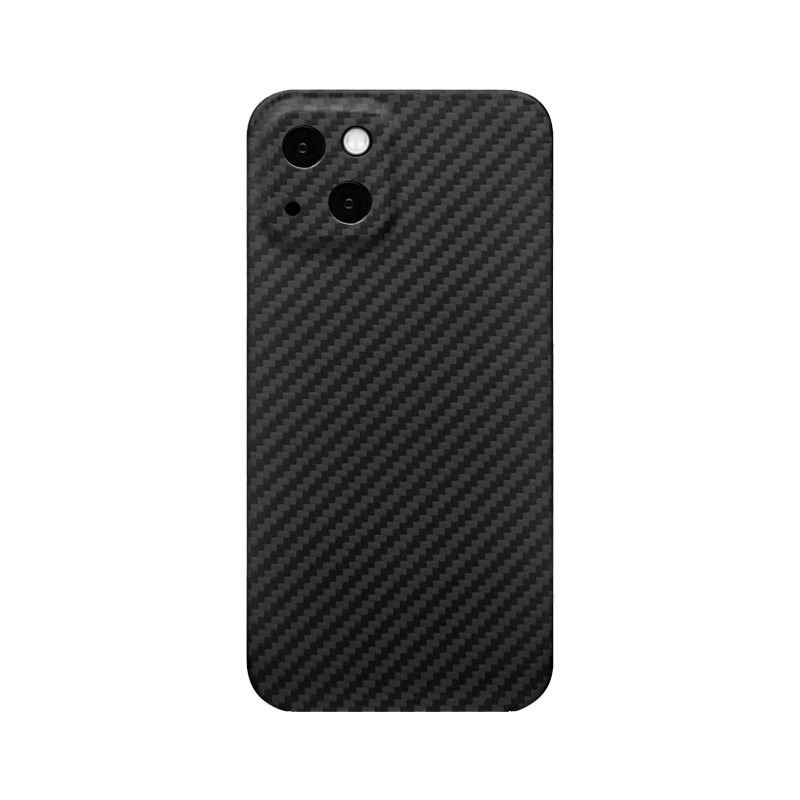
6. Carbon Fiber iPhone Cases
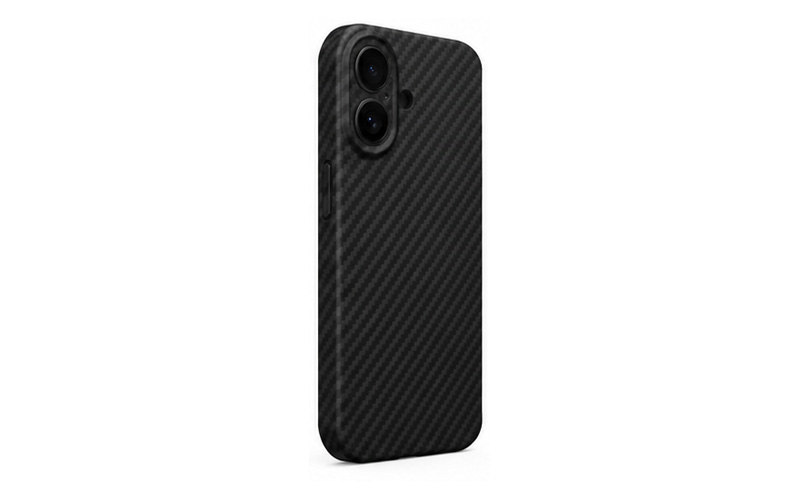
Carbon fiber deserves special attention because it is often misunderstood.
Carbon fiber is not simply a stronger version of ordinary plastic. It is usually used as a reinforcement in a fiber-reinforced polymer composite. Very thin carbon fibers are combined with a polymer matrix, often arranged in specific orientations or woven into a fabric.
This structure is important because the fibers carry much of the load while the resin holds the fibers together and transfers stress between them.
Research reviews describe carbon-fiber-reinforced polymers as materials with high specific strength and stiffness, meaning that they can provide substantial mechanical performance without requiring the weight of many traditional structural materials.
NASA also describes carbon-fiber composite structures as lightweight materials in which high-strength carbon fibers are combined with a polymer matrix. These composites are widely investigated for aerospace structures where reducing weight is important.
For a carbon fiber phone case, this can translate into an interesting combination of low weight, high stiffness, and a distinctive technical appearance.
But there is an important qualification: carbon fiber does not automatically mean maximum drop protection.
A carbon fiber phone case can be extremely thin and stiff, yet a rugged TPU case may provide more cushioning during certain types of drops. The actual result depends on the complete structure, including fiber orientation, resin system, thickness, edge geometry, corner reinforcement, and whether flexible materials are used around the perimeter.
This is why I recommend looking at carbon fiber as an engineering material, not as a marketing label.
Best for: users who want a lightweight, thin, stiff, and premium case with a distinctive composite appearance.
Benefits of Carbon Fiber Phone Cases: Strength, Weight & Protection
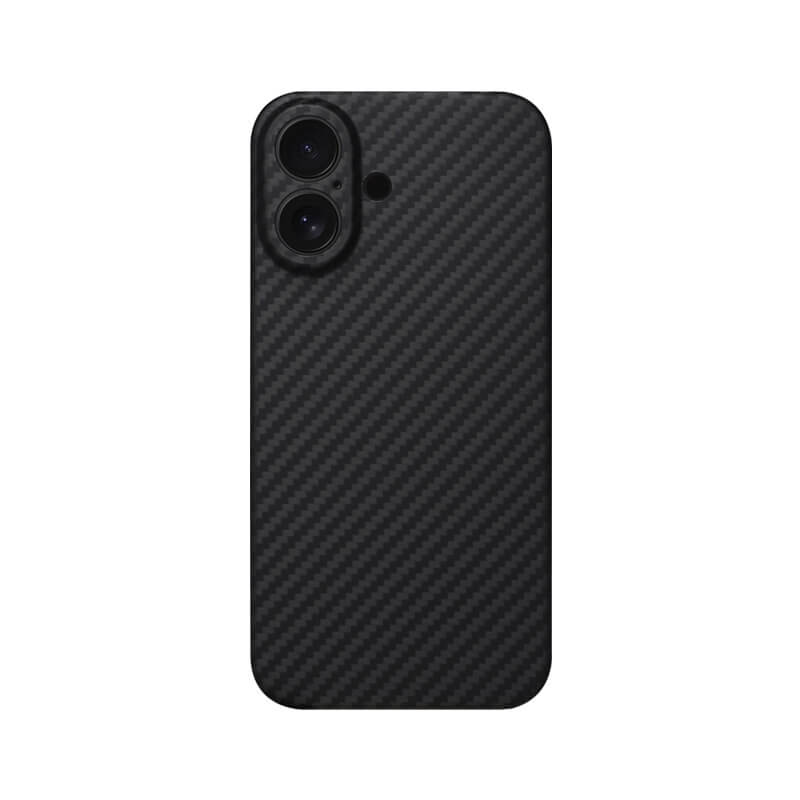
Strong MagSafe magnets ensure secure attachment.
Slim profile protects without adding unnecessary bulk.
Raised edges protect screen and camera.
Textured surface provides a secure grip.
Precise cutouts ensure easy everyday access.
Durable construction helps absorb everyday impacts.
Supports wireless charging without removing the case.

7. Clear iPhone Cases
A clear case is a design category rather than a specific material.
Clear cases can be made from TPU, PC, or combinations of different transparent polymers. Their main purpose is to protect the phone while allowing its original color and design to remain visible.
One common problem is yellowing or discoloration. The extent depends on the polymer formulation, additives, exposure to ultraviolet light, heat, and normal aging.
Clear cases can also vary greatly in protection. A very thin transparent shell and a reinforced hybrid clear case may look similar but perform very differently.
Best for: people who want protection without hiding the design of their iPhone.
8. Slim and Ultra-Thin iPhone Cases
Slim cases focus on minimizing thickness and weight.
Their main advantage is simple: they preserve more of the original feel and size of the iPhone. They are also easier to carry in a pocket.
The trade-off is protection. Less material and less internal space generally leave less room for cushioning, reinforced corners, and impact-dissipation structures.
This does not make slim cases bad. It simply means they are designed around a different balance of priorities.
Best for: careful users who prioritize thinness, weight, and pocketability.
9. Rugged iPhone Cases
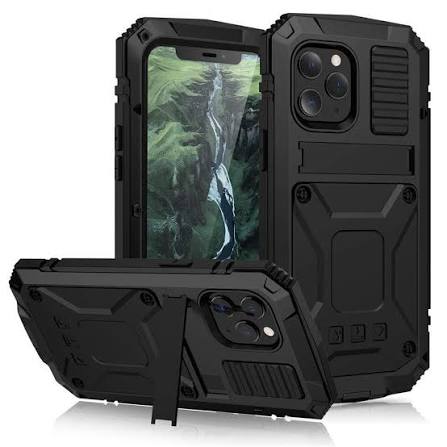
Rugged cases take the opposite approach.
They commonly use multiple layers, reinforced corners, flexible bumpers, rigid internal frames, raised bezels, and textured surfaces.
The goal is not simply to make the case harder. A good protective phone case needs to manage impact energy and reduce the chance that concentrated forces reach vulnerable parts of the phone.
Rugged cases can therefore be excellent for people who frequently work outdoors, travel, participate in physical activities, or simply drop their phones often.
The disadvantage is obvious: more protection usually means more weight and bulk.
Best for: users who prioritize protection over slimness.
You may also interested in: Thin Phone Case vs Rugged Phone Case: Which One Is Better for Your Phone?
10. Hybrid iPhone Cases
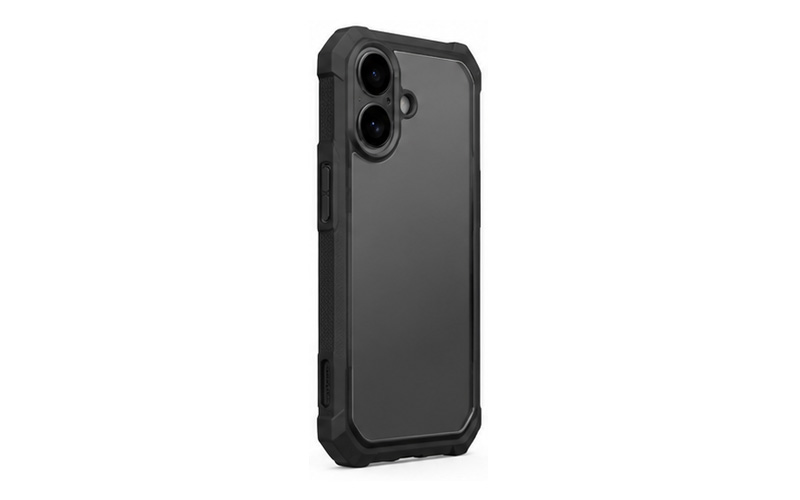
Hybrid cases combine two or more materials to take advantage of their different properties.
A common example is a rigid PC back combined with a flexible TPU bumper.
The reasoning is straightforward:
- PC can provide stiffness and structural support.
- TPU can provide flexibility around edges and corners.
- Soft materials can improve grip.
- Fiber composites can reduce weight while increasing stiffness.
This type of material combination is often more useful than asking which single material is “best.”
Modern case designs frequently use material stacks rather than one material throughout the entire case. Apple’s current accessory catalog, for example, includes cases using silicone, TPU, hard plastic, TechWoven, synthetic materials, and other constructions, alongside rugged and kickstand designs.
Best for: users looking for a balance between protection, weight, grip, and appearance.
11. MagSafe iPhone Cases
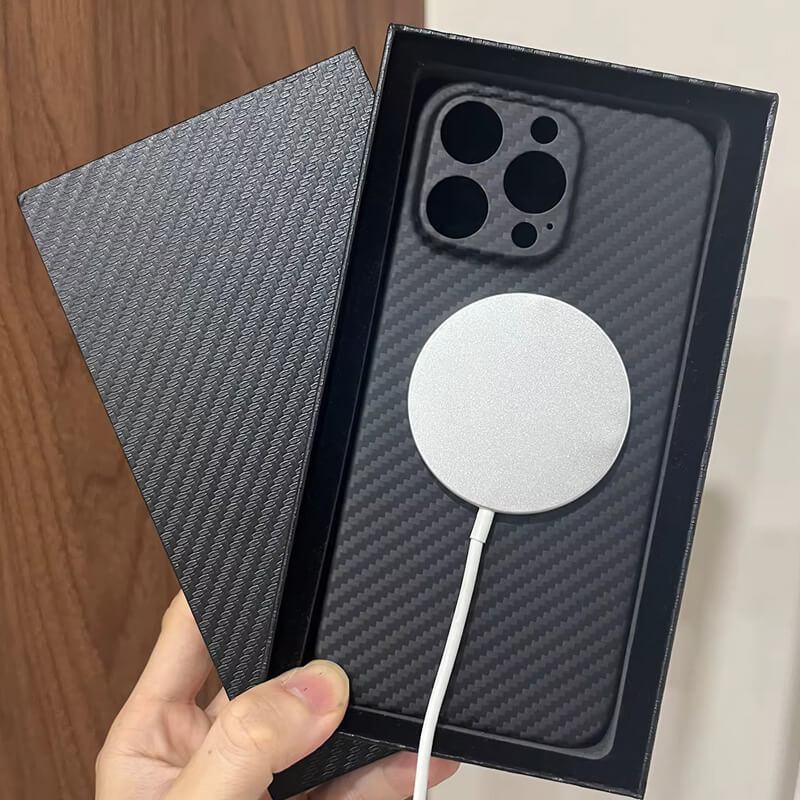
MagSafe is different from materials such as silicone or carbon fiber. It is primarily a functional compatibility system.
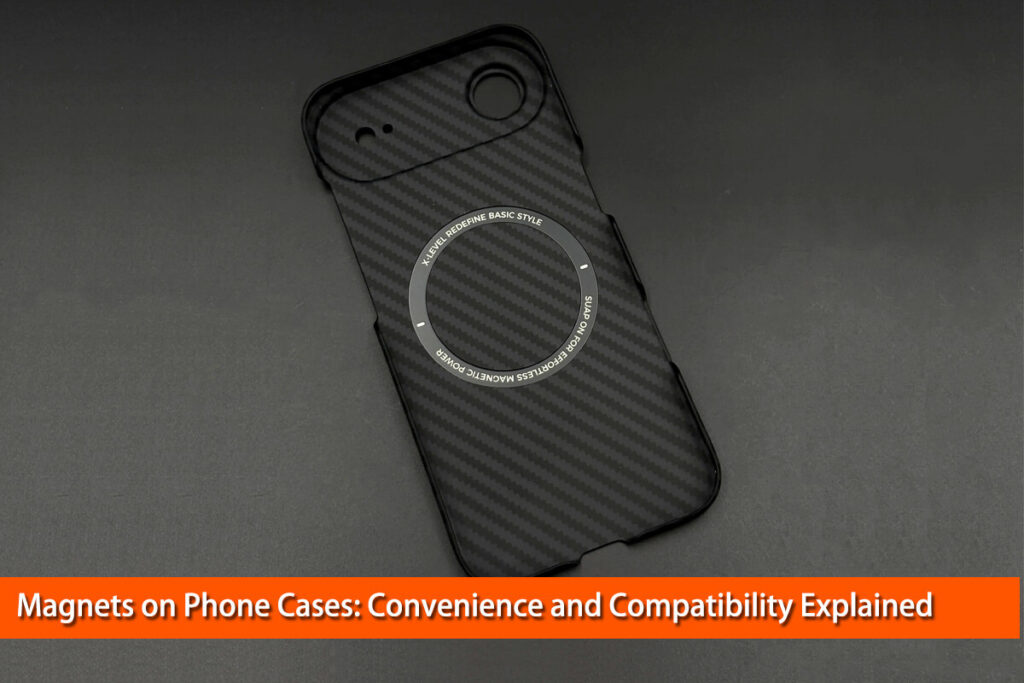
A MagSafe-compatible case incorporates magnets or a magnetic structure that allows compatible accessories to attach to the back of the iPhone.
These accessories can include:
- Magnetic chargers
- Wallets
- Car mounts
- Grips
- Stands
- Battery accessories
Apple’s current accessory ecosystem includes MagSafe cases, wallets, grips, chargers, mounts, and stands, showing how widely this system is now integrated into the iPhone accessory market.
One important point is that wireless charging compatibility and MagSafe compatibility are not exactly the same thing. A case may allow wireless charging but provide weak or no magnetic attachment.
If you use magnetic accessories regularly, check specifically for MagSafe compatibility.
Best for: users who regularly use magnetic chargers, wallets, mounts, stands, or grips.
Is a MagSafe Phone Case Worth It? Pros, Cons & a Practical Buying Guide
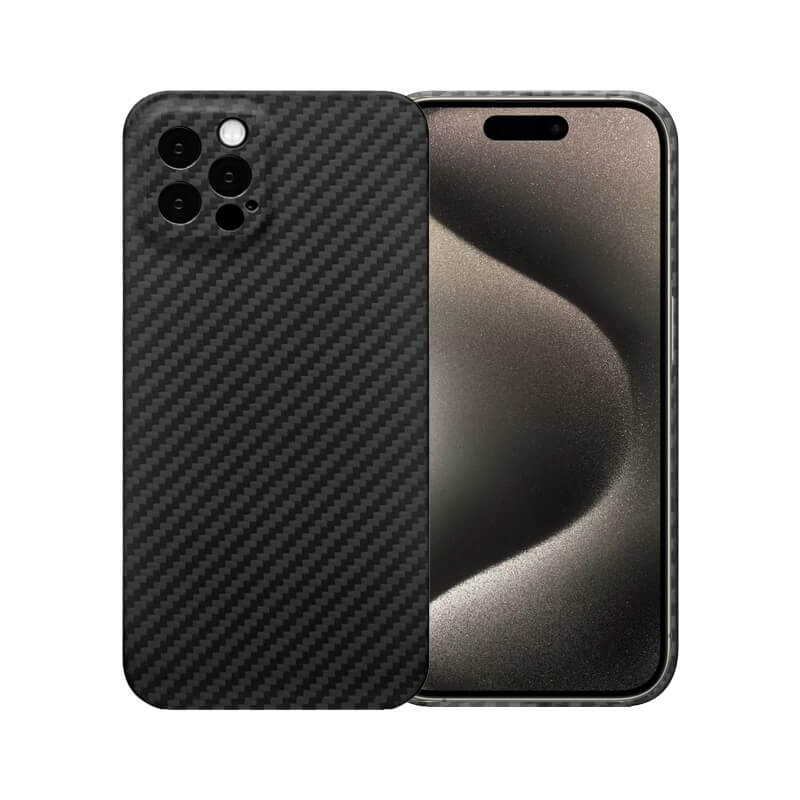
A premium, lightweight, and performance-inspired look.
Slim design, protects your iPhone without adding unnecessary bulk.
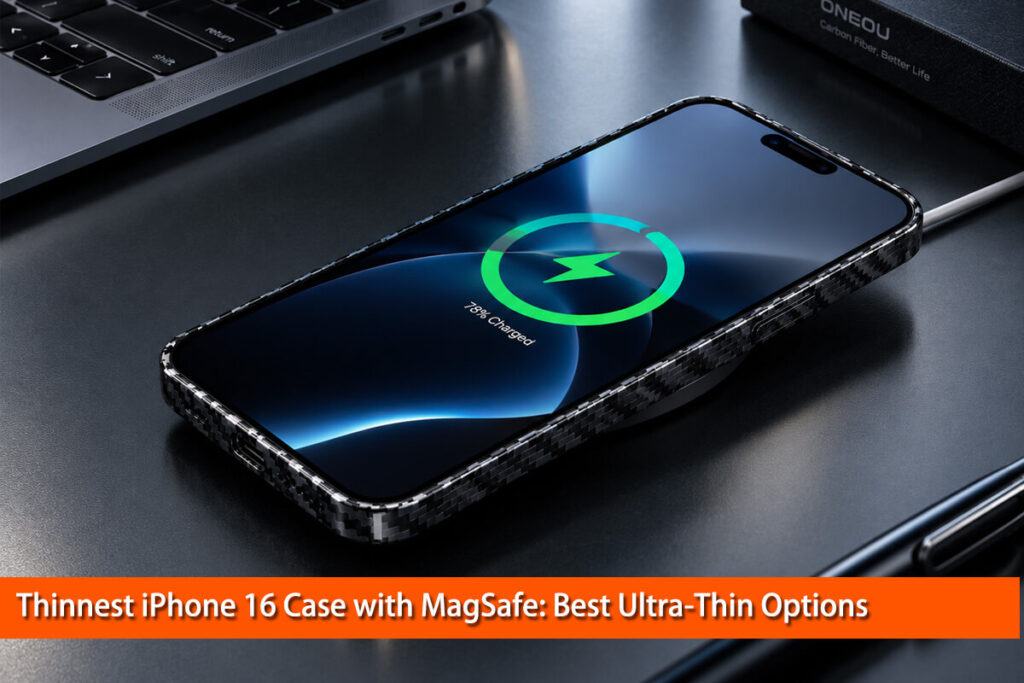
Built-in MagSafe magnets support convenient charging and accessories.
Precision fit provides easy access to buttons, ports, and cameras.
Raised edges help protect your screen and camera lenses from scratches.
Designed specifically for the iPhone 15 Pro for a precise fit.
12. Wallet and Folio iPhone Cases
Wallet cases combine phone protection with card storage. Folio cases go one step further by adding a front cover.
They can be useful for people who want to carry fewer items.
The main trade-off is bulk. Adding cards, a cover, or a separate wallet section naturally increases thickness.
There is also an important charging consideration. Depending on the design, cards or other objects positioned between the phone and charger can interfere with charging or magnetic attachment.
Best for: minimalists who want to combine their phone and wallet.
13. Kickstand and Grip Cases
Kickstand cases are designed for hands-free viewing. They can be useful for watching videos, making video calls, or using the phone on a desk.
Grip cases focus more on handling. They may use textured sides, finger loops, integrated grips, or magnetic accessories.
Both designs illustrate an important principle: protection is not only about what happens after a drop. A case that is easier to hold may also reduce the chance of dropping the phone in the first place.
The trade-off is additional structure, which can increase thickness and weight.
14. Different Types of iPhone Cases Comparison
| Case Type | Protection | Weight | Grip | Slimness | MagSafe | Best For |
|---|---|---|---|---|---|---|
| Silicone | Medium | Low–Medium | Excellent | Medium | Often | Everyday use |
| TPU | Medium | Low | Good | Medium | Often | Affordable protection |
| PC | Medium | Low | Medium | High | Depends | Slim/clear designs |
| Leather | Medium | Medium | Good | Medium | Often | Premium style |
| Aramid | Medium–High* | Very Low | Medium | Excellent | Often | Lightweight users |
| Carbon Fiber | Medium–High* | Very Low | Medium | Excellent | Depends | Performance/premium |
| Hybrid | High | Medium | Good | Medium | Often | Balanced protection |
| Rugged | Very High* | High | Good–Excellent | Low | Often | Heavy-duty protection |
| Wallet | Medium | Medium–High | Good | Low | Often | Minimal carry |
15. Which iPhone Case Type Should You Choose?
There is no single material that is perfect for every user. Instead, start with your priorities.
If you want maximum thinness: consider a slim aramid or carbon fiber case.
If you want strong everyday protection: consider a hybrid TPU/PC construction.
If you frequently drop your phone: look for a rugged case with reinforced corners and tested impact protection.
If you want maximum grip: silicone or textured TPU can be good choices.
If you want to show the iPhone’s original design: choose a clear case.
If you use magnetic accessories: choose a case specifically designed for MagSafe.
If you carry cards: consider a wallet or magnetic wallet system.
If you watch videos frequently: a kickstand case may be useful.
The important thing is to choose based on your actual use rather than a simple claim that one material is universally better.
16. What Actually Makes an iPhone Case Protective?
This is perhaps the most important question.
The material is only one part of the engineering.
Corner geometry
Corners often experience concentrated forces during drops. Reinforcing these areas can be more important than simply making the entire back thicker.
Raised edges
A raised bezel can help keep the screen from directly contacting a flat surface when the phone is placed face down.
Camera protection
A raised camera lip can help prevent direct contact between the camera lenses and the surface beneath the phone.
Internal structure
Ribs, frames, air gaps, flexible layers, and reinforced sections can all influence how impact loads move through a case.
Material combination
Different materials can perform different jobs. A rigid layer can provide stiffness while a flexible layer can deform and dissipate energy.
Manufacturing quality
Two cases made from the same nominal material can perform differently because of differences in thickness, molding, fiber orientation, resin quality, bonding, and tolerances.
This is why a materials engineer would be careful with statements such as “Material X is the strongest phone-case material.” The real question is:
How is the material engineered into the finished product?
17. Common Mistakes When Buying an iPhone Case
There are several mistakes worth avoiding.
First, do not choose only by appearance. A beautiful case may not provide the type of protection you actually need.
Second, do not assume that “hard” means “more protective.” Hardness, stiffness, toughness, and energy absorption are different material properties.
Third, do not assume that a high price guarantees better engineering.
Fourth, check the exact iPhone model. Camera layouts, dimensions, buttons, and charging features can change between generations.
Fifth, if you use MagSafe accessories, verify magnetic compatibility rather than assuming that any wireless-charging case will work.
Finally, be cautious with vague phrases such as “military grade” or “maximum protection” unless the manufacturer explains what was tested and under which standard or conditions.
Frequently Asked Questions
What are the main types of iPhone cases?
The major types include silicone, TPU, polycarbonate, leather, aramid fiber, carbon fiber, clear, slim, rugged, hybrid, MagSafe, wallet, folio, kickstand, grip, and bumper cases.
Is carbon fiber good for an iPhone case?
Carbon fiber can be an excellent choice when low weight and high stiffness are important. However, actual drop protection depends on the complete case construction rather than carbon fiber alone.
Is TPU better than polycarbonate?
They serve different purposes. TPU is flexible and useful for energy absorption and edge protection, while PC provides rigidity and structural support. Many good cases combine both.
Are slim iPhone cases protective?
Yes, but their protection is generally based on a different trade-off. Slim cases reduce bulk and weight, while rugged cases provide more space for cushioning and reinforcement.
Does a MagSafe case have to be made from a specific material?
No. MagSafe compatibility is primarily about the magnetic system and case construction. MagSafe cases can use different exterior materials, including silicone, TPU, plastic, fabric, and composites.
Is a rugged case always better?
Not necessarily. A rugged case may provide more protection, but it also adds weight and bulk. The right choice depends on how you use your phone.
Final Thoughts
The world of iPhone cases is easier to understand when you separate materials from designs.
Silicone, TPU, PC, leather, aramid fiber, and carbon fiber describe materials or material systems. Slim, rugged, hybrid, wallet, MagSafe, kickstand, and grip describe designs or functions. One case can belong to several categories at the same time.
From a materials-engineering perspective, the most important lesson is that the material name alone does not determine the performance of a phone case. Geometry, thickness, fiber orientation, internal structure, corner reinforcement, manufacturing quality, and the combination of different materials can all make a major difference.
Carbon fiber is a good example. Its high specific strength and stiffness make it attractive for lightweight composite structures, but a carbon fiber phone case still needs thoughtful engineering around the vulnerable areas of a phone.
So instead of asking, “What is the best iPhone case material?” ask a more useful question:
What combination of material, structure, protection, weight, grip, and functionality fits the way I actually use my iPhone?
That question will lead you to a much better case.
Related reading:
What’s the Best Phone Case Material? A Complete Comparison