What Makes Carbon Fiber Different From Traditional Phone Case Materials?
Carbon fiber is not simply another type of plastic.A typical carbon fiber composite consists of carbon fibers embedded in a polymer resin. The fibers provide much of the structural strength and stiffness, while the resin holds the fibers together and transfers loads between them.This is why carbon fiber is best understood as a composite material, rather than a single homogeneous material. The properties of the finished part depend on both the fibers and the way the composite is designed and manufactured. Research on carbon-fiber-reinforced polymers also shows that their electrical and thermal properties can vary with fiber arrangement and composite structure.An Exceptional Strength-to-Weight Ratio
One of carbon fiber’s biggest advantages is its strength and stiffness relative to its weight.In simple terms, engineers can achieve a rigid structure without adding a large amount of material.That matters for a phone case because nobody wants protection that turns a slim smartphone into a bulky brick.A well-designed carbon fiber case can maintain a slim profile while providing a rigid outer structure around the device.High Structural Rigidity
Carbon fiber is particularly valuable for its stiffness.A rigid case is less likely to flex excessively during normal use. It can help maintain its shape and provide a stable protective shell around the phone.However, there is an important engineering distinction:Stiffness is not the same thing as impact absorption.A material can be very stiff without being the best material for absorbing the energy of a hard impact.This is why simply making a case from a very hard material does not automatically create the best drop protection.The best designs consider the entire protective system.Lightweight Protection
For everyday use, weight matters almost as much as protection.A case that is technically strong but unnecessarily heavy may be uncomfortable to carry all day.Carbon fiber’s high performance relative to its weight makes it particularly attractive for people who want a protective case without giving up the thin, lightweight feel of their phone.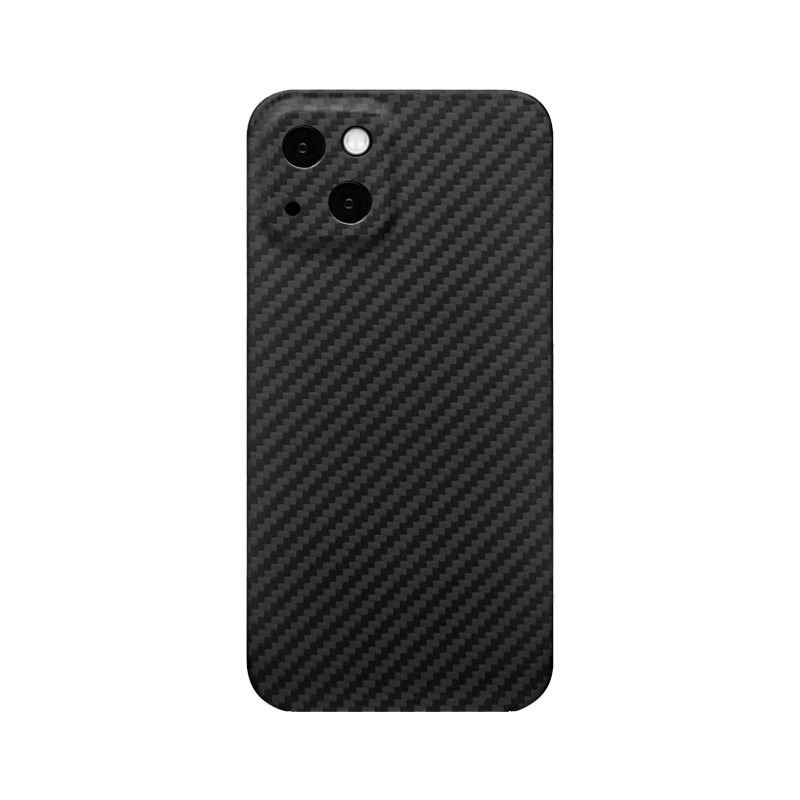
$49.99 $59.99
Tough and strong enough to protect your iPhone. Skin-friendly touch and a comfortable grip. Stylish and lightweight but still provide essential protection. Full protection against daily bumps, drops and accidental impacts. Precise holes that give you easy access to the buttons and ports. Ultra-light and thin.
17% OFF

How Does a Carbon Fiber Phone Case Protect Your Phone?
A phone case protects a device from several different types of damage, and each requires a slightly different approach.1. Protection Against Scratches and Everyday Wear
The first job of a case is simple: keep the phone’s exterior away from the surfaces that can damage it.Your phone can encounter:- Keys
- Coins
- Desk surfaces
- Pocket friction
- Bags and backpacks
- Car interiors
- Dust and small particles
2. Protection Against Bending and Structural Stress
Modern smartphones are remarkably thin, which makes structural design increasingly important.A rigid composite shell can help resist unwanted bending and deformation.This is one area where carbon fiber’s stiffness becomes useful.Instead of thinking about a case as a soft cushion, think of the carbon fiber shell as a structural layer that helps maintain the shape and integrity of the protective enclosure.3. Protection Around the Screen and Camera
The back panel is only one part of the phone.The screen and camera are often among the most vulnerable areas.For this reason, a well-designed case should consider:- Raised screen edges
- Raised camera edges
- Corner coverage
- Button protection
- Port openings
- Precise camera cutouts
4. Impact Protection: Why Design Matters More Than Material Alone
This is where carbon fiber phone cases are often misunderstood.Carbon fiber is strong, but “strong” does not automatically mean “best at absorbing every impact.”When a phone falls, its kinetic energy has to go somewhere.Flexible materials such as TPU can deform during impact and dissipate energy. Rigid materials such as polycarbonate can provide structural support and distribute loads. Modern protective cases often combine different materials because each material performs a different job.That leads to an important principle:A phone case is a protection system, not simply a material.The most important factors include:Material + geometry + thickness + corners + edge coverage + internal structure + precise fitThis is why you should be cautious about any phone case claiming that one material alone guarantees protection from every drop.
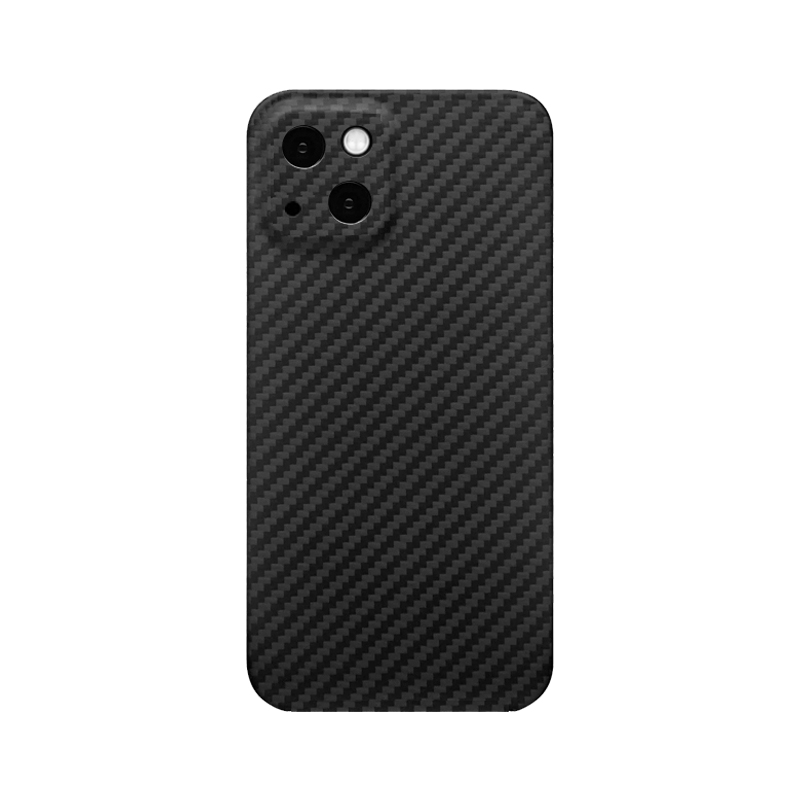
$49.99 $59.99
Carbon fiber Kevlar Aramid fiber made Military level strength and protection, fully protect your iPhone Support MagSafe and wireless charging Comfortable handling feel Fully wrapped edges to absorb the impact force
17% OFF
Carbon Fiber vs. Other Phone Case Materials
There is no single material that wins every category.The right choice depends on what you value most.| Material | Main Strength | Main Trade-Off |
|---|---|---|
| TPU | Flexible and good at absorbing impact | Less rigid and can add bulk |
| Polycarbonate | Rigid, lightweight, and good for structural shells | Less effective at absorbing impact by itself |
| Silicone | Soft and grippy | Can be less structurally rigid |
| Aramid Fiber | Extremely thin and lightweight | Drop protection depends heavily on case design |
| Carbon Fiber | High stiffness, low weight, premium construction | Rigid carbon alone is not a complete impact-absorption system |
| Hybrid Construction | Combines different material advantages | Can be thicker or more complex |
Carbon Fiber vs. TPU
TPU is flexible and can deform under impact.Carbon fiber is much more rigid.So these materials solve different problems.If your priority is maximum shock absorption from frequent hard drops, a well-designed TPU or TPU-hybrid case may be the better choice.If your priority is low weight, slimness, stiffness, premium materials, and structural protection, carbon fiber becomes much more attractive.There is no contradiction here.Good engineering means choosing the right material for the right job.Carbon Fiber vs. Polycarbonate
Polycarbonate is a rigid thermoplastic commonly used in protective cases.Like carbon fiber, it can provide structural rigidity while remaining relatively lightweight.Carbon fiber’s major advantage is its exceptional stiffness-to-weight potential and premium composite construction.Polycarbonate, however, can be easier and less expensive to manufacture in complex shapes.Again, the final performance depends on the entire case rather than the material label alone.Carbon Fiber vs. Aramid Fiber
Carbon fiber and aramid fiber are often confused because both can produce very thin, high-performance cases.But they are different fibers.Aramid fibers are known for high tensile strength and toughness, while carbon fiber is particularly valued for stiffness and low weight.The construction of the final case matters enormously. A thin woven shell, regardless of whether it is carbon or aramid, should not automatically be assumed to provide the same drop performance as a thick multi-layer rugged case.The 5 Biggest Advantages of a Carbon Fiber Phone Case
1. Lightweight Construction
This is perhaps the biggest everyday advantage.You get structural protection without adding the weight associated with many rugged cases.2. High Stiffness
Carbon fiber is excellent when you need a thin structure that resists deformation.3. Slim Profile
For people who dislike bulky cases, carbon fiber can provide a premium protective solution while preserving much of the phone’s original form.4. Excellent Surface Durability
A properly manufactured and finished carbon fiber surface can withstand substantial everyday wear.The exact result still depends on the resin, surface finish, coating, and manufacturing quality.5. Premium Appearance
There is also a reason carbon fiber is associated with high-performance engineering.The woven pattern, technical appearance, and lightweight construction create a very different experience from ordinary plastic.For many users, the appeal is not just protection.It is engineering you can see and feel.Does Carbon Fiber Help With Heat Dissipation?
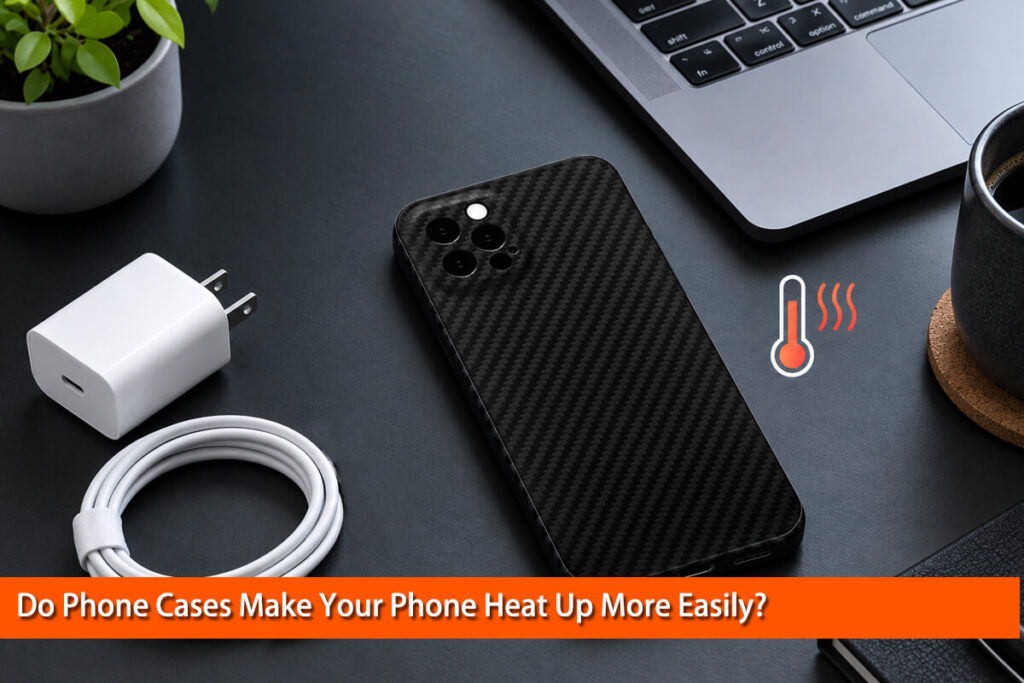
This question requires a little more care than many marketing articles suggest.Carbon fiber can conduct heat, but a carbon fiber phone case is not automatically a cooling system.Carbon-fiber-reinforced polymers are anisotropic, meaning their thermal behavior can depend on the direction of the fibers and the construction of the composite. Current materials research continues to examine fiber orientation and composite structure for thermal-management applications.In a phone case, actual thermal behavior depends on:- Fiber type
- Fiber orientation
- Resin system
- Composite thickness
- Surface area
- Contact with the phone
- Overall case construction
Can Carbon Fiber Affect 5G, Wi-Fi, GPS or NFC?
This is another area where precision matters.Carbon fibers are electrically conductive, and carbon-fiber-reinforced polymers have electrical properties that depend on their fiber structure and composite design.That means a solid conductive structure placed around electronic antennas can potentially create electromagnetic effects.But this does not mean every carbon fiber phone case will block your signal.The actual design matters.When choosing a carbon fiber case, look for:- Proper antenna-area design
- Appropriate openings and clearances
- Tested wireless charging compatibility
- MagSafe compatibility where applicable
- Proper NFC operation
What Makes a Good Carbon Fiber Phone Case?
If you are shopping for one, here are the things I would examine first.Genuine Carbon Fiber vs. Carbon-Fiber Look
This is one of the most important distinctions.A product may have a carbon fiber-looking pattern without containing genuine carbon fiber.It could simply be:- Printed plastic
- Textured TPU
- Carbon-look film
- Decorative coating
Construction Quality
Look beyond the marketing photograph.Consider:- Actual material
- Fiber construction
- Shell thickness
- Surface finish
- Edge coverage
- Corner design
- Camera protection
- Screen protection
Precise Fit
A premium case should fit the specific phone model precisely.Buttons should remain usable.Ports should remain accessible.Camera openings should align correctly.The case should not move excessively around the phone.These details may seem small, but they have a major effect on everyday usability.Wireless Charging and MagSafe Compatibility
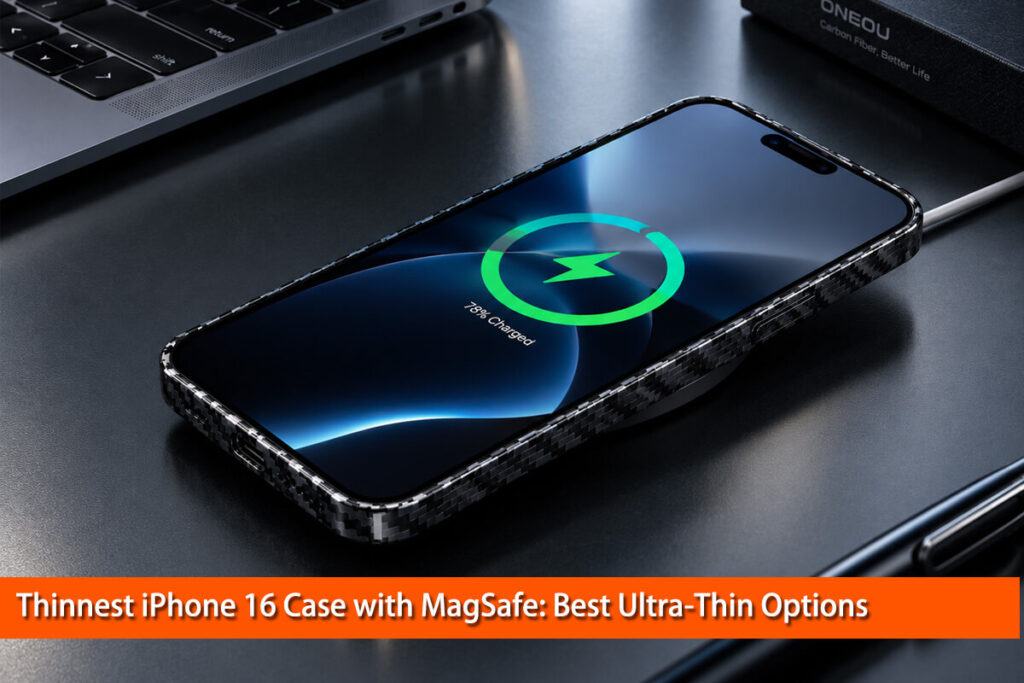
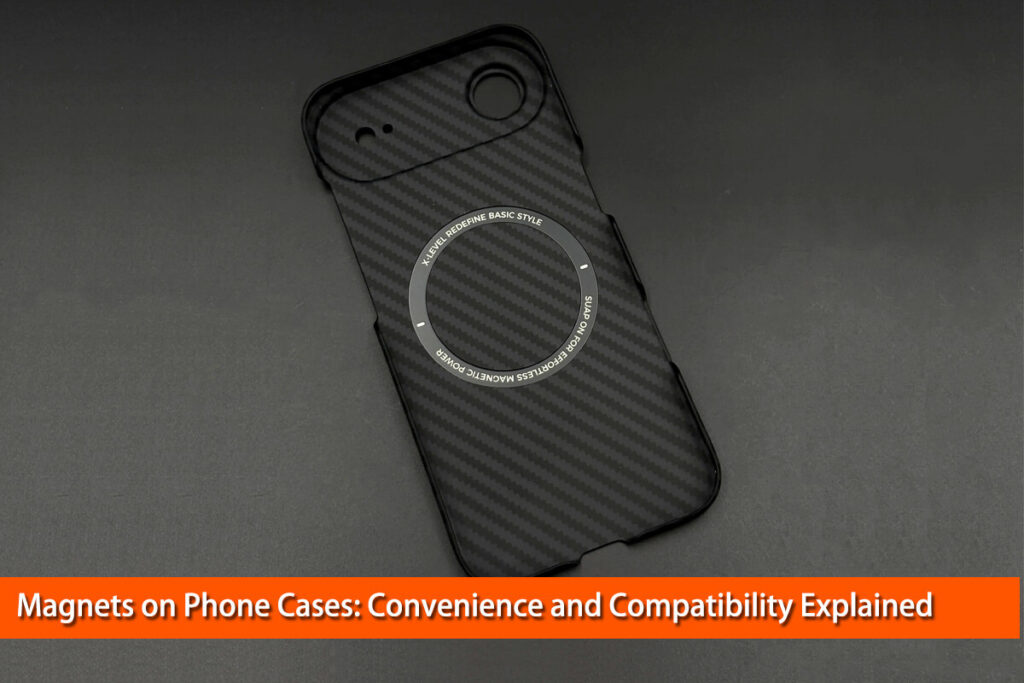
If you use wireless charging or magnetic accessories, compatibility should be checked before buying.Do not assume that every carbon fiber case will behave identically.The case’s thickness, construction, magnetic ring, and material arrangement all matter.Who Should Buy a Carbon Fiber Phone Case?
A carbon fiber case is particularly attractive if you:- Want a lightweight case
- Dislike bulky protective cases
- Prefer a slim phone profile
- Appreciate premium engineering materials
- Want high structural rigidity
- Care about long-term everyday durability
- Like a technical or motorsport-inspired aesthetic
Who Should Choose a Rugged Case Instead?
A carbon fiber case is not automatically the best choice for everyone.If your phone regularly experiences severe drops, construction-site use, outdoor adventures, or other extreme conditions, a thicker multi-layer rugged case may be more appropriate.A rugged design can use flexible materials, reinforced corners, thicker walls, and multiple protective layers specifically to manage high-energy impacts.That is an important distinction:Carbon fiber can be an excellent lightweight structural material. It is not magic.Being honest about that is part of choosing the right case.Frequently Asked Questions
Are carbon fiber phone cases worth it?
For users who value low weight, slimness, stiffness, premium materials, and durability, a well-designed carbon fiber phone case can be an excellent investment.The key is to evaluate the complete case rather than buying based only on the words “carbon fiber.”Are carbon fiber phone cases good for drops?
They can provide useful protection, but the answer depends on the case design.A thin rigid carbon fiber shell should not automatically be considered equivalent to a thick TPU/PC rugged case designed specifically for high-energy impact absorption.Is carbon fiber better than TPU?
Neither is universally better.Carbon fiber excels at stiffness and lightweight structural performance.TPU excels at flexibility and impact energy absorption.A hybrid design can combine some of these advantages. Related reading: Is Carbon Fiber Better Than TPU?Is carbon fiber better than aramid fiber?
They have different engineering characteristics.Carbon fiber is particularly attractive when stiffness and lightweight structural performance are priorities. Aramid fiber is also exceptionally strong for its weight and can produce very thin cases.The final product design matters more than the material name alone.Do carbon fiber cases affect 5G?
A carbon-fiber composite can have electrical conductivity, so case construction and antenna design matter.A properly designed case does not automatically mean poor connectivity, but manufacturers should account for the phone’s antenna system. You may need to learn: Does Carbon Fiber Phone Case Block Signal?Do carbon fiber cases work with MagSafe?
They can, but compatibility depends on the specific case construction and magnetic design.If MagSafe is important to you, check for explicit compatibility rather than assuming it.How long does a carbon fiber phone case last?
A quality case can last for years under normal use, but lifespan depends on the carbon fiber construction, resin, surface finish, impact history, UV exposure, and daily handling.Like any engineered product, carbon fiber is not immune to wear.Final Verdict: Is a Carbon Fiber Phone Case Worth It?
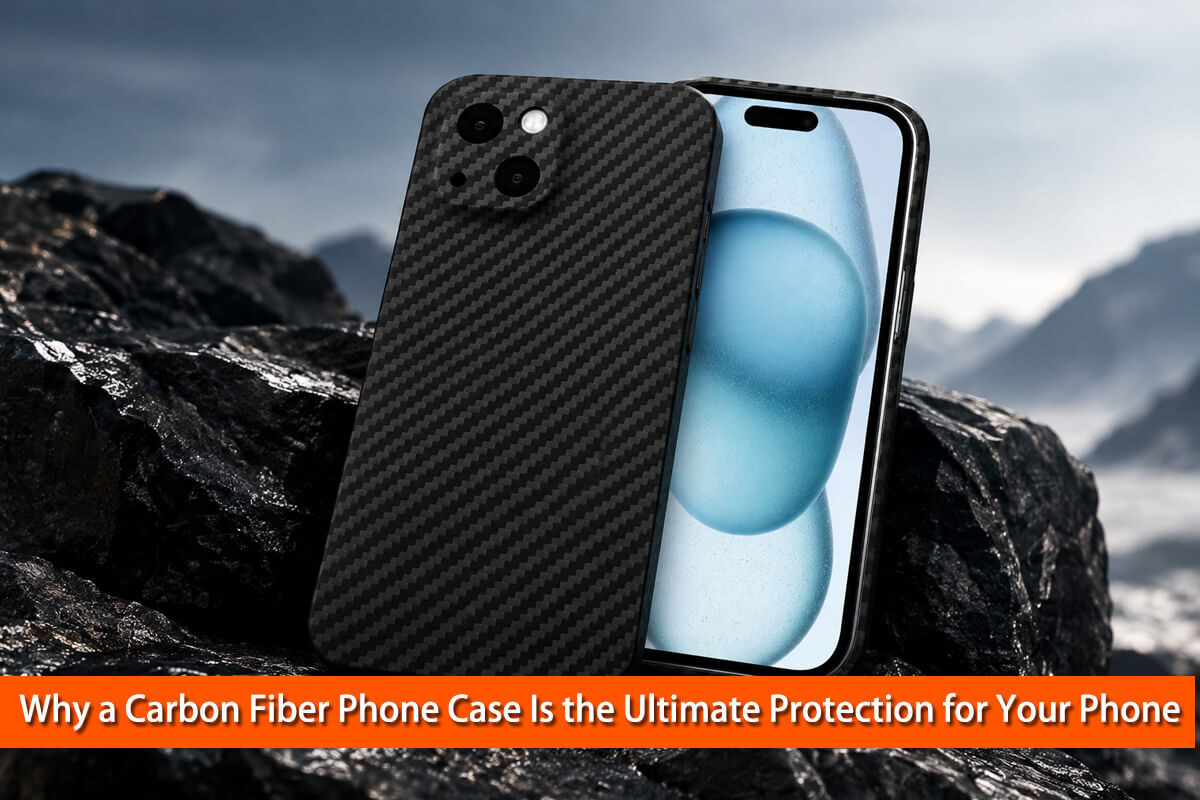
A carbon fiber phone case is not the ultimate solution simply because carbon fiber is a strong material.It becomes an excellent protection solution when the material is combined with thoughtful engineering.The real advantages are the combination of:**Light weight- High stiffness
- Slim construction
- Surface durability
- Precise fit
- Thoughtful edge and camera protection
- Appropriate charging and antenna design**
Don’t buy a phone case because it says “carbon fiber.” Buy it because the carbon fiber, construction, and protection system have been engineered well.That is the difference between a case that merely looks high-performance and one that is actually designed with performance in mind.